
A hospital IT team mirrors third-party medical imaging vendor containers directly into its private registry, bypassing internal CI/CD build pipelines. How should the team ensure these vendor images are evaluated before deployment?
Select an answer to reveal the explanation.
Short Explanation
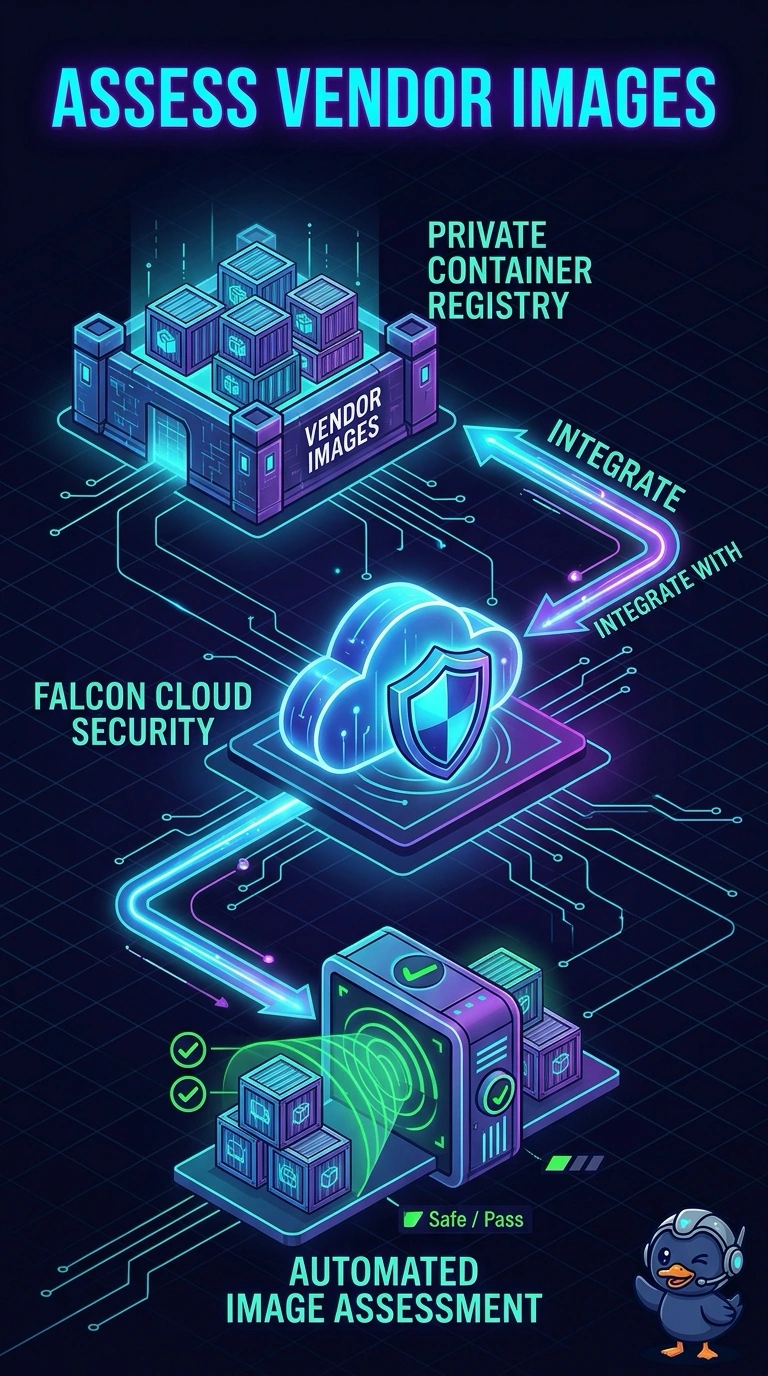
When you mirror third-party images outside your build pipeline, your private registry is the right place to check them before deployment. You can use registry integration to assess the images; source-code scans and cloud posture checks won't inspect their contents in the needed way.
Full Explanation
Because third-party vendor images are mirrored directly into the hospital’s private registry without passing through internal build pipelines, you should integrate that registry with Falcon Cloud Security for automated image assessment. Registry integration inspects stored image manifests and layers for known package vulnerabilities and embedded risks before pods launch, giving you visibility even when you do not control the upstream build. Requiring developers to run source-code repository scans against the vendor’s compiled container images fails because those images do not contain the vendor’s raw source repository and cannot be evaluated like internal application code. Relying solely on Cloud Security Posture Management scans of the cloud account hosting the cluster is ineffective because CSPM audits cloud control-plane settings rather than packages inside image layers. Waiting for runtime behavioral detections on production Kubernetes worker nodes leaves clinical workloads exposed to known pre-runtime flaws until an attacker actively exploits them. As a caveat, registry integration requires valid repository credentials and pull permissions for scans to complete. As a practical check, confirm that mirrored vendor repositories are in scope and review initial scan results before approving deployments.
Prefer to study offline? Printable PDF study book + test engine ($7.50, unofficial). These questions stay free here.