
A software DevSecOps team reviews hundreds of pre-runtime package vulnerability findings in a newly built microservice image and needs to prioritize which items developers can immediately resolve by upgrading packages. Which detail in the image assessment findings helps the team separate actionable upgrades from unpatched upstream issues?
Select an answer to reveal the explanation.
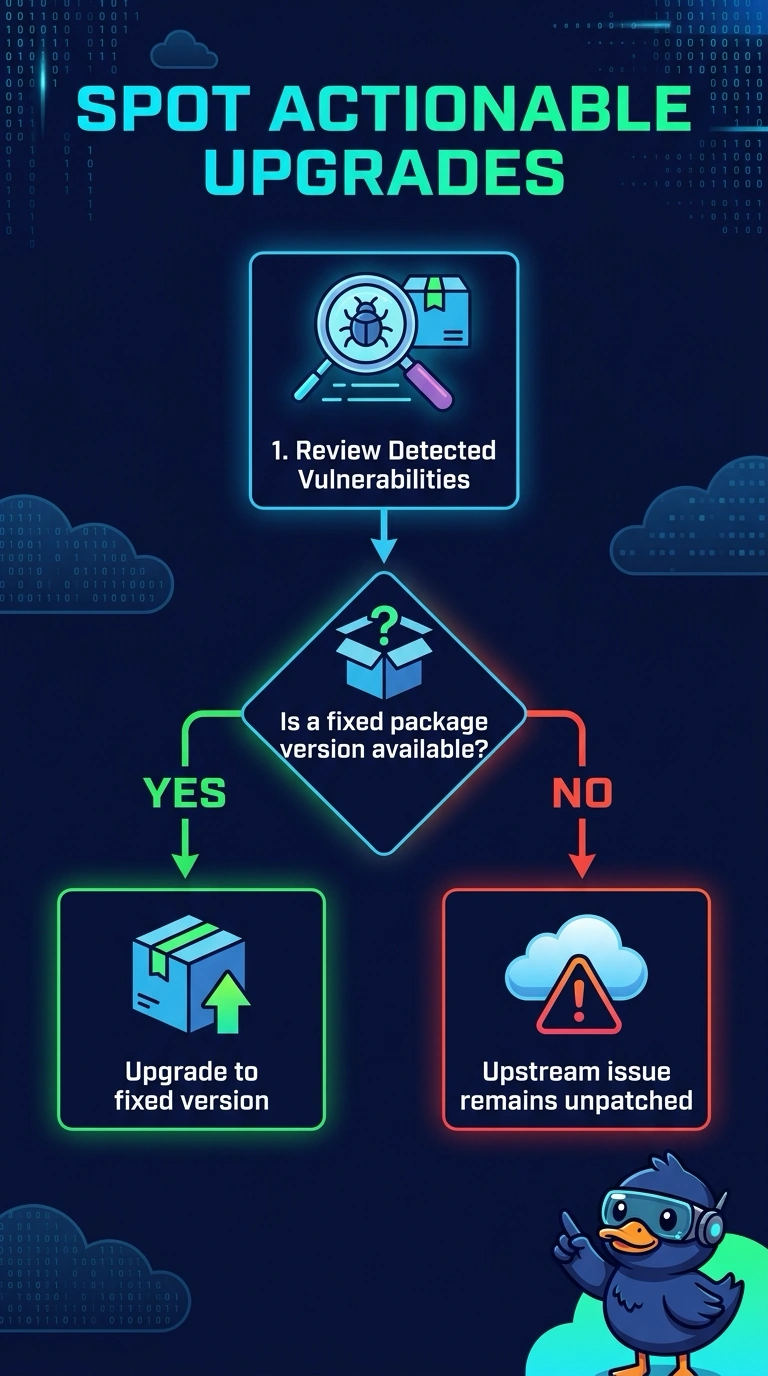
Short Explanation
When you face a mountain of container CVEs, knowing which ones actually have a patch ready saves developers from chasing dead ends. The trap is focusing on infrastructure metadata instead of fix availability in the package finding itself.
Full Explanation
Checking Whether a fixed package version is available for each detected vulnerability lets developers immediately separate actionable dependency upgrades from upstream issues that lack a vendor patch. Prioritizing findings with a published fix version enables teams to update base images or application manifests and rebuild right away. By contrast, The Kubernetes node hostname where the container might run has no bearing on whether an OS or language package vulnerability inside the image has an upstream fix. Similarly, The cloud account's scheduled compliance report delivery time only governs when posture summaries are emailed and provides no package remediation data. Relying on The IAM trust policy external ID used for cloud onboarding relates solely to cloud account registration authentication, not container image package triage. As a caveat, vulnerabilities without an available fix may still require compensating controls such as removing unused packages or tightening runtime policies. For an operational check, filter pre-runtime image findings by fix availability alongside severity so engineering sprints target upgradeable packages first.
Prefer to study offline? Printable PDF study book + test engine ($7.50, unofficial). These questions stay free here.