
A hospital platform team adds a scoped Kubernetes admission policy exclusion so a vetted legacy diagnostic pod can start with elevated privileges. How does this admission exclusion affect Falcon Cloud Security runtime protection for that pod once it is running?
Select an answer to reveal the explanation.
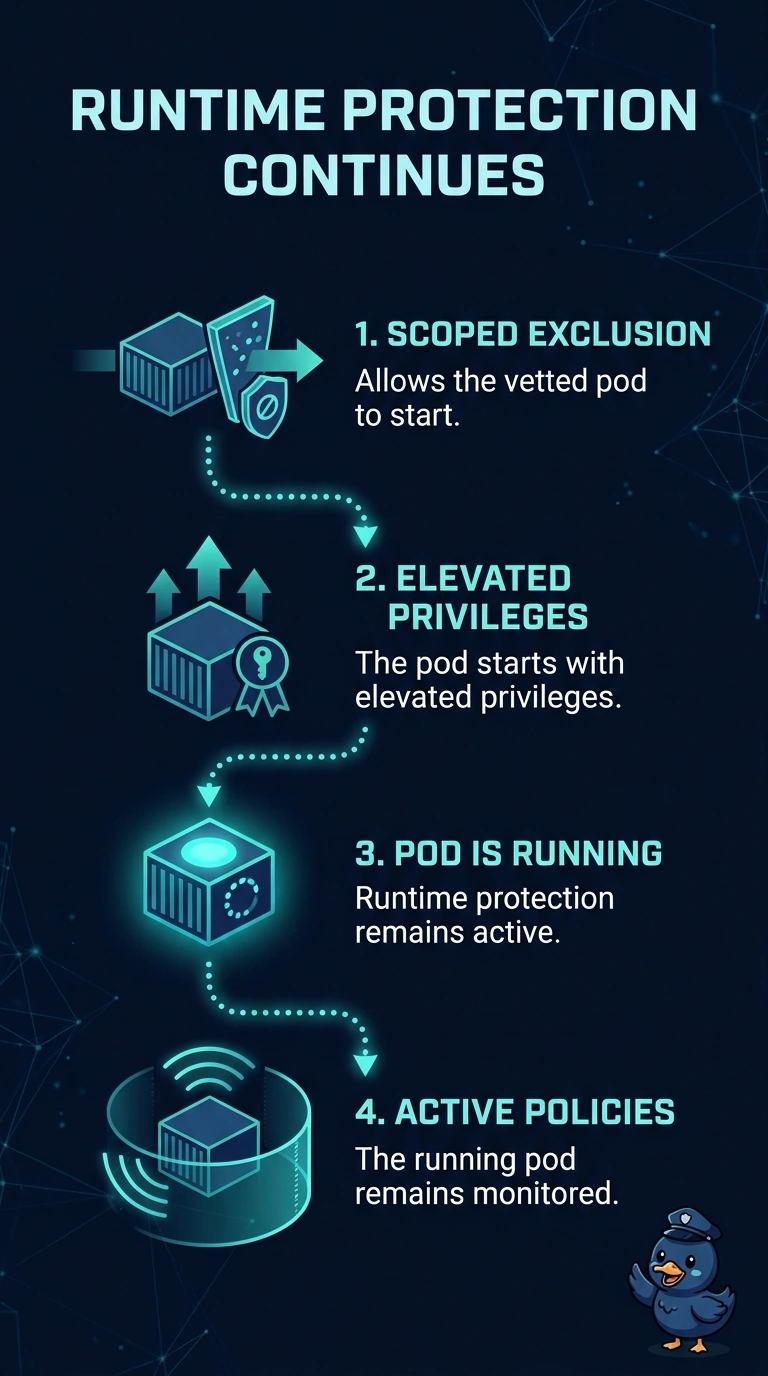
Short Explanation
An admission exclusion is like a hall pass to enter the building, not immunity from security cameras inside. Even with a pod-creation exception, your running pod remains monitored by active runtime protection policies. The trap is assuming an admission bypass turns off behavioral detection once the container is live.
Full Explanation
Once scheduled, The running pod remains monitored by active runtime protection policies. Kubernetes admission policies and runtime protection policies operate at different lifecycle stages: admission control evaluates deployment requests before pods are created, whereas the node-level Falcon sensor enforces runtime protection policies on executing processes and network connections inside running containers. Claiming that The admission exclusion automatically disables the Falcon sensor on that worker node is incorrect because node-level sensors continue monitoring all pods on the host independently of admission exceptions. Claiming that The pod is permanently exempted from all pre-runtime image vulnerability scans confuses Kubernetes admission exclusions with registry or CI/CD image assessment policy exclusions. Claiming that The admission controller terminates the pod immediately after it finishes starting is false because admission control only evaluates API requests at submission time and does not terminate already-running pods. As a caveat, if the vetted diagnostic tool executes benign commands that trigger a runtime rule, any needed runtime exclusion must be scoped separately. As an operational check, verify that runtime telemetry for the excluded pod still appears in Falcon Cloud Security after deployment.
Prefer to study offline? Printable PDF study book + test engine ($7.50, unofficial). These questions stay free here.