
A manufacturing security team is introducing a new Falcon Cloud Security runtime protection policy for its production Kubernetes clusters and wants to avoid disrupting legitimate application processes during rollout. Which deployment practice should the team follow?
Select an answer to reveal the explanation.
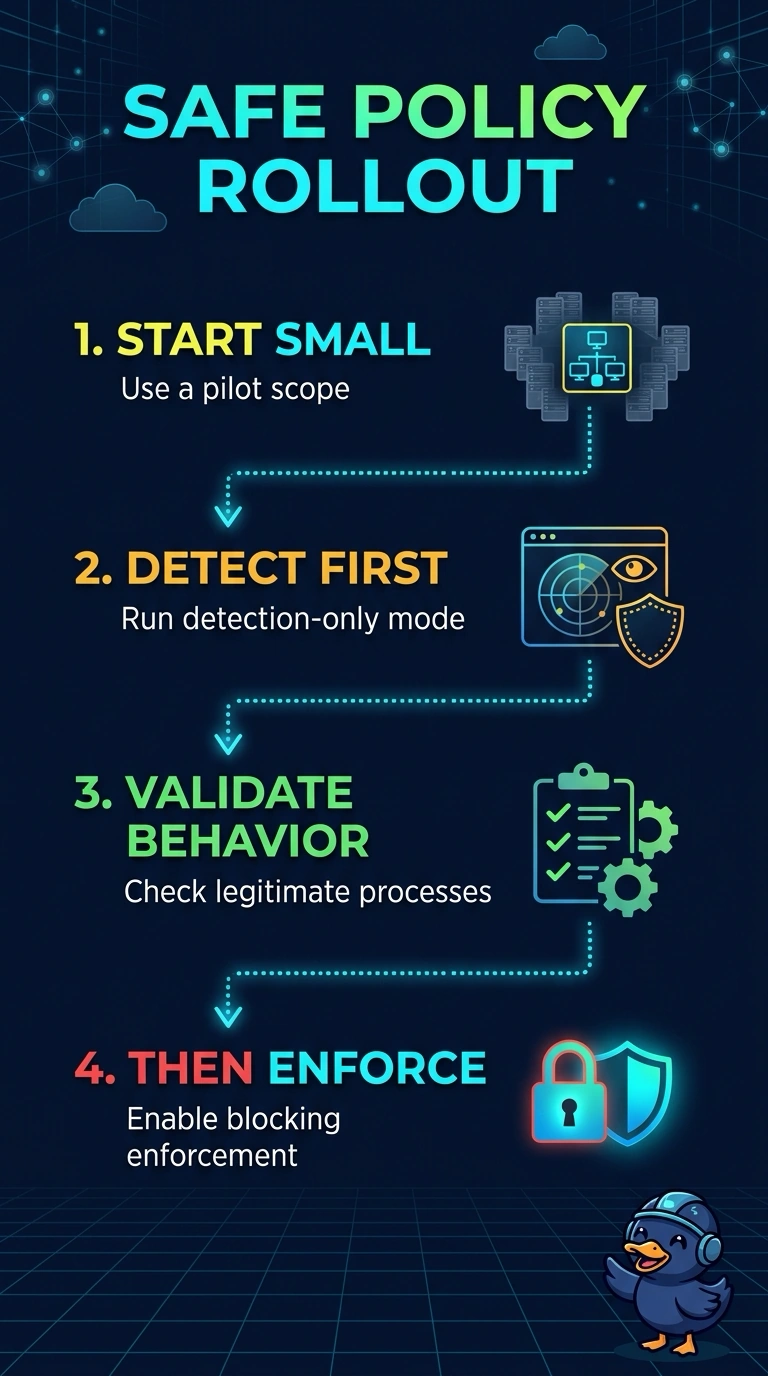
Short Explanation
Rolling out a strict runtime policy straight to blocking is like changing locks on a factory floor without testing the keys first. When you validate the policy in detection-only mode on a pilot scope, you catch legitimate tools that need tuning before enforcing blocks. The trap is thinking immediate blocking is safer, which often triggers avoidable outages.
Full Explanation
To roll out runtime controls safely, teams should Validate the policy in detection-only mode on a pilot scope before enabling blocking enforcement. Detection-only mode logs matching behavioral events without terminating processes, allowing engineers to verify baseline application behavior and create scoped exclusions for legitimate administrative utilities before switching to prevention. Choosing to Enable full process blocking immediately across all production namespaces risks interrupting critical business workloads if unexpected but benign scripts match a rule. Choosing to Disable runtime policies until every container image has zero known CVEs leaves active workloads unprotected against post-deployment attacks, because even fully patched containers can be exploited through application flaws. Choosing to Apply the new runtime policy only to offline container registries fails because runtime protection governs live executing workloads rather than static stored images. As a caveat, detection-only mode still requires active alert review so real threats are not ignored during the trial window. As an operational check, review pilot detection logs after a representative workload cycle and confirm zero false-positive triggers on core services before enabling blocking.
Prefer to study offline? Printable PDF study book + test engine ($7.50, unofficial). These questions stay free here.