
A software DevSecOps team creates a new image assessment policy to block builds with critical vulnerabilities, yet scans of a target container repository still evaluate under an older permissive rule set. What should the team review first?
Select an answer to reveal the explanation.
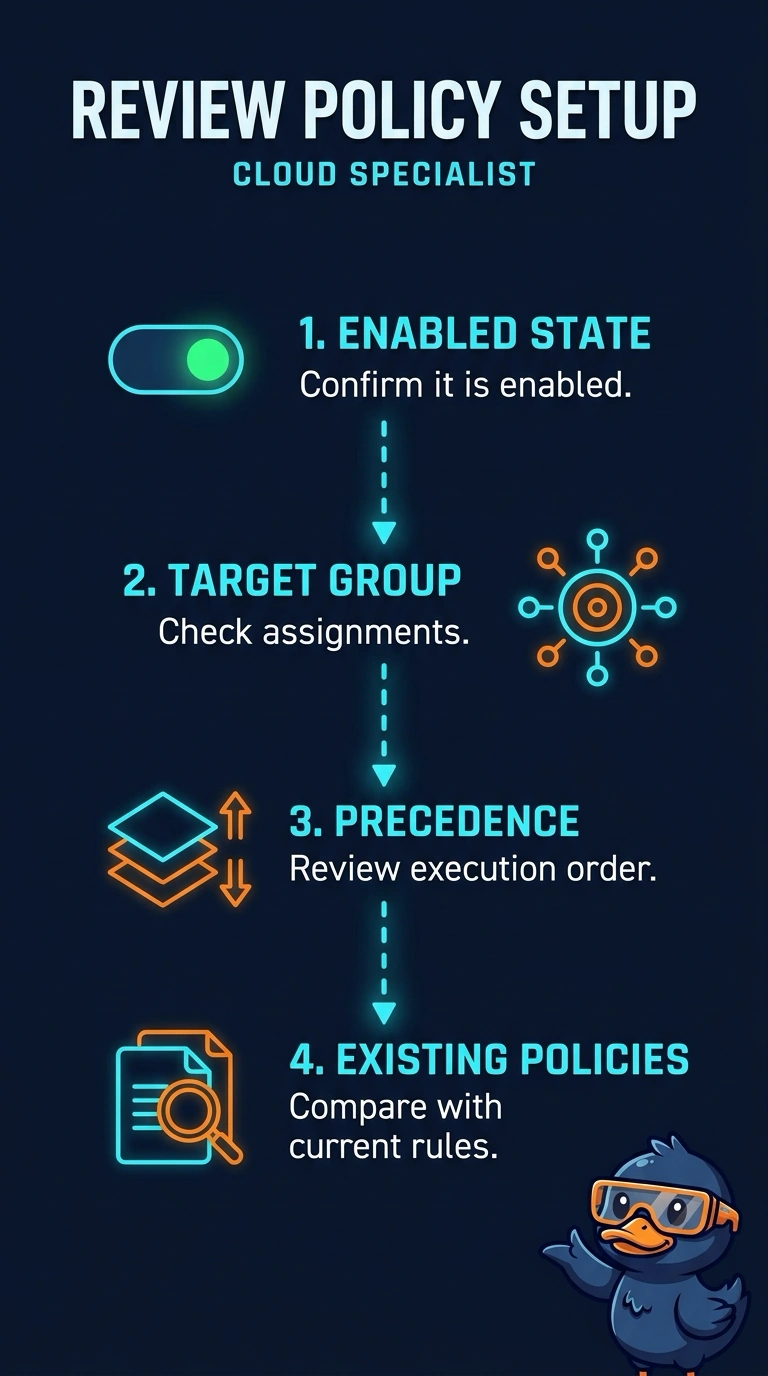
Short Explanation
Writing a strict new policy without checking its assignment and order is like writing a new traffic rule and leaving it in a drawer behind the old sign. The trap is troubleshooting runtime sensors or posture roles when your image policy is simply inactive, unassigned, or outranked.
Full Explanation
The policy's enabled state, target group assignment, and precedence relative to existing policies determine which image assessment rules actually govern a given repository scan. In Falcon Cloud Security, creating a policy does not automatically enforce it on every workload if the policy is disabled, omitted from the relevant policy group, or superseded by another matching policy. Checking Whether the Kubernetes nodes have runtime Falcon sensors installed addresses post-deployment host and container monitoring rather than pre-runtime image assessment policy evaluation. Checking Whether the cloud organization's weekly compliance report is scheduled only affects periodic report delivery and has no bearing on how image scans evaluate rules. Reviewing The IAM trust policy used for cloud storage posture assessment governs cloud control-plane account onboarding rather than container image policy matching. As a caveat, avoid assuming precedence order from a field name alone without checking how your environment's active policies are ordered and scoped. For an operational check, inspect the image assessment policy list, confirm the new policy is enabled and assigned to the target repository group, and verify its precedence.
Prefer to study offline? Printable PDF study book + test engine ($7.50, unofficial). These questions stay free here.