
A school district platform team wants to ensure its Kubernetes clusters only launch container pods sourced from the district's approved private container registry, rejecting pods referencing external public registries. Which policy type enforces this requirement at deployment time?
Select an answer to reveal the explanation.
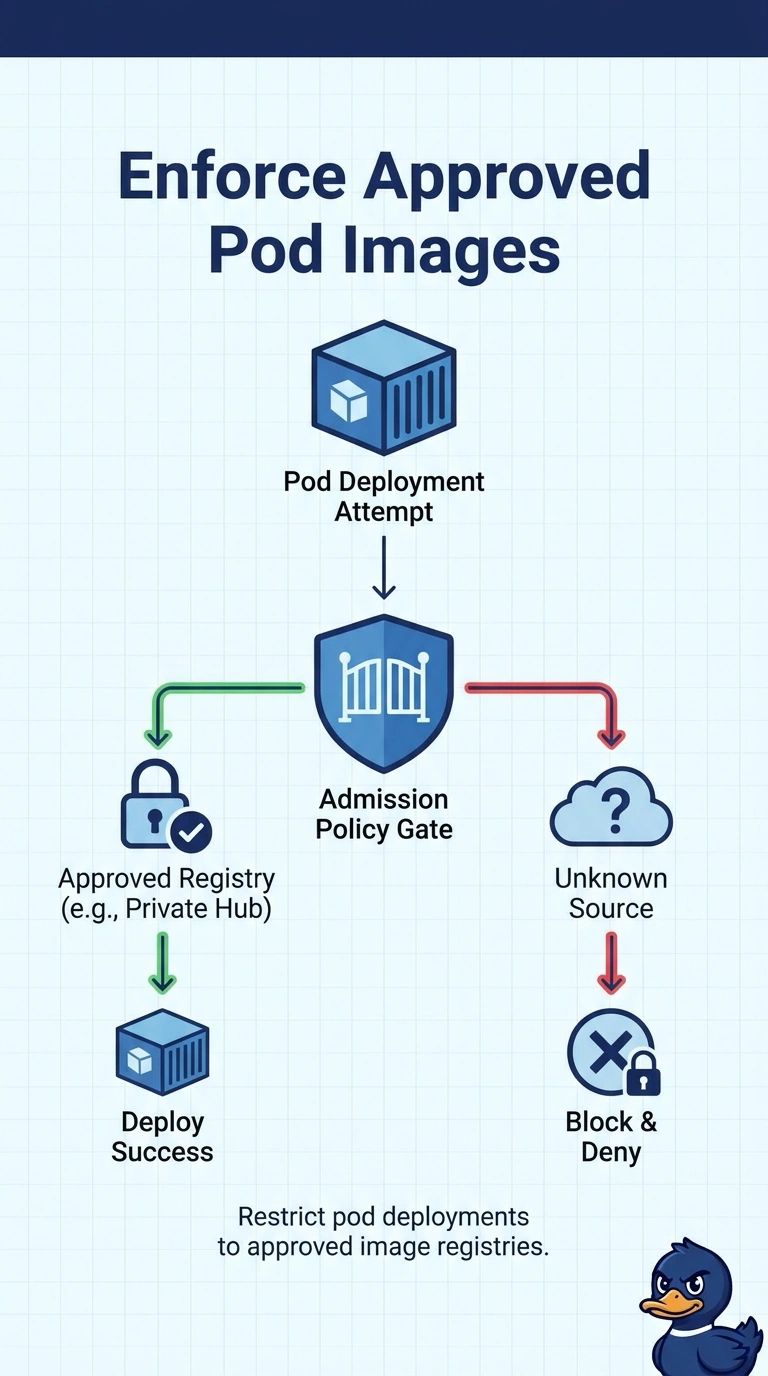
Short Explanation
Think of an admission policy as the security guard at the cluster gate checking where every pod's image came from before it steps inside. The trap is relying on posture or runtime rules when you need to block unapproved registries at scheduling time.
Full Explanation
Choosing An admission policy restricting pod deployments to approved image registries places enforcement directly at the Kubernetes admission gate so any pod specification referencing an external public registry is rejected before scheduling. Admission policies inspect deployment requests in real time, making them the right control for enforcing image provenance and approved registry sources. Choosing A cloud posture policy evaluating storage encryption across cloud accounts audits cloud control-plane resources rather than gating Kubernetes pod creation requests. Choosing A runtime protection policy terminating unexpected outbound network connections acts only after a container is already running and generating network activity. Choosing A scheduled compliance benchmark policy auditing identity role entitlements evaluates cloud account permissions against frameworks rather than blocking unapproved container registries. As a caveat, admission enforcement only evaluates new deployment requests, so you should still audit already-running pods for unapproved registries. For an operational check, attempt to deploy a test pod referencing a public registry image and verify the admission controller rejects the request.
Prefer to study offline? Printable PDF study book + test engine ($7.50, unofficial). These questions stay free here.