
A hospital platform team enables a runtime protection policy on its Kubernetes cluster, and a legitimate backup agent container repeatedly triggers alerts when executing its scheduled snapshot utility. How should the team eliminate the false positives without leaving the cluster unprotected?
Select an answer to reveal the explanation.
Short Explanation
When a trusted maintenance tool sets off your motion sensor, you adjust the sensor's blind spot for that tool rather than unplugging the whole alarm. You should scope an exclusion to the verified backup process, because the trap is turning off runtime protection for everyone.
Full Explanation
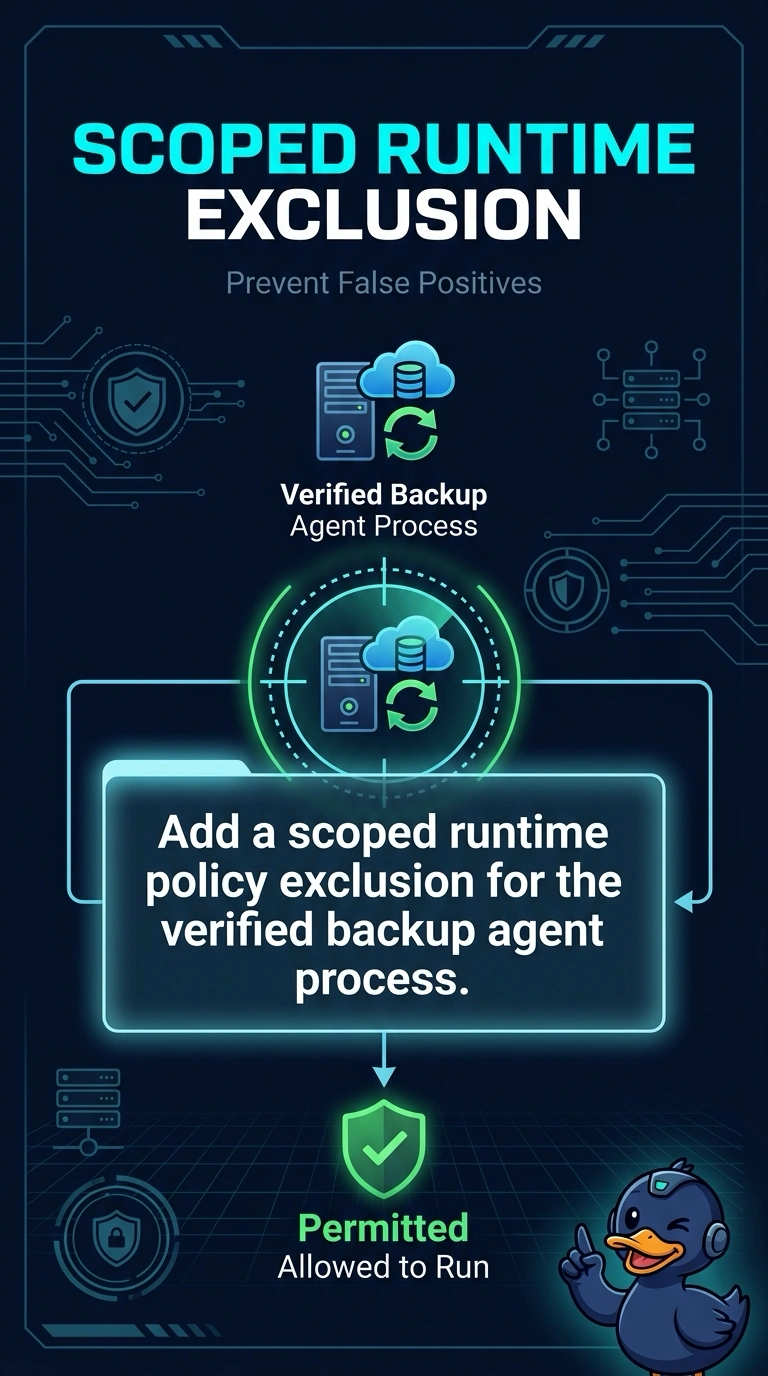
Choosing to Add a scoped runtime policy exclusion for the verified backup agent process suppresses known benign alerts for that specific workload while keeping active runtime enforcement intact across the rest of the cluster. Runtime protection policies evaluate live process and container behavior, so narrowing the exception preserves detection for unexpected shells or malicious binaries. Selecting Disable the entire runtime protection policy across all production Kubernetes namespaces fails because it removes real-time attack detection for every clinical workload in the cluster. Choosing to Replace the runtime protection policy with a scheduled posture compliance scan fails because agentless posture checks audit cloud control-plane settings rather than in-container process execution. Deciding to Move the backup agent container image to an unmonitored public container registry introduces supply-chain risk and does not stop the runtime sensor from observing the container's live processes. As a caveat, keep the exclusion as narrow as possible so an attacker cannot abuse a broad exception. Operationally, confirm that scheduled backup runs no longer generate false-positive alerts while unrelated test detections still trigger.
Prefer to study offline? Printable PDF study book + test engine ($7.50, unofficial). These questions stay free here.