
A software team wants to automatically block any container image containing unpatched critical vulnerabilities from being deployed into its production Kubernetes cluster. Which policy type should the team configure?
Select an answer to reveal the explanation.
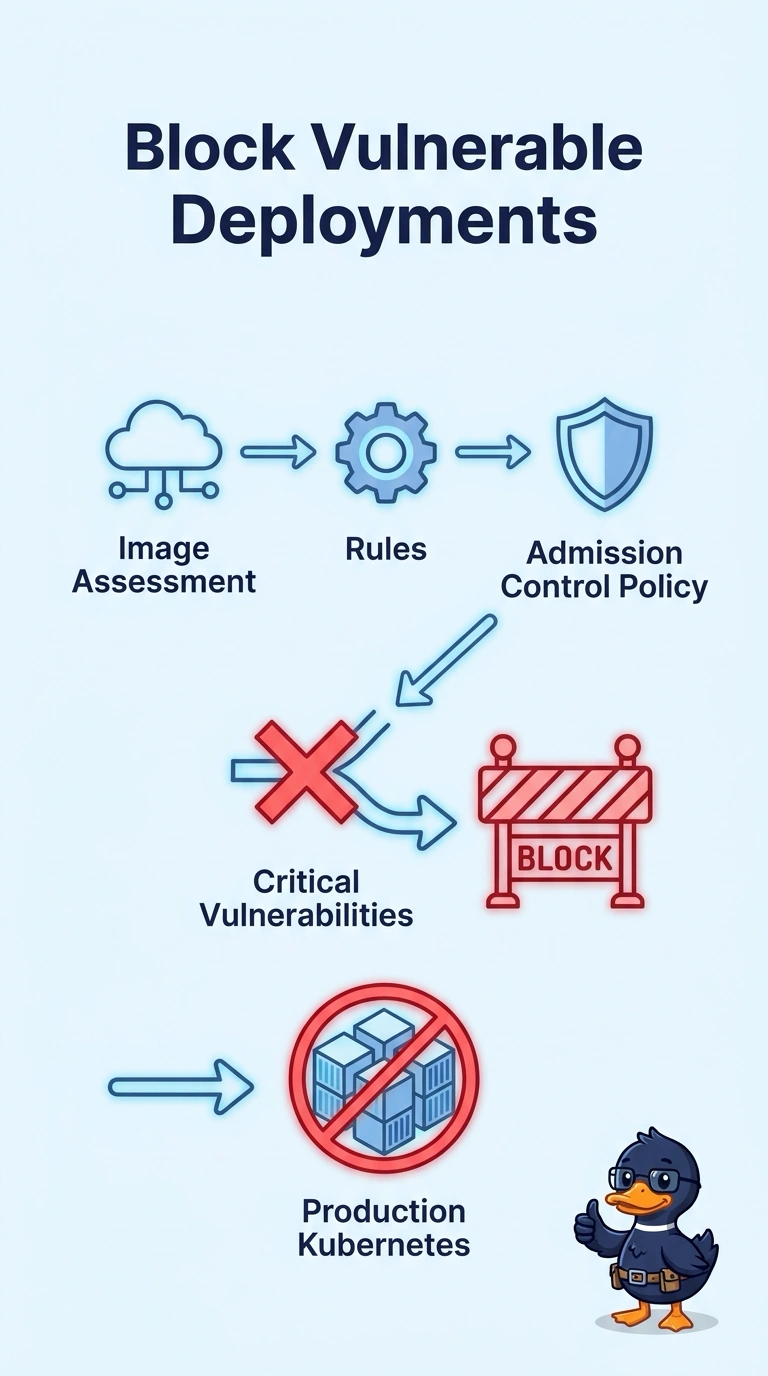
Short Explanation
When you want to stop vulnerable images before they ever hit production, you need a gatekeeper policy rather than a passive scanner. Don't fall for general posture or reporting rules—only admission policies can block pod creation.
Full Explanation
An admission control policy tied to image assessment rules evaluates container image scan results—such as critical vulnerability findings—at the moment a deployment request reaches the Kubernetes API server. When a policy rule is set to block mode, any pod referencing a non-compliant image is rejected before it can start in the production cluster. A cloud posture policy for storage encryption evaluates cloud infrastructure configurations like object buckets and cannot intercept Kubernetes pod scheduling. A scheduled reporting policy for audit exports delivers periodic summaries of findings to stakeholders without enforcing deployment blocks. A cloud account exclusion policy for sandbox tags omits designated accounts or resources from evaluation rather than preventing vulnerable images from running in production. As a scope caveat, blocking deployments via admission control relies on up-to-date image assessment results from connected registries or CI pipelines. Verify effective KAC host-group assignment, namespace/label rule groups, enabled image assessment, policy prevention and unassessed/error handling. A matching assessed-image block rule and unknown-image behavior must both be deliberately configured.
Prefer to study offline? Printable PDF study book + test engine ($7.50, unofficial). These questions stay free here.