
A manufacturing DevSecOps team wants to define a rule that flags container images containing critical OS package vulnerabilities and embedded secrets during registry and pipeline scans. Which Falcon Cloud Security policy type should the team configure?
Select an answer to reveal the explanation.
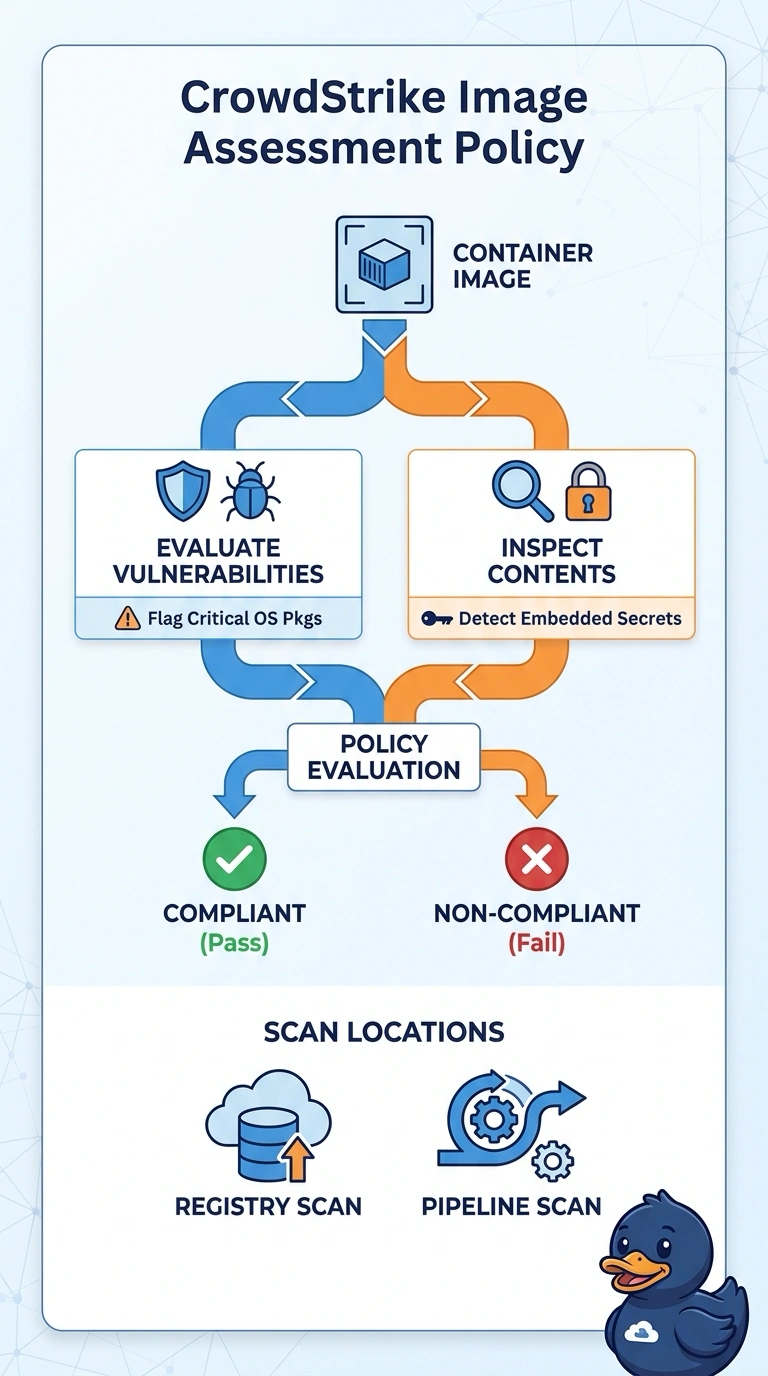
Short Explanation
You’ll get the right results when your rule targets the artifact you’re inspecting. Cloud posture policies check infrastructure settings, while container images need image assessment rules for packages and layers.
Full Explanation
To evaluate software artifacts before execution, configure an image assessment policy that sets pass or alert criteria for CVEs, malware, secrets, and disallowed packages inside container images. It applies during CI/CD pipeline checks and container registry scans, helping you enforce consistent image hygiene before deployment. A cloud security posture policy evaluates cloud service API configurations, such as IAM, storage, and networking, rather than container image layers. A runtime behavioral policy monitors live process execution on Linux hosts, so it governs active workloads after deployment instead of inspecting static images in registries. A cloud account registration policy defines cross-account IAM trust roles and supports cloud account onboarding; it does not evaluate container packages. One caveat is that image assessment policies flag non-compliant images during pre-runtime scans, while monitoring live behavior is the role of a runtime behavioral policy. As a practical check, attach the image assessment policy to the target image group or registry, then verify that a test image with known findings triggers the expected evaluation result.
Prefer to study offline? Printable PDF study book + test engine ($7.50, unofficial). These questions stay free here.