
A hospital research team needs a temporary exception for one legacy cloud resource flagged by a posture rule, while keeping the rule active for all other production accounts. What is the safest approach?
Select an answer to reveal the explanation.
Short Explanation
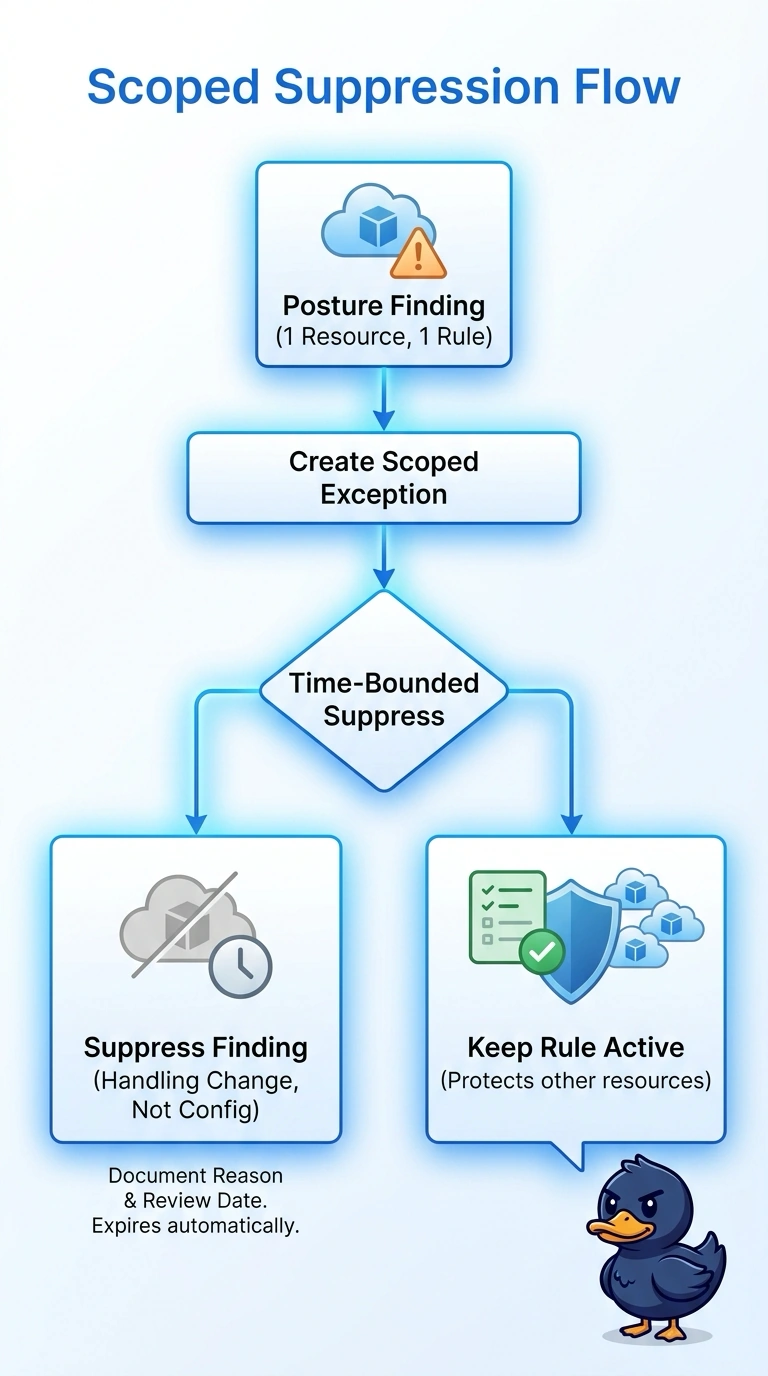
Turning off a security rule for the whole company just to quiet one legacy system is like unplugging the fire alarm for the entire building. You want a surgical, time-bounded suppression for that resource and rule so you change finding handling while the rule still protects everything else, with a documented reason and expiry.
Full Explanation
To accommodate a legitimate legacy exception without weakening overall security, the safest method is to Create a time-bounded posture finding exception/suppression for that specific resource and rule. A documented scoped suppression/override changes finding handling, not the provider configuration or necessarily inventory/scan execution; retain the rule elsewhere and record reason/expiry. Scoping the suppression by resource identifier and rule ensures the posture rule continues evaluating and alerting on all other production workloads. Choosing to Disable the posture rule across the entire tenant creates a blind spot across every cloud account and leaves production exposed to the same misconfiguration. Choosing to Unregister the production cloud account from scanning confuses scan omission with finding suppression and removes all posture visibility for the entire account rather than isolating a single finding. Choosing to Remove the Falcon runtime sensors from all worker nodes affects workload runtime protection and does nothing to address a cloud posture rule exception. As a caveat, suppressions need justification and expiry so temporary exceptions do not become permanent gaps. For an operational check, verify in the suppression list that the exception targets only the intended resource and rule and confirm the rule still evaluates normally elsewhere.
Prefer to study offline? Printable PDF study book + test engine ($7.50, unofficial). These questions stay free here.