
During a SOC shift at a retail enterprise, an analyst reviews a Falcon Cloud Security control-plane detection showing that an existing IAM user created new programmatic access keys from an unfamiliar external IP address. What does this finding primarily indicate?
Select an answer to reveal the explanation.
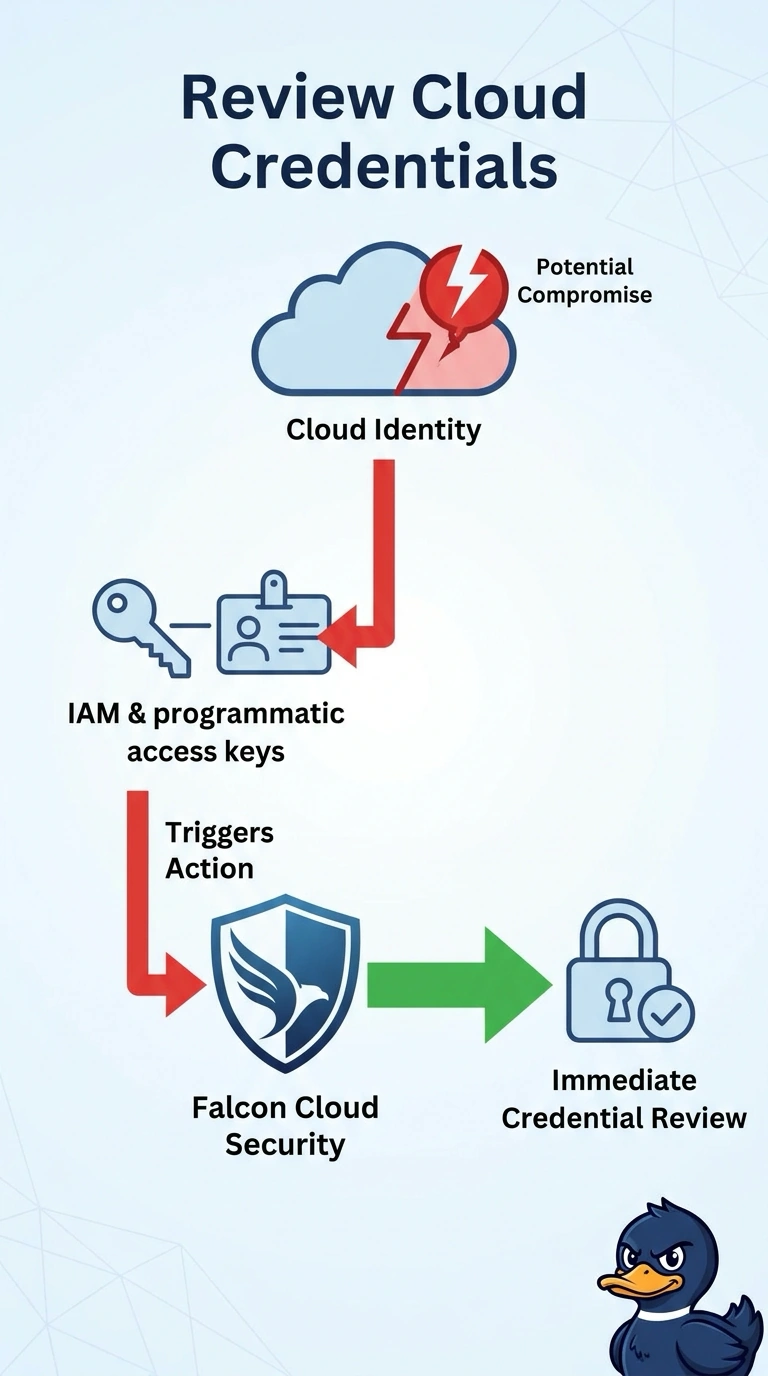
Short Explanation
When an account suddenly mints new access keys from an unfamiliar IP, your alarm bells should ring immediately! The trap is brushing off anomalous control-plane behavior as routine rotation or a static posture rule instead of investigating identity compromise.
Full Explanation
Potential cloud identity compromise requiring immediate credential review is the primary takeaway when an existing IAM user creates new programmatic access keys from an unfamiliar external IP address. Falcon Cloud Security analyzes cloud control-plane audit events to surface anomalous identity behavior that signals an attacker attempting to establish persistence. A static cloud posture misconfiguration in an unattached storage bucket policy describes a configuration risk rather than an active, suspicious API action performed by a user identity. An expected automated key rotation performed by the cloud provider control plane would originate from recognized automation principals and expected schedules rather than an unfamiliar external IP on a standard user account. A compliance benchmark failure caused by an untagged development resource group reflects governance hygiene rather than a real-time identity threat. Caveat: correlate the key-creation event with surrounding API calls to see whether the actor also enumerated roles or modified trust policies. Operational check: verify the caller identity, source IP, and recent activity in cloud audit logs, and revoke or rotate the affected credentials if unauthorized.
Prefer to study offline? Printable PDF study book + test engine ($7.50, unofficial). These questions stay free here.