
A software enterprise uses federated single sign-on for its cloud accounts, and Falcon Cloud Security flags a high-risk identity finding on an administrative role whose federated trust policy omits restrictive subject or group claims. What risk does this misconfiguration create?
Select an answer to reveal the explanation.
Short Explanation
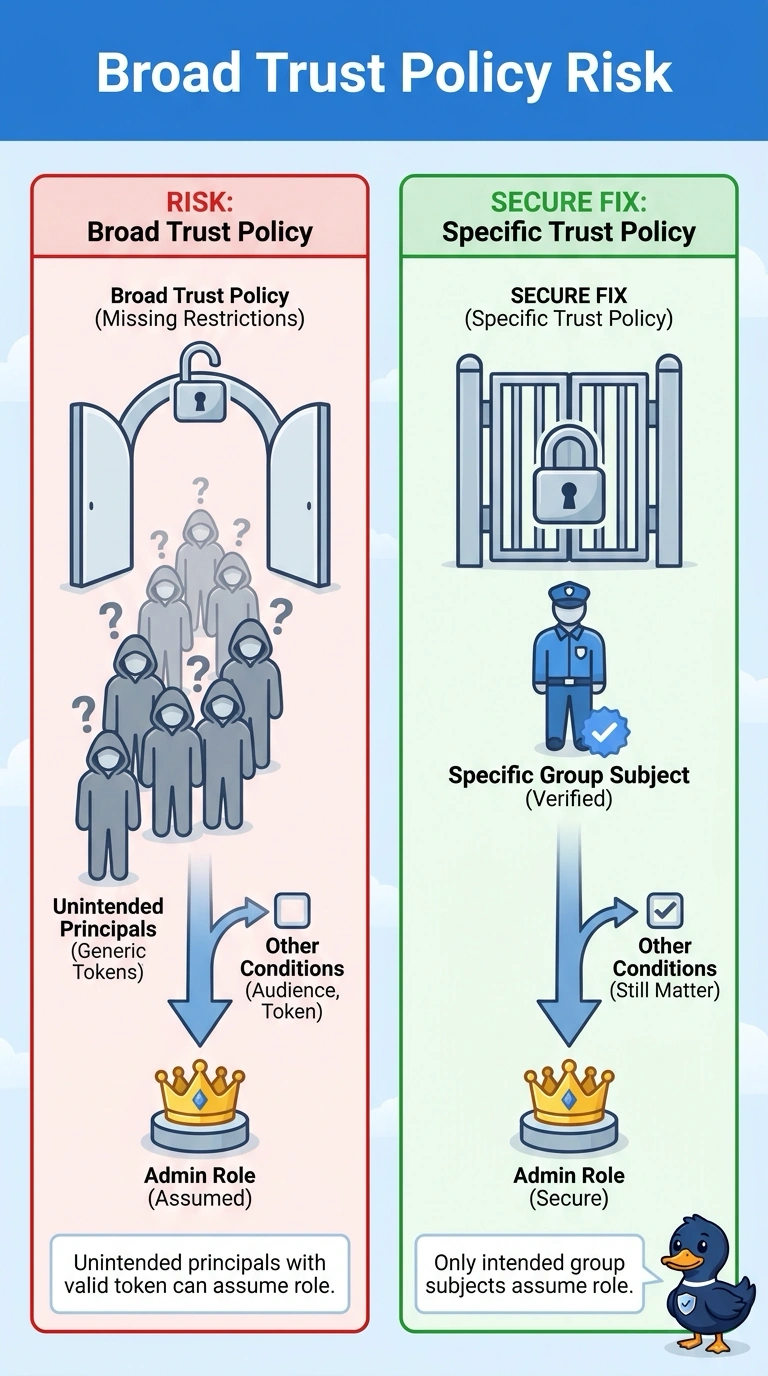
You can think of a broad trust policy like handing a building master key more widely than you intended. You still need valid assignment, audience and token conditions to get in, so tightening subject or group claims with your identity team focuses access without assuming everyone gets through.
Full Explanation
Federated role trust policies must limit which principals from an external identity provider can assume the role. Missing subject/group restrictions can broaden eligibility, but provider app assignment, audience, role claims, token validity and other conditions still matter; omission of one condition does not guarantee access for every directory user. Therefore unintended principals able to obtain a valid token/assertion satisfying the remaining trust and provider conditions may assume the administrative role, which is why this is flagged as high-risk for privileged roles. The idea that federated users will be unable to obtain temporary session tokens when signing in from corporate devices describes the opposite failure mode of overly narrow or broken conditions, not overly broad trust. The idea that cloud posture scans will stop inventorying storage buckets and virtual machines in that cloud account confuses user SSO roles with the separate onboarding role Falcon Cloud Security uses for API inventory. The idea that the administrative role's permissions automatically downgrade to read-only access across all cloud services misunderstands trust policies, which control who can assume the role without reducing attached permissions. Tighten conditions in coordination with identity administrators to preserve legitimate admin access, then verify specific group or subject claims in CIEM findings.
Prefer to study offline? Printable PDF study book + test engine ($7.50, unofficial). These questions stay free here.