
During a hospital SOC investigation, an analyst confirms that an attacker achieved remote code execution inside a Kubernetes pod that has no host-path mounts or privileged flags. Which identity-analysis step helps determine whether the attacker can access cloud storage buckets from that pod?
Select an answer to reveal the explanation.
Short Explanation
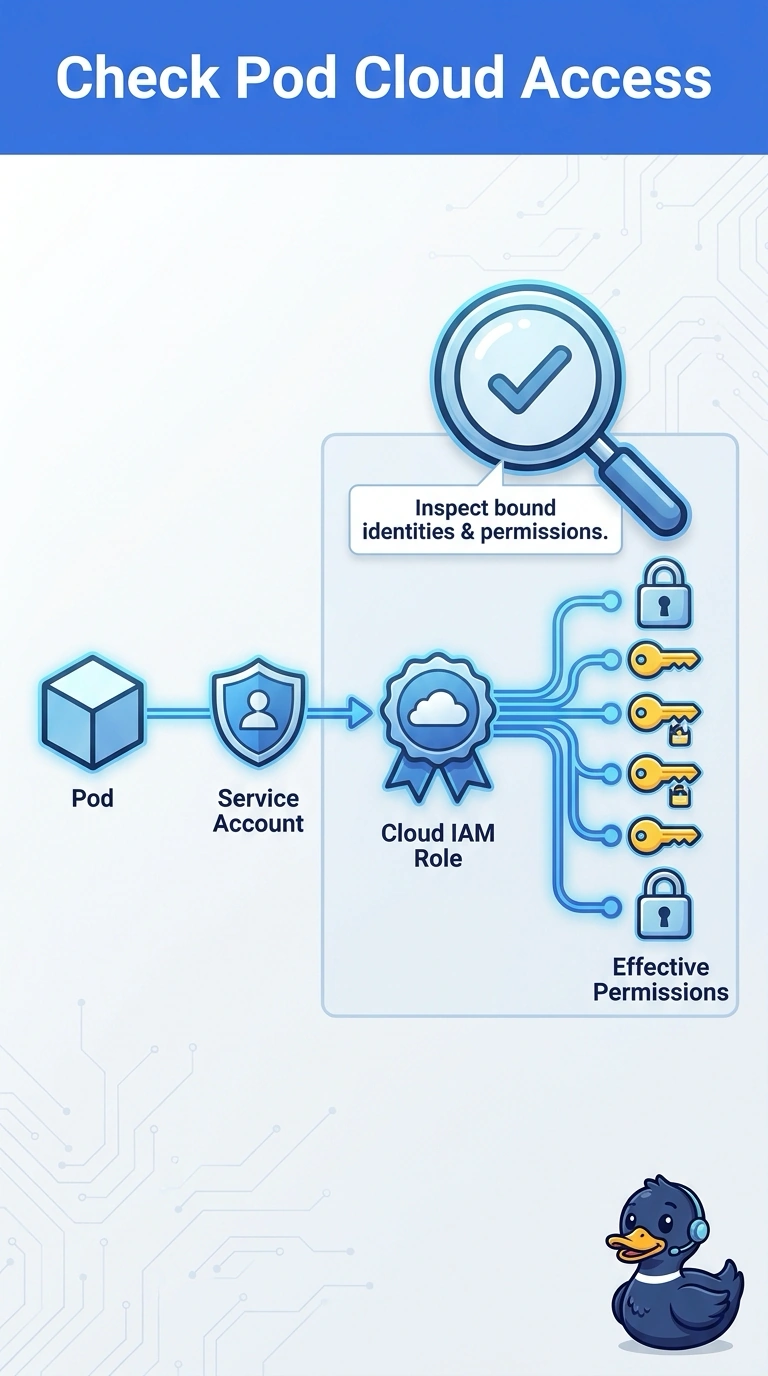
Even a locked-down pod can give an attacker access to cloud storage if its service account has overly broad permissions. To assess that risk, inspect the IAM role and effective permissions bound to the pod’s service account.
Full Explanation
Inspecting the cloud IAM role and effective permissions bound to the pod’s service account shows which cloud APIs and storage buckets a compromised workload can access using its federated workload identity. Reviewing the container image’s pre-runtime operating system package and library vulnerability report may help explain how code execution occurred, but it does not reveal the running pod’s cloud storage permissions. Checking whether the Kubernetes cluster uses a private container registry for base images can inform image provenance, but registry configuration does not determine runtime cloud IAM access. Verifying whether the pod’s root filesystem is configured as read-only can show whether local disk writes are restricted, but it does not prevent outbound cloud API calls made with valid identity tokens. A caveat is that a pod’s direct role may appear narrow while inherited permissions or assumable roles broaden access to storage. As a practical check, review effective-permission findings for the bound cloud role and audit recent cloud storage API activity attributed to that workload identity.
Prefer to study offline? Printable PDF study book + test engine ($7.50, unofficial). These questions stay free here.