
A school district compliance analyst notices that the organization's CIS cloud benchmark score dropped sharply overnight, even though no posture policies or rules were modified. What is the most likely operational cause to investigate first?
Select an answer to reveal the explanation.
Short Explanation
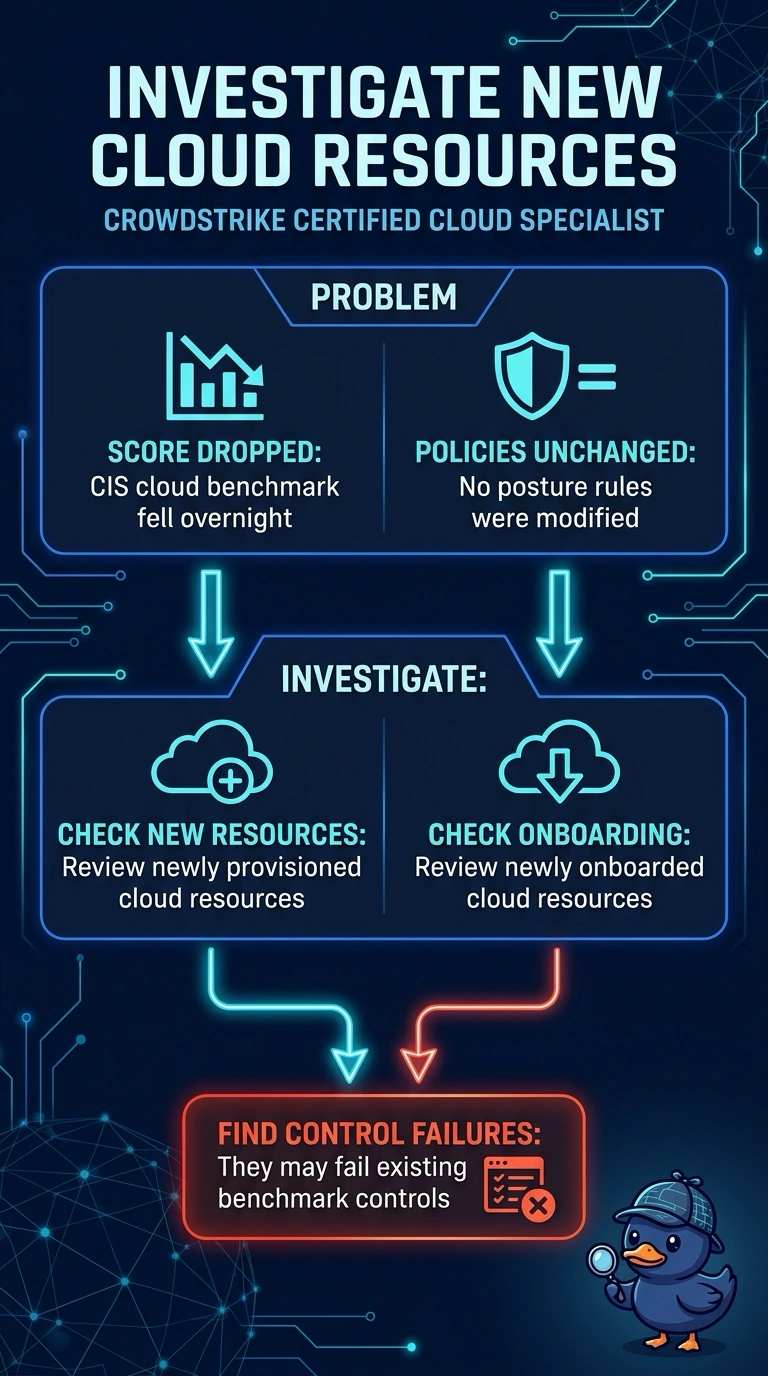
A sudden drop in your benchmark score does not always mean someone changed a security rule. Newly provisioned resources or a newly onboarded cloud account may fail existing controls and lower your overall score; image scans and runtime sensors do not calculate cloud control-plane benchmark scores.
Full Explanation
Newly provisioned or newly onboarded cloud resources failing existing benchmark controls is the most likely cause to investigate first. Compliance benchmark scores reflect the pass-or-fail state of evaluated cloud resources against active rules, so adding non-compliant infrastructure can lower the score even when no policies or rules change. An expired private container registry credential blocking pre-runtime image scans affects container image vulnerability assessments, not cloud control-plane CSPM benchmark calculations. A Kubernetes DaemonSet image pull error preventing runtime sensor startup on worker nodes affects runtime workload telemetry on cluster nodes, not control-plane posture compliance scoring. A scheduled compliance report email failing to reach external auditors on Monday morning is a notification delivery issue and does not alter underlying posture evaluation results. One caveat: a cloud provider outage or revoked read permissions could also stall inventory updates, though newly deployed non-compliant resources are a typical cause of a sudden score drop. For a practical check, sort benchmark findings by creation timestamp and account to identify newly discovered resources that triggered failures.
Prefer to study offline? Printable PDF study book + test engine ($7.50, unofficial). These questions stay free here.