
A hospital SOC analyst receives a cloud control-plane alert showing new compute instances launched in an unused geographic region. Which combination of evidence should the analyst correlate first to distinguish credential compromise from authorized automation?
Select an answer to reveal the explanation.
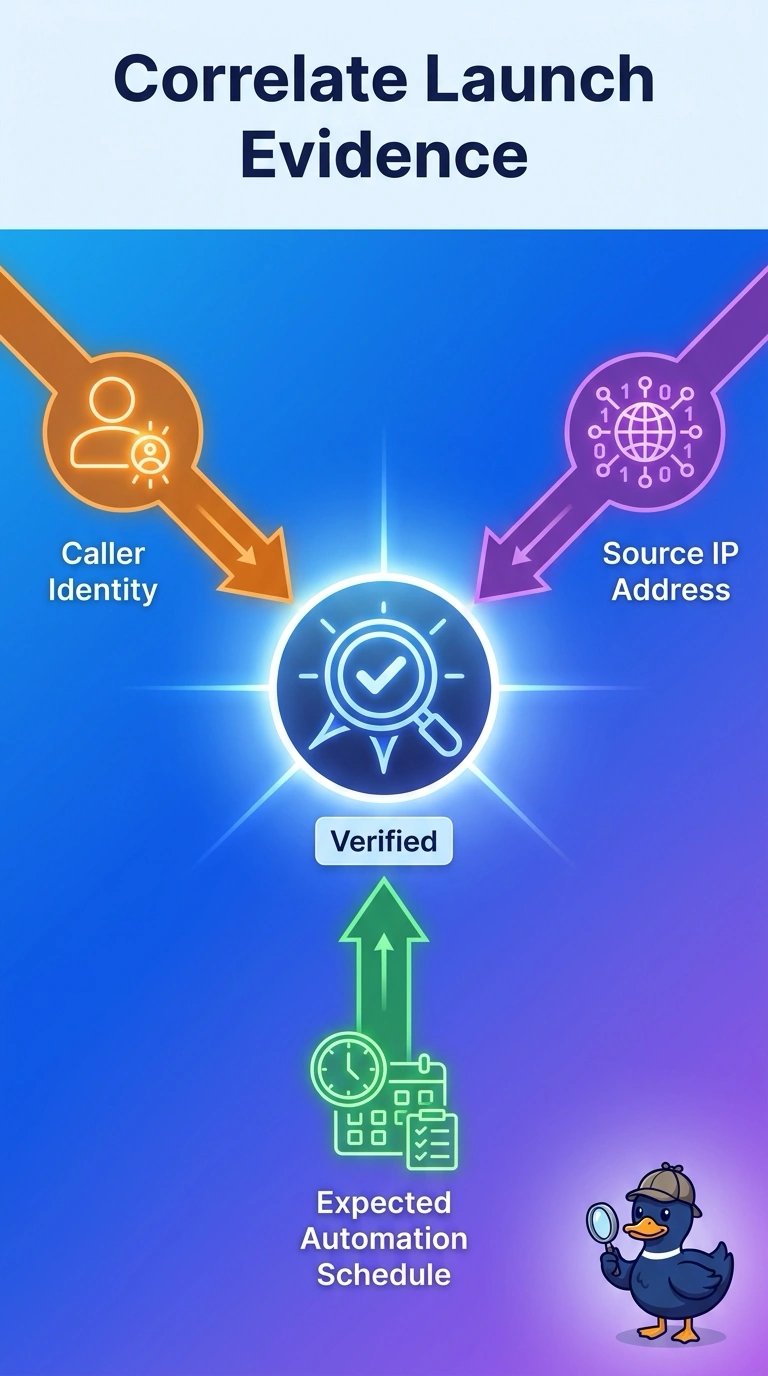
Short Explanation
An instance launch in an unused region might be a rogue automation script—or an attacker spinning up crypto miners with stolen keys. Before you escalate, check who made the API call, where it came from, and whether it matches an approved schedule.
Full Explanation
Control-plane threat analysis requires validating whether an unusual cloud API action aligns with known administrative patterns. Correlating "The caller identity, source IP address, and expected automation schedule" lets the analyst quickly determine whether a recognized CI/CD service account ran from an approved corporate range during a planned change window, or whether a user or key operated from an unfamiliar external IP in an unapproved region. "The container image base-OS package count and the weekly compliance report format" reflect static image inventory and reporting preferences rather than live API provenance. "The Kubernetes DaemonSet pod count and the private registry credential expiry" relate to cluster sensor deployment and image scanning, not control-plane instance-launch attribution. "The storage bucket tagging standard and the admission policy alert-mode setting" govern resource governance and pod scheduling rather than cloud API caller verification. Caveat: attackers often use stolen automation credentials or launch resources in unused regions specifically to evade casual notice. Operational check: inspect the cloud audit-log event attributes for caller ARN or principal, source IP, user agent, and timestamp.
Prefer to study offline? Printable PDF study book + test engine ($7.50, unofficial). These questions stay free here.