
During an audit preparation cycle, a SOC analyst needs to evaluate the organization's cloud infrastructure against standardized security frameworks such as CIS or NIST rather than reviewing individual raw alerts. Which Falcon Cloud Security capability supports this?
Select an answer to reveal the explanation.
Short Explanation
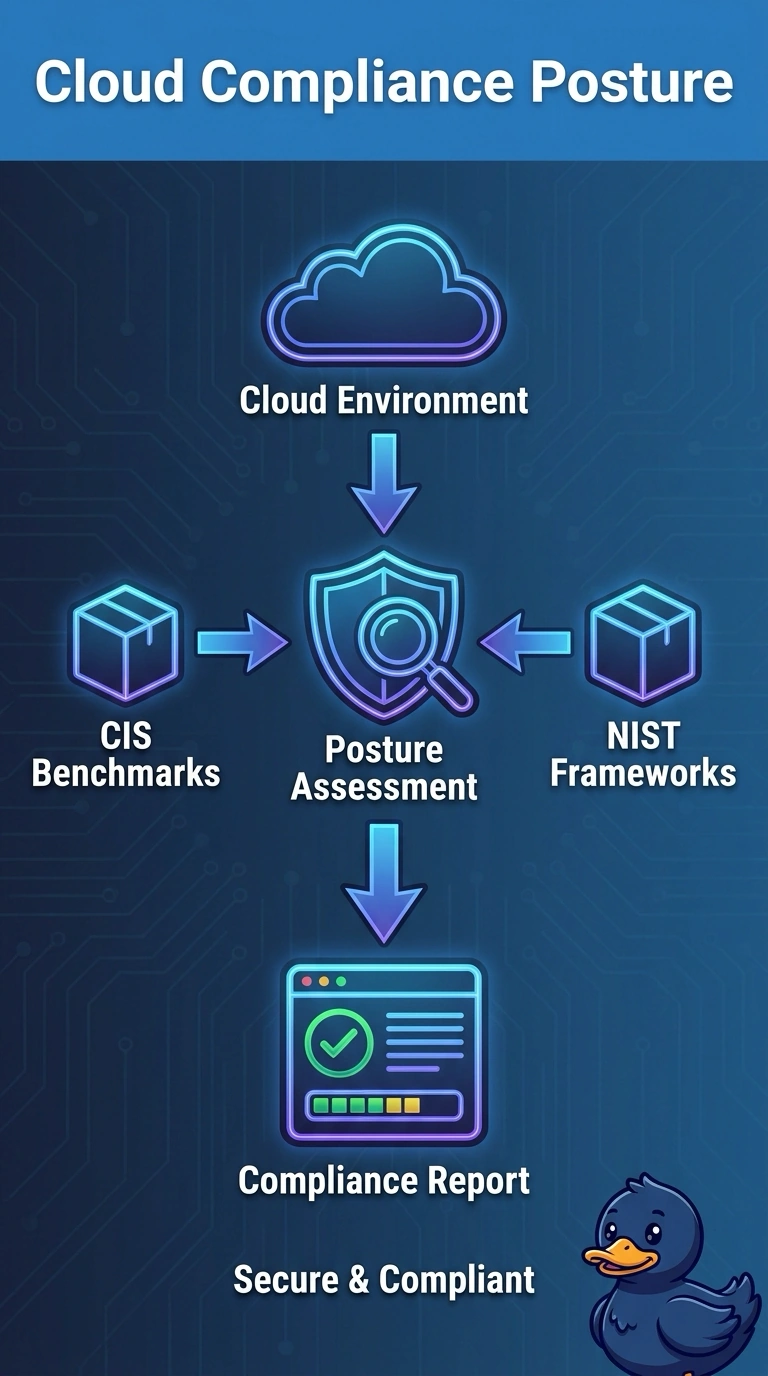
Auditors rarely want to wade through thousands of raw alerts when they ask how your environment stacks up against CIS or NIST. The trap is picking a runtime or registry action that alters workloads instead of mapping posture to a framework. Compliance benchmark posture assessments give you the framework-level view you need for audit readiness.
Full Explanation
Compliance benchmark posture assessments map cloud control-plane misconfiguration findings directly to recognized industry standards such as CIS and NIST, letting analysts track overall framework pass rates and pinpoint specific non-compliant controls. Container drift detects supported new-binary execution under the applicable runtime rule; exact interpreter/script handling is product-rule-specific. This enforces runtime integrity rather than scoring cloud infrastructure against compliance frameworks. Automated registry image pruning removes stale or unused container images from repositories to reduce storage or exposure, but it does not evaluate cloud accounts against audit benchmarks. Outbound network socket filtering restricts network connections from workloads at runtime and provides no framework-aligned posture scoring across cloud resources. As a scope caveat, benchmark scores reflect only the cloud accounts and resource types currently registered and within scan scope, so excluded accounts will not appear in compliance totals. As an operational check, open the compliance dashboard, filter by the target framework and cloud group, and verify that all in-scope production accounts show recent assessment timestamps.
Prefer to study offline? Printable PDF study book + test engine ($7.50, unofficial). These questions stay free here.