
A school district privacy officer needs to locate cloud storage buckets and managed databases that contain sensitive student records and verify whether any of them are publicly exposed. Which Falcon Cloud Security capability directly addresses this need?
Select an answer to reveal the explanation.
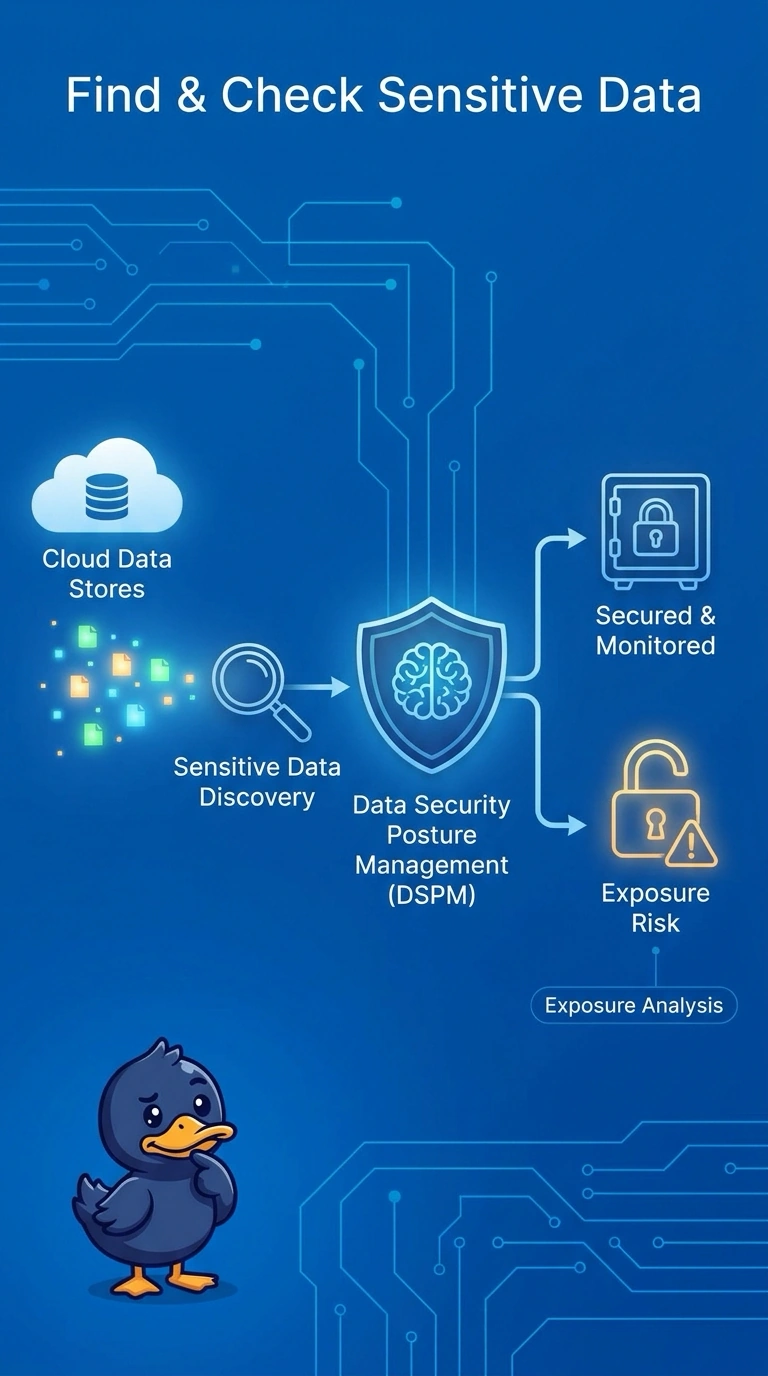
Short Explanation
You can think of it like checking which vaults hold gold before looking for unlocked doors. Data Security Posture Management maps where sensitive records live and reveals exposure; container and runtime tools focus on workloads, not stored data.
Full Explanation
Data Security Posture Management for sensitive data discovery and exposure directly addresses the privacy officer’s goal: it identifies sensitive or regulated records in cloud storage buckets and managed databases, then highlights exposure risks. By combining data sensitivity context with cloud posture and access exposure, it helps teams prioritize protection of high-value records. Kubernetes admission control for blocking non-compliant pod deployments does not fit because it gates Kubernetes pod deployments rather than discovering records in storage or databases. Container image assessment for scanning OS packages during CI/CD builds evaluates software packages and artifacts in container images before deployment, not stored student data or its access. Runtime process monitoring for detecting unexpected binaries inside containers watches live container execution, rather than cataloging sensitive data stores and public access paths. As an exam caveat, distinguish data discovery and exposure from controls aimed at pod deployment, image contents, or runtime behavior; choose the capability that addresses both where sensitive data resides and whether it is exposed. For a practical check, review the DSPM inventory for storage buckets or databases classified as containing sensitive data and flagged for public or overly broad access.
Prefer to study offline? Printable PDF study book + test engine ($7.50, unofficial). These questions stay free here.