
A software enterprise already scans its Terraform IAM templates with Infrastructure-as-Code scanning before deployment, but still needs to identify which live cloud roles have accumulated unused administrative permissions over time. Which complementary capability addresses this gap?
Select an answer to reveal the explanation.
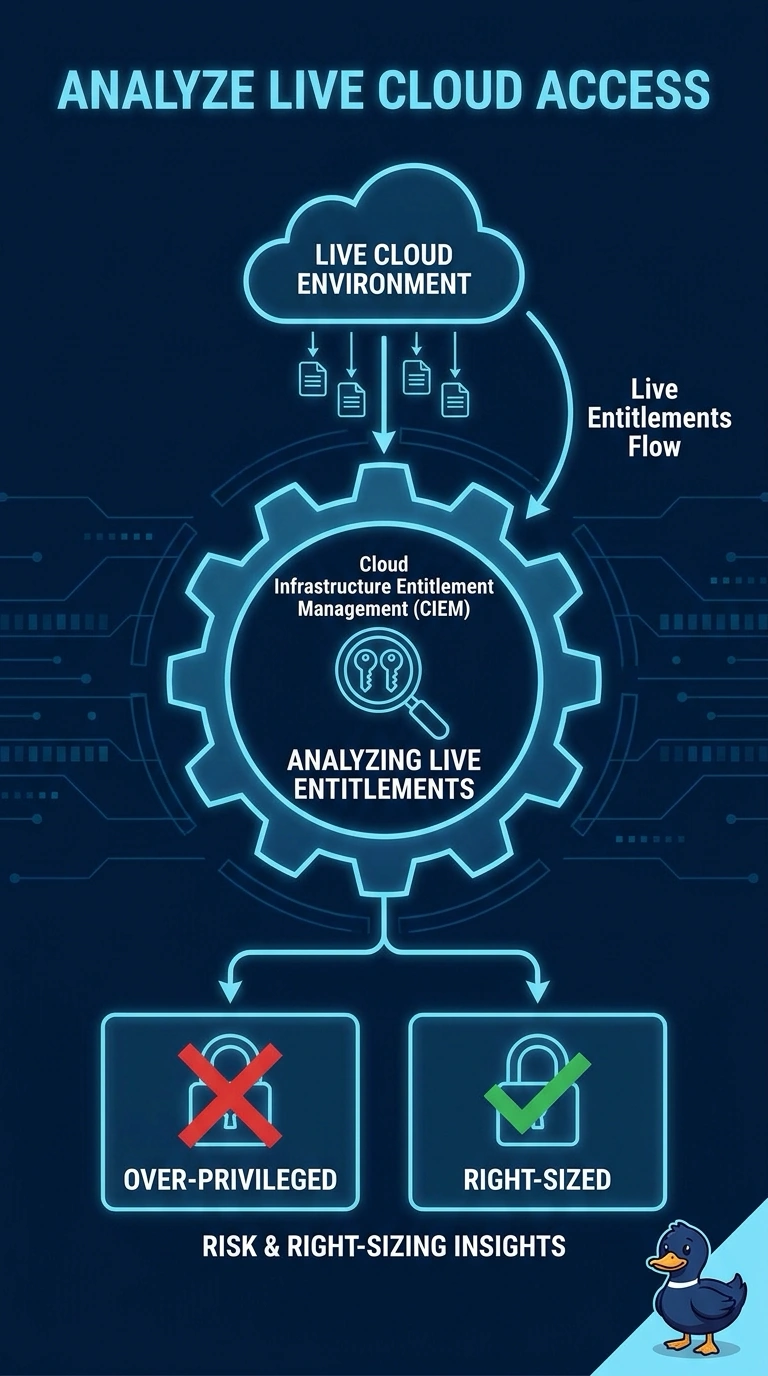
Short Explanation
IaC scanning checks your blueprints before you build, but it cannot see who quietly added extra keys to the keyring months later. Live cloud identities accumulate excess privileges through console edits and role chaining. The trap is expecting pre-deployment template checks to track live identity drift.
Full Explanation
Pre-deployment template checks inspect static code before provisioning, so organizations pair them with "Cloud Infrastructure Entitlement Management (CIEM) for analyzing live entitlements" to uncover over-privileged roles in running cloud accounts. CIEM evaluates effective permissions, cross-account trust relationships, and observed activity to highlight unused administrative rights that accumulate after initial deployment. "Data Security Posture Management (DSPM) for classifying sensitive object storage" is incorrect because DSPM focuses on discovering and classifying sensitive data stores rather than auditing identity privilege creep. "Kubernetes admission control for rejecting privileged container specs at launch" fails because admission controllers govern pod deployment requests inside clusters rather than cloud IAM entitlement drift. "Pre-runtime container image assessment for detecting vulnerable operating system packages" is wrong because image scanning inspects container layers and libraries rather than live cloud identity permissions. As a caveat, removing unused permissions identified by CIEM should also be reflected back into Terraform templates to avoid reintroducing them. As an operational check, review CIEM entitlement findings alongside recent API usage before trimming role policies.
Prefer to study offline? Printable PDF study book + test engine ($7.50, unofficial). These questions stay free here.