
A retail software team wants to prioritize fixing application vulnerabilities based on whether the affected services interact with cloud storage buckets and databases holding regulated customer records. Which combination of complementary Falcon Cloud Security services provides both the application-layer risk context and the sensitive data classification needed for this decision?
Select an answer to reveal the explanation.
Short Explanation
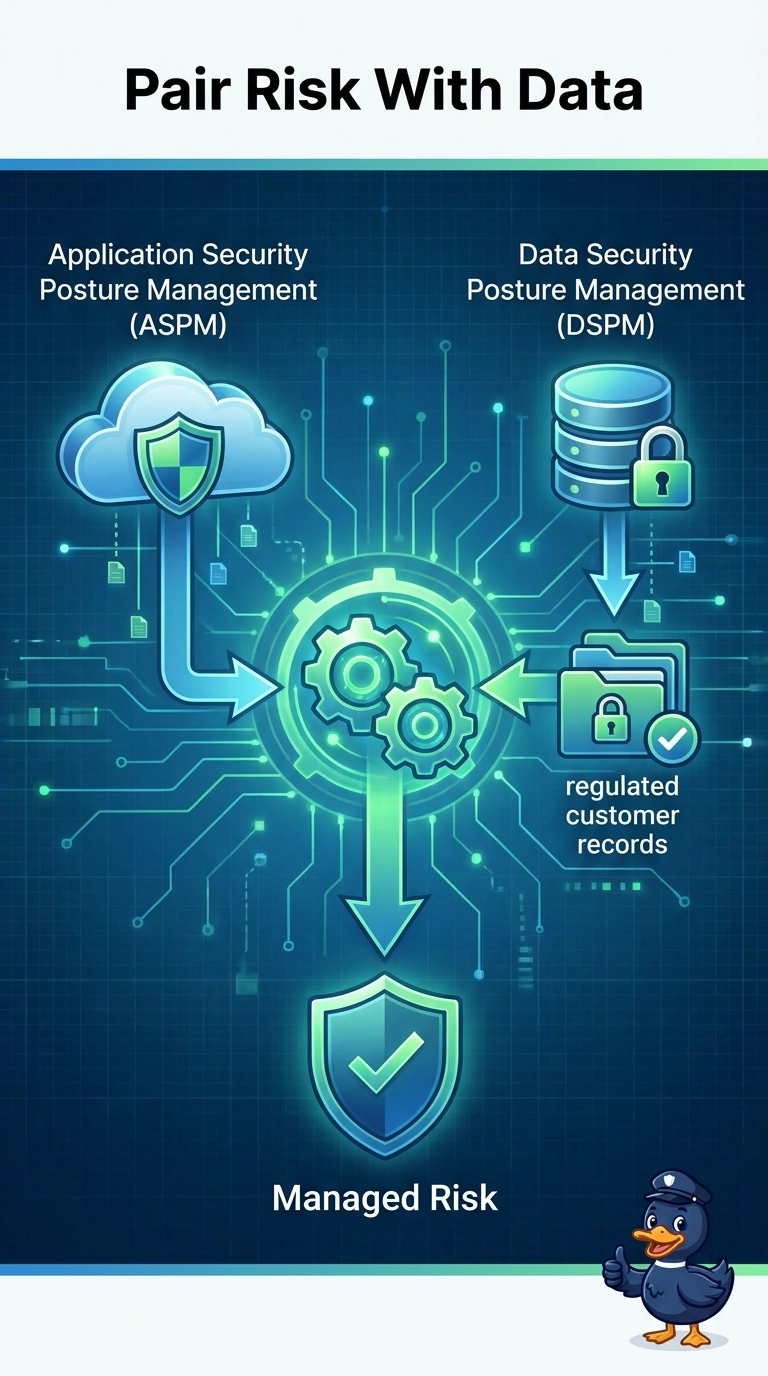
Knowing which app has a flaw is only half the puzzle when you need to see if it touches sensitive customer data. Pairing Application Security Posture Management with Data Security Posture Management links application-layer risk to classified data stores so your team can prioritize effectively. The trap is relying on posture checks, admission gates, or build scans alone, which do not classify regulated data.
Full Explanation
Application Security Posture Management (ASPM) paired with Data Security Posture Management (DSPM) is the right combination because ASPM correlates application-layer vulnerabilities and service context while DSPM discovers and classifies sensitive data across cloud storage buckets and managed databases. Together, they let a team prioritize fixes for vulnerable services that can actually reach regulated customer records. Infrastructure-as-Code (IaC) scanning paired with Kubernetes admission control catches template misconfigurations before provisioning and enforces pod deployment rules at the cluster API, but neither capability classifies sensitive data inside storage or maps application code risk. Cloud Security Posture Management (CSPM) paired with node-level Falcon sensors audits cloud control-plane settings and monitors running workloads for malicious execution, yet CSPM and CWP capabilities alone do not supply the requested ASPM and DSPM functions; current Falcon Data Security for Cloud can use the existing Linux sensor for classified data-flow visibility when that capability is enabled. Pre-runtime container image assessment paired with cloud account scan exclusions inspects static image packages and omits designated resources from posture scans, leaving data sensitivity unmapped. Caveat: DSPM classification highlights where sensitive data resides, not whether an application flaw is actively being exploited. Operational check: verify that both ASPM application integrations and DSPM data-store discovery cover the target production accounts and repositories.
Prefer to study offline? Printable PDF study book + test engine ($7.50, unofficial). These questions stay free here.