
A manufacturing DevSecOps team wants to detect overly permissive cloud IAM policies in Terraform files before provisioning, while separately scanning built container layers for vulnerable libraries. Which distinction guides tool selection?
Select an answer to reveal the explanation.
Short Explanation
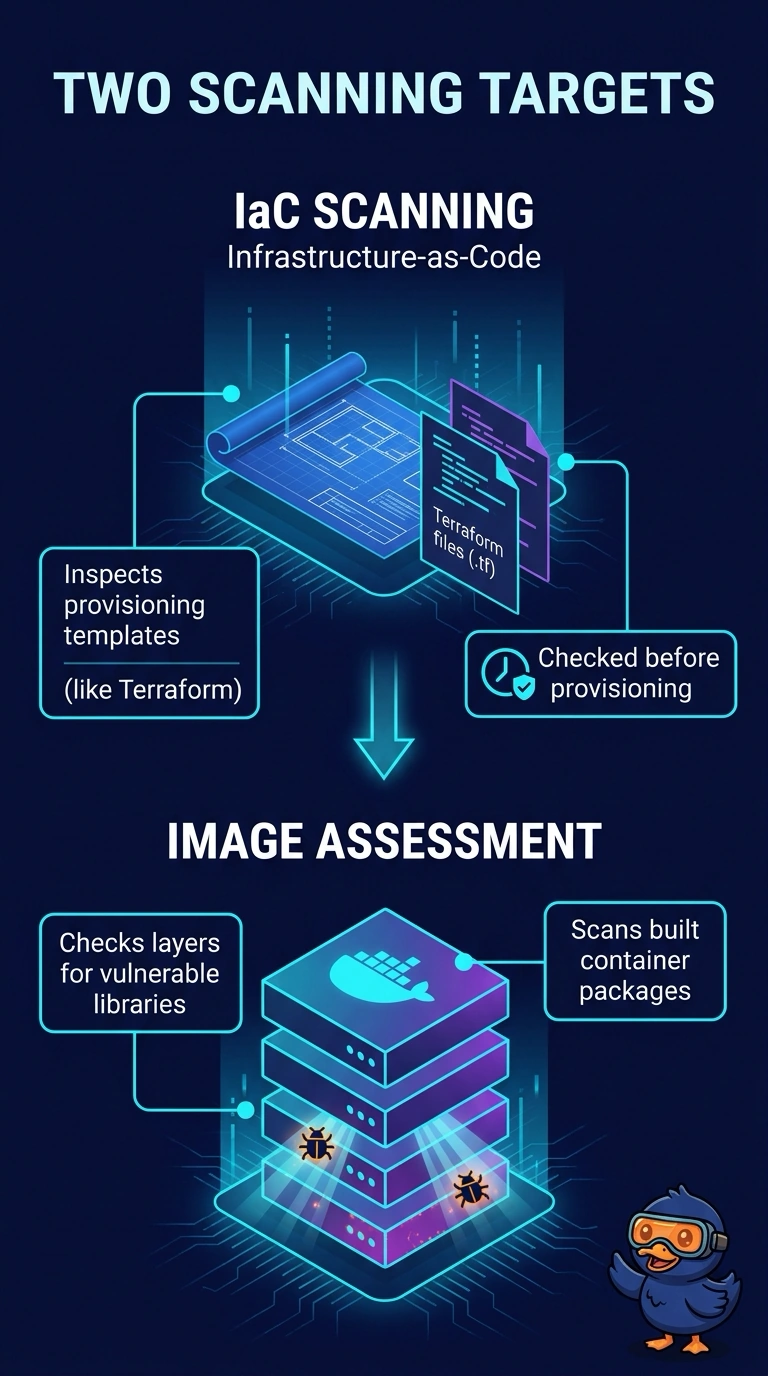
Checking blueprints before pouring concrete is different from inspecting prebuilt bricks before stacking them. Infrastructure-as-Code scanning checks your cloud templates while image assessment checks built container layers, and the trap is expecting posture, runtime, or admission tools to do both.
Full Explanation
Infrastructure-as-Code scanning inspects provisioning templates, whereas image assessment scans built container packages and layers captures the exact complementary boundary between these two pre-runtime capabilities: Infrastructure-as-Code scanning catches misconfigured cloud IAM, network, and storage definitions in declarative templates before cloud resources exist, while image assessment evaluates OS packages, application dependencies, and embedded secrets inside container image artifacts. Cloud posture policies replace both workflows by editing Terraform files automatically is false because posture policies audit live cloud resources after provisioning rather than rewriting source templates. Runtime Falcon sensors scan Terraform templates before any cloud account is registered is incorrect because sensors monitor live host and container execution at runtime. Kubernetes admission control compiles application source code and patches base image layers confuses deployment-time pod admission gating with build pipelines. As a caveat, neither pre-runtime check eliminates the need for live posture and runtime monitoring after deployment. For an operational check, verify that your CI pipeline runs Infrastructure-as-Code scanning on template changes and image assessment on every container build.
Prefer to study offline? Printable PDF study book + test engine ($7.50, unofficial). These questions stay free here.