
A retail security architect already uses Cloud Security Posture Management (CSPM) to detect publicly accessible storage buckets, but leadership wants to know which exposed buckets actually store payment or customer records. Which complementary capability provides this insight?
Select an answer to reveal the explanation.
Short Explanation
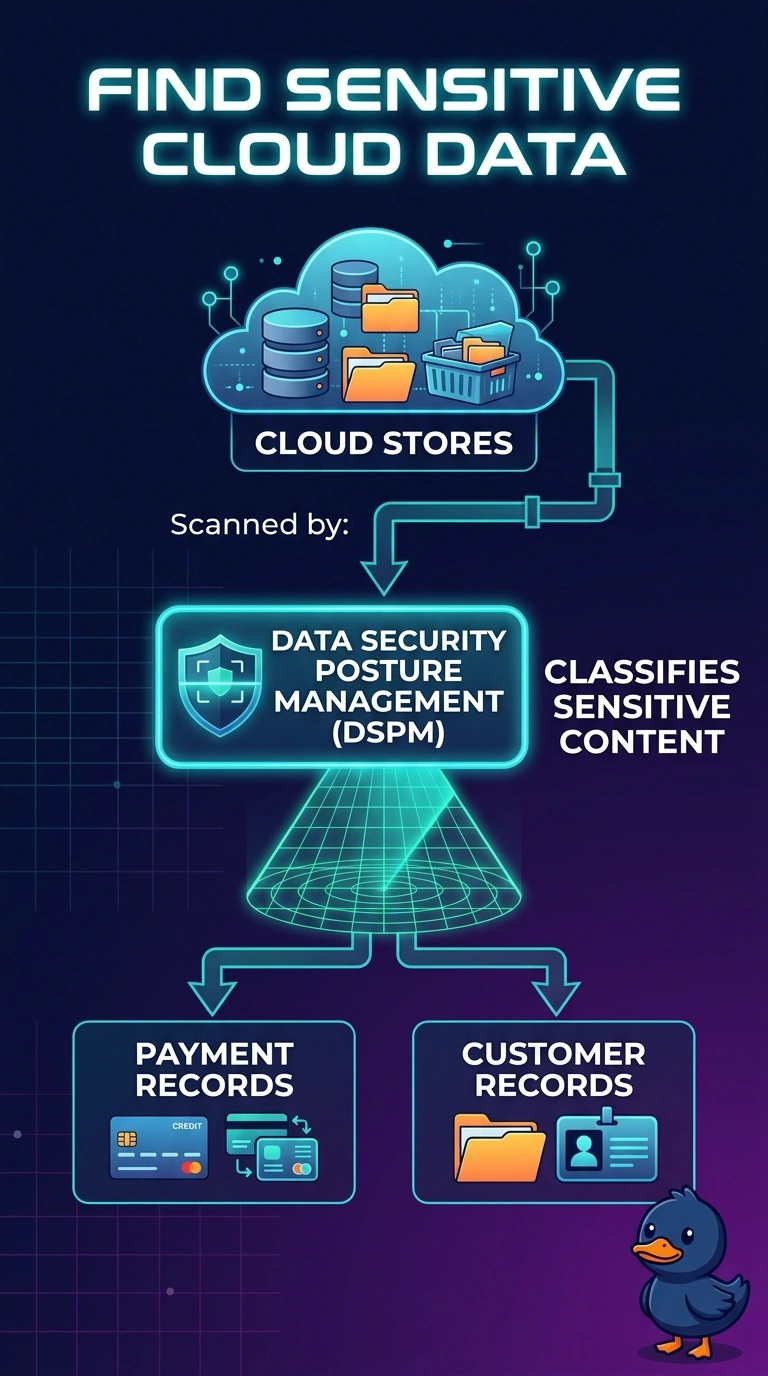
Knowing a warehouse door is unlocked matters, but knowing whether it holds empty boxes or customer files tells you how fast to run. You need data classification alongside posture scanning to spot which exposed stores hold sensitive records.
Full Explanation
While CSPM identifies control-plane misconfigurations such as public bucket access, Data Security Posture Management classifying sensitive content within cloud stores adds visibility into what regulated or sensitive data actually resides inside those stores. Combining exposure posture with data classification lets teams prioritize buckets holding payment or customer data ahead of empty or non-sensitive buckets. By comparison, Kubernetes admission control evaluating pod security contexts before scheduling governs container deployment requests in clusters rather than inspecting data inside cloud storage buckets. Similarly, Infrastructure-as-Code scanning reviewing Terraform templates in pull requests catches misconfigurations in deployment templates before provisioning, not the contents stored inside live buckets. Finally, Cloud Workload Protection monitoring system calls and processes inside running hosts defends virtual machines and containers at runtime rather than classifying objects in managed cloud data stores. Caveat: DSPM relies on appropriate read permissions and scope to inspect data stores, so verify data-plane access rules before expecting classification results. Operational check: review DSPM findings filtered by sensitivity category and cross-reference them with public-exposure posture alerts.
Prefer to study offline? Printable PDF study book + test engine ($7.50, unofficial). These questions stay free here.