
A hospital platform team uses Cloud Security Posture Management to monitor its managed Kubernetes cluster settings, but still needs to detect vulnerable libraries inside container images before deployment. Which complementary capability addresses this gap?
Select an answer to reveal the explanation.
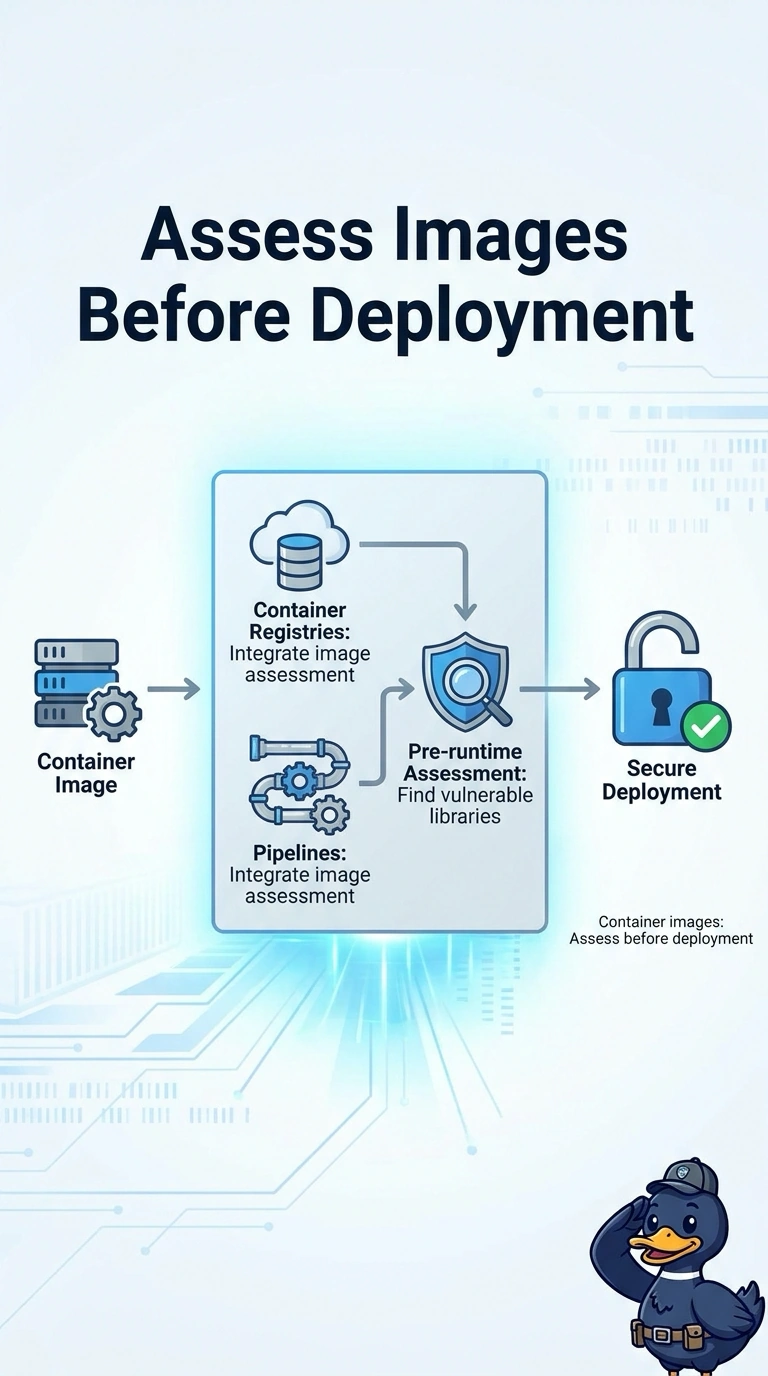
Short Explanation
You can think of checking Kubernetes settings without scanning the images as inspecting a hospital building while overlooking the medical supplies arriving at the loading dock. To catch vulnerable libraries before deployment, you need pre-runtime image assessment that inspects container images through registries and pipelines.
Full Explanation
Pre-runtime image assessment integrated with container registries and pipelines complements Cloud Security Posture Management by inspecting operating system packages, libraries, and other build artifacts inside container images before deployment. Posture management evaluates cloud control-plane and cluster configuration settings, while image assessment examines the software packaged in each image, addressing the gap between configuration checks and vulnerable libraries. Cloud Infrastructure Entitlement Management for reviewing human user permissions analyzes identity privileges and excessive access; it does not inspect software packages in container builds. Scheduled compliance reporting for emailing weekly benchmark posture summaries provides periodic governance documents after configuration checks, rather than assessing newly built images for vulnerable libraries. Cloud account group exclusions for omitting development clusters from scans reduce posture coverage and do not add artifact inspection. One caveat is that pre-runtime assessment evaluates stored or built artifacts; it does not replace runtime sensors that detect malicious execution after deployment. As a practical check, push a test image to the connected registry and confirm that package vulnerability findings appear in the image assessment view.
Prefer to study offline? Printable PDF study book + test engine ($7.50, unofficial). These questions stay free here.