
A manufacturing enterprise already monitors cloud storage and IAM configurations with CSPM, but now needs active workload protection and vulnerability visibility on its cloud virtual machines and containers. Which complementary service addresses this gap?
Select an answer to reveal the explanation.
Short Explanation
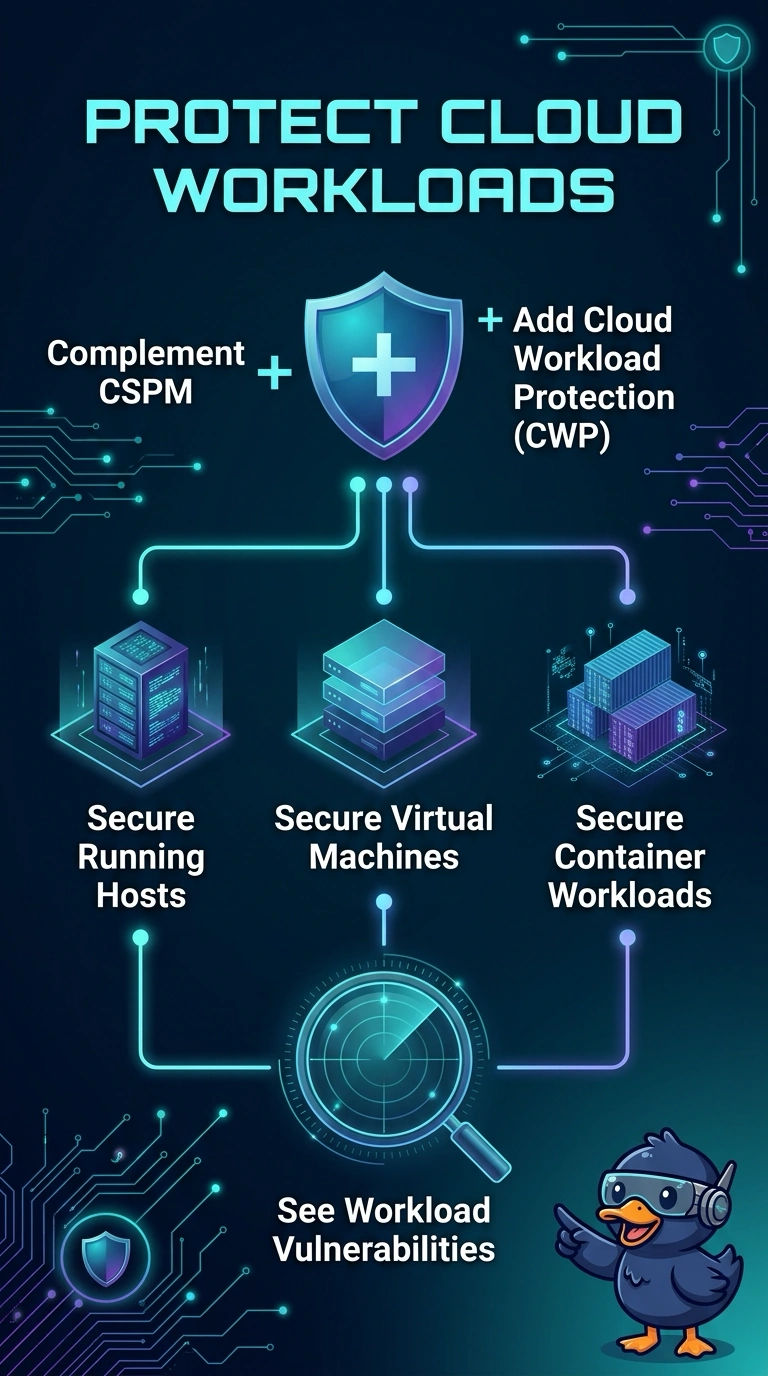
CSPM watches your cloud control plane like a building inspector, but you still need security inside the rooms where workloads actually run! The trap is picking administrative helpers like cloud groups or audit reports instead of a workload security service. You need Cloud Workload Protection to guard running VMs and containers.
Full Explanation
Cloud security requires complementary services because control-plane posture scanning alone cannot inspect processes, vulnerabilities, and runtime threats inside compute workloads. The service that fills this gap is Cloud Workload Protection (CWP) to secure running hosts, virtual machines, and container workloads by providing workload-level visibility and runtime defense alongside CSPM. Choosing Scheduled compliance reporting for distributing weekly audit summaries to stakeholders only packages existing posture data for governance and adds no workload protection. Choosing Scan exclusions for omitting short-lived developer sandbox resources from posture checks reduces noise in posture assessments rather than protecting virtual machines or containers. Choosing Cloud group hierarchies for organizing cloud accounts across regional business units helps structure account administration and policy scoping without securing running compute instances. As a caveat, CWP and CSPM work best together so control-plane misconfigurations and in-workload threats are both covered. For an operational check, confirm that target virtual machines and Kubernetes nodes have the required workload protection coverage enabled and are reporting healthy telemetry.
Prefer to study offline? Printable PDF study book + test engine ($7.50, unofficial). These questions stay free here.