
A software organization wants to connect findings from application code, container images, and deployed cloud workloads so teams can trace which service owns a production risk. Which Falcon Cloud Security capability provides this unified context?
Select an answer to reveal the explanation.
Short Explanation
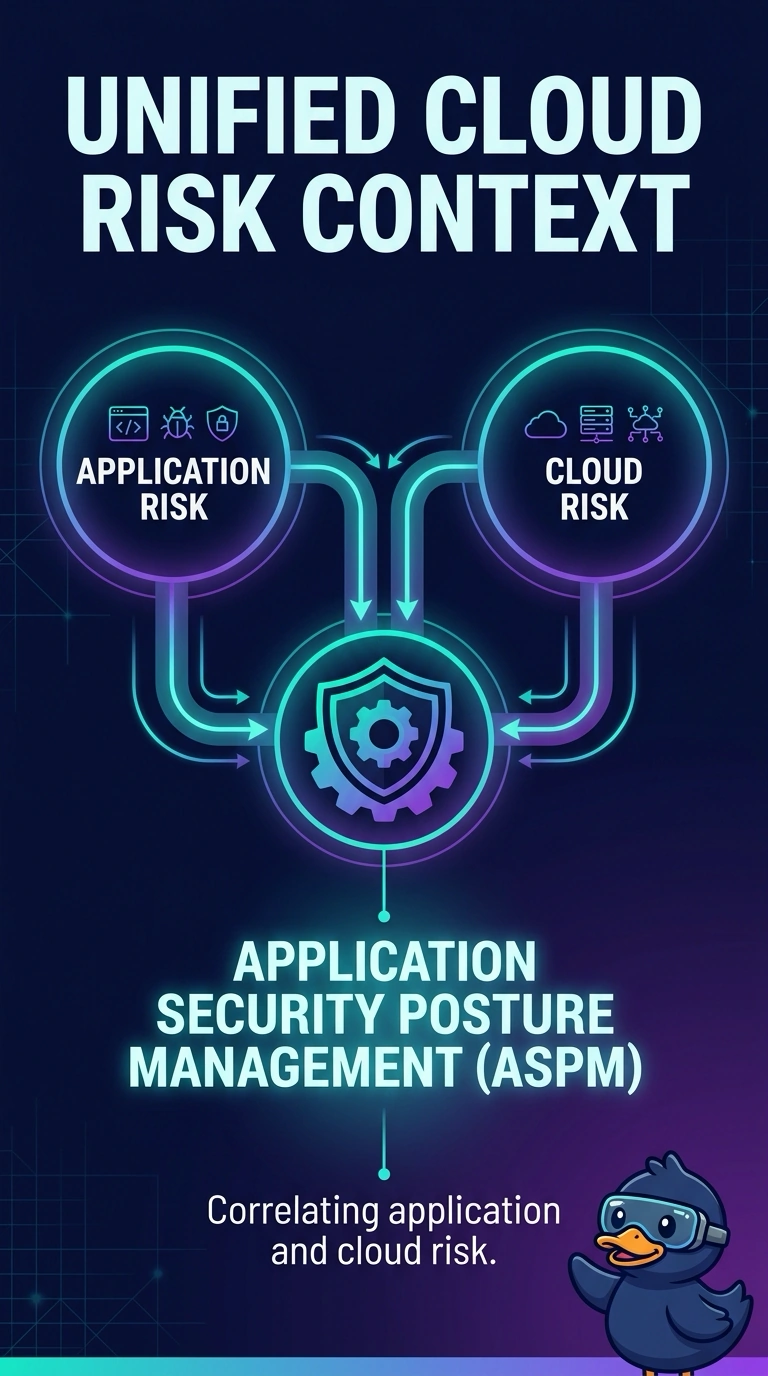
Knowing a container has a flaw helps, but you still need to trace it back to the exact app and team that shipped it! The trap is picking a single-layer feature like node telemetry or audit reports instead of cross-layer correlation. ASPM ties code, image, and cloud workload context together so you see the full risk path.
Full Explanation
Modern cloud applications span source repositories, build artifacts, and runtime infrastructure, making isolated alerts hard to prioritize. The right capability is Application Security Posture Management (ASPM) correlating application and cloud risk because it links application-level findings with deployed cloud resources and ownership context. Choosing Cloud account registration exclusions for omitting temporary developer sandbox environments only narrows posture scan scope and does not correlate application code with production workloads. Choosing Scheduled compliance reporting for emailing weekly benchmark summaries to external auditors delivers periodic governance snapshots rather than interactive code-to-cloud traceability. Choosing Kubernetes DaemonSet deployment for collecting node-level container process telemetry provides runtime visibility on cluster nodes without mapping findings back to upstream application components. As a caveat, ASPM correlation is most accurate when repositories, registries, and cloud accounts are all onboarded consistently. For an operational check, review an application service view to confirm that code, image, and runtime workload findings map to the same service owner.
Prefer to study offline? Printable PDF study book + test engine ($7.50, unofficial). These questions stay free here.