
A software organization scans its Terraform templates in pull requests to block misconfigured storage buckets before deployment, yet operations engineers still make emergency manual changes directly in the cloud console. Which Falcon Cloud Security capability detects those out-of-band configuration changes in live cloud accounts?
Select an answer to reveal the explanation.
Short Explanation
Scanning Terraform in pull requests keeps the front door locked, but your live cloud console changes walk right around the back. The trap is assuming pre-deployment template checks can spot manual drift after resources are already running.
Full Explanation
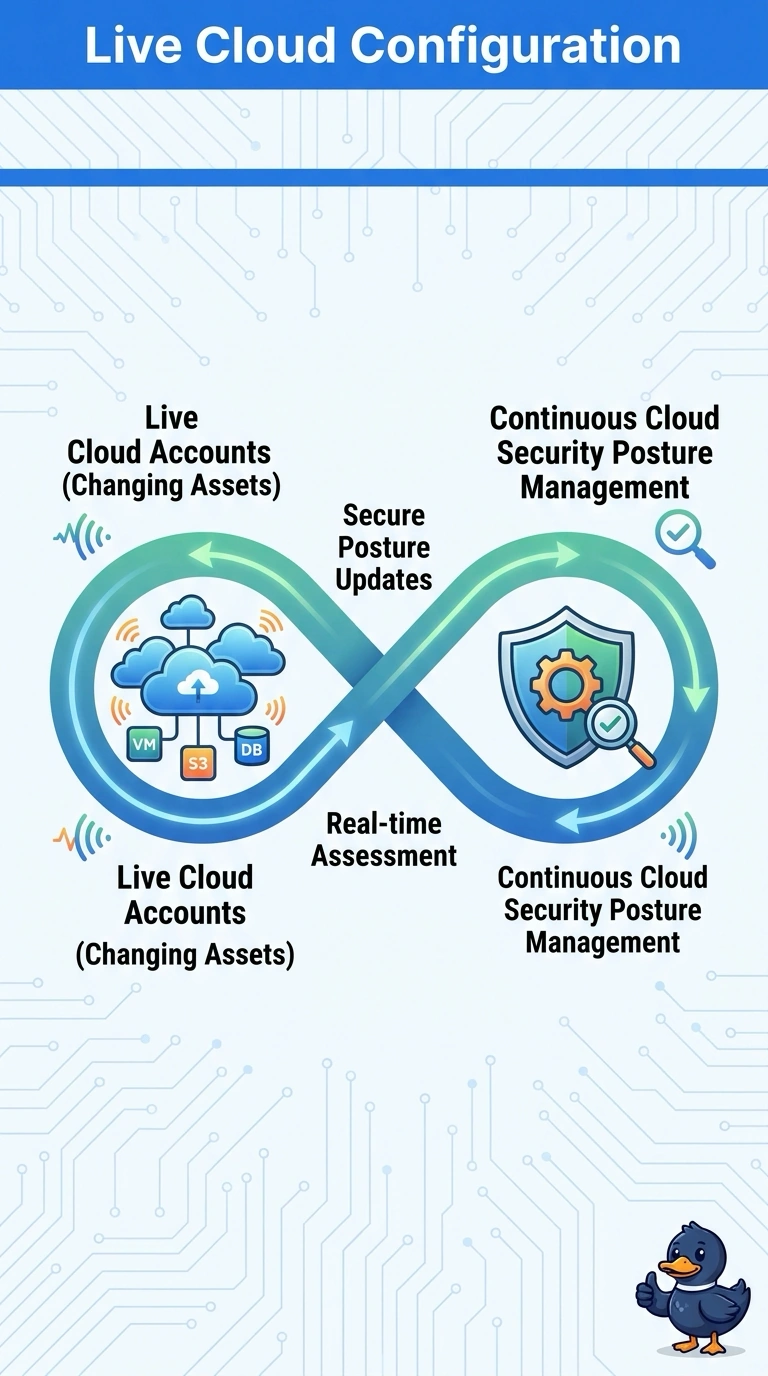
Using Continuous Cloud Security Posture Management against live accounts directly addresses out-of-band console edits because CSPM continuously evaluates the actual deployed cloud control-plane state rather than static code files. When an engineer alters bucket permissions or security groups manually during an incident, CSPM detects the resulting misconfiguration in the live account. By contrast, Pre-runtime container image assessment in the build pipeline inspects container layers and packages, not cloud provider storage or network control-plane settings. Similarly, Kubernetes admission control enforcing pod security specifications governs pod scheduling inside a cluster rather than external cloud console changes. Relying on Static Infrastructure-as-Code scanning on local developer workstations only checks template definitions before provisioning and remains blind to manual edits made directly in the cloud console afterward. As a caveat, posture scans detect drift after the change occurs rather than blocking console clicks in real time. For an operational check, review live posture findings for recently modified resources and reconcile them back into version-controlled Terraform state.
Prefer to study offline? Printable PDF study book + test engine ($7.50, unofficial). These questions stay free here.