
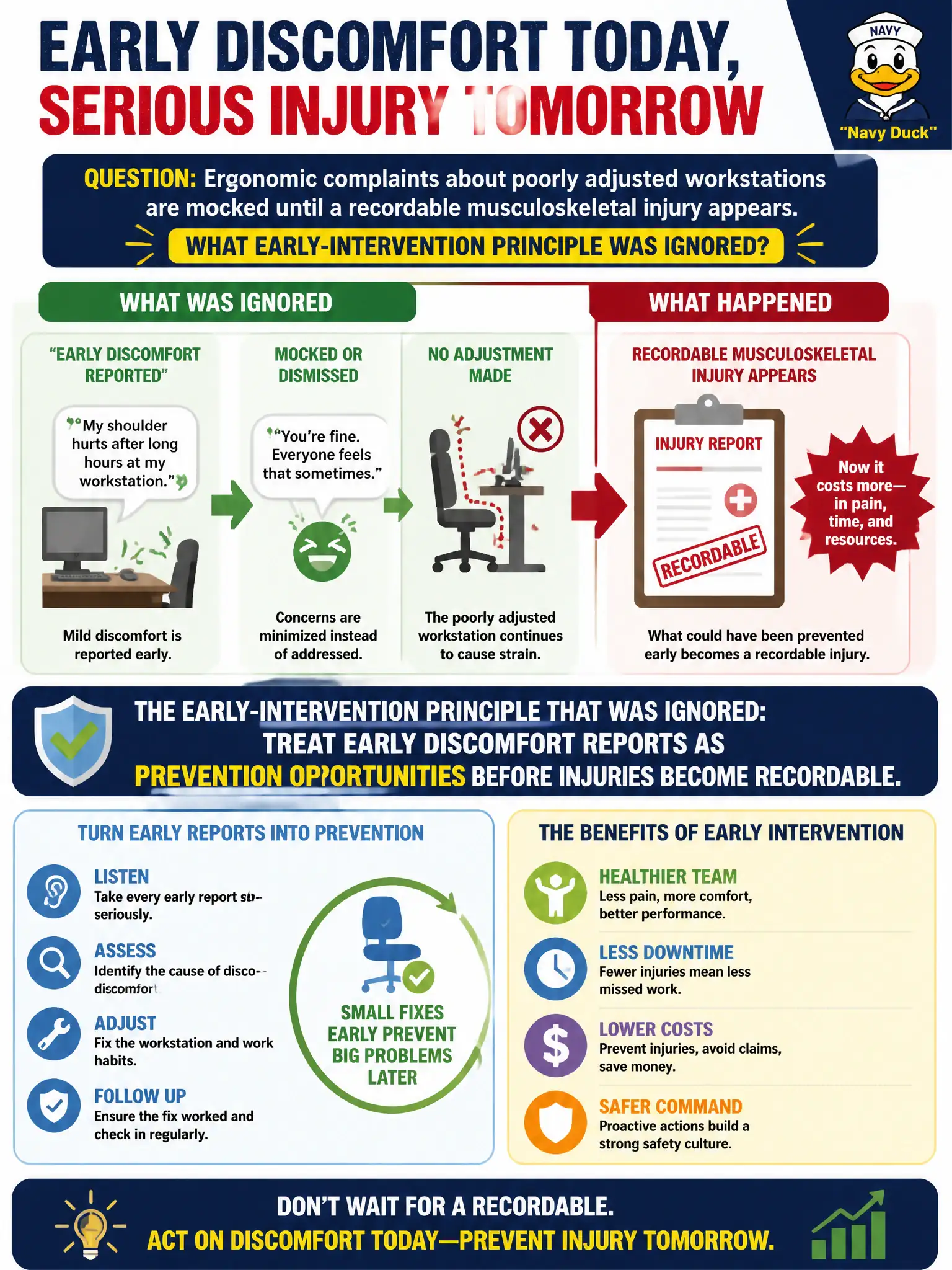
Ergonomic complaints about poorly adjusted workstations are mocked until a recordable musculoskeletal injury appears. What early-intervention principle was ignored?
Select an answer to reveal the explanation.
Short Explanation
When someone says the chair is wrecking their back, that is a free early-warning light—not comedy hour. Fix the setup while it is still a complaint. Waiting for a recordable injury is learning the hard, expensive way.
Full Explanation
Treating early discomfort reports as prevention opportunities before injuries become recordable is correct because ergonomic complaints are leading indicators. Mocking poorly adjusted workstation pain until a musculoskeletal injury appears wastes the cheapest intervention window—adjust chairs, monitors, and job rotation while symptoms are mild. Civic offices should invite early reporting and rapid workstation assessment.
Continuing to mock complaints until OSHA cites the site fails by concept because ridicule suppresses reporting and invites preventable recordables; citation-driven reaction is lagging. Claiming ergonomic issues are never occupational until surgery is required fails because work-related MSDs develop along a continuum and early intervention is standard prevention practice. Limiting ergonomic assessments to warehouse roles only fails because administrative and office workstations generate significant MSD risk.
Exam caveat: CRMC early intervention treats discomfort reports as prevention inputs, not jokes. Waiting for recordability or surgery is the opposite of proactive risk treatment.
Operational check: Open an ergonomic early-report channel for city office staff, respond with assessment/adjustment within a short SLA, track discomfort vs recordable MSD trends, and coach supervisors who dismiss complaints.