
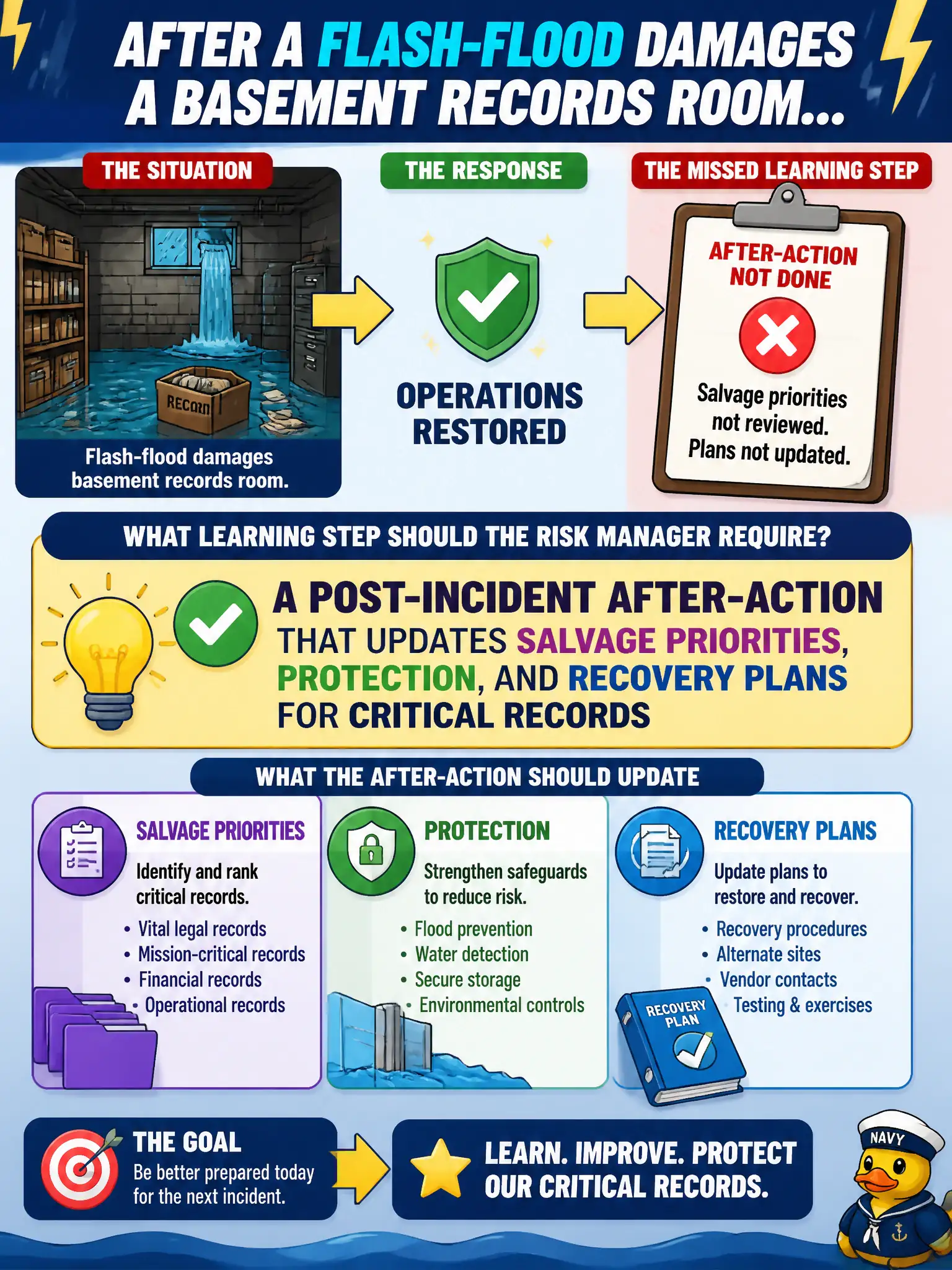
After a flash-flood damages a basement records room, the organization restores operations but skips an after-action on salvage priorities. What learning step should the risk manager require?
Select an answer to reveal the explanation.
Short Explanation
You already paid tuition on that flood—do not skip the notes. Which boxes mattered most? What should have been upstairs or digitized? An after-action turns soggy boxes into a clearer salvage and protection plan for next time.
Full Explanation
A post-incident after-action that updates salvage priorities, protection, and recovery plans for critical records is required because restoring operations without learning leaves the next flood equally damaging. Flash-flood damage to a basement records room reveals whether salvage order, elevation, and protection were adequate. Civic records managers must convert that learning into updated priorities and physical protection—not merely dry the carpet.
Immediately disposing of all undamaged records to simplify inventories fails by concept because destruction of intact records is avoidance of inventory work, not flood resilience, and may violate retention. Documenting no lessons so staff are not reminded of the flood fails because deliberate amnesia prevents plan improvement. Transferring all paper records into the flooded basement to free upstairs space fails because relocating into the known flood zone increases future loss.
Exam caveat: CRMC post-incident learning expects after-action updates to continuity and protection plans. Operational restoration without plan revision is incomplete recovery governance.
Operational check: Convene an after-action for the records flood; revise salvage priority lists, elevate or relocate critical series, update wet-recovery vendors/contacts, and evidence the plan changes before the next wet season.