
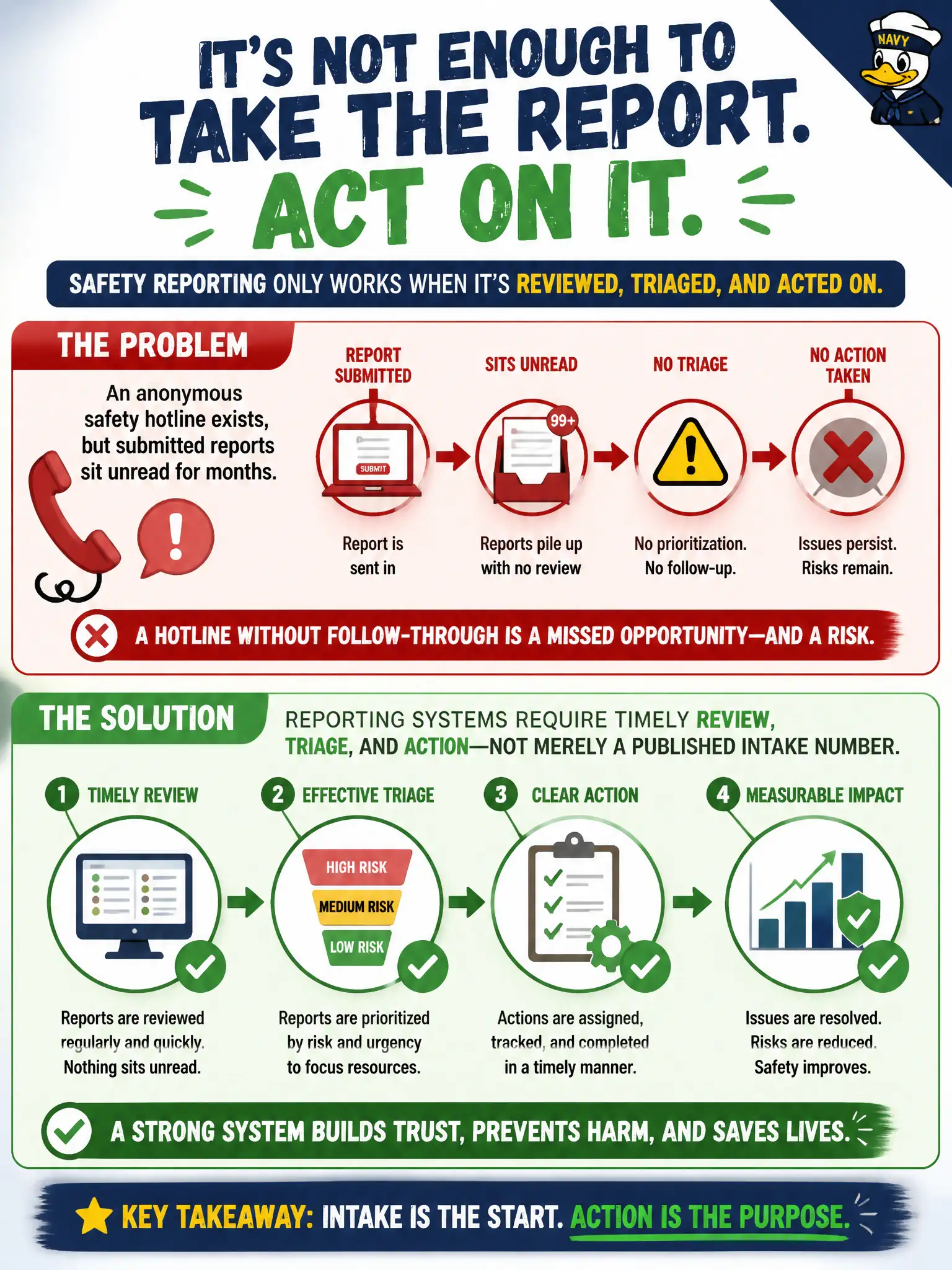
An anonymous safety hotline exists, but submitted reports sit unread for months. What system failure should leadership correct?
Select an answer to reveal the explanation.
Short Explanation
A hotline nobody monitors is a suggestion box with a lid welded shut. People spoke up; silence on the back end teaches them not to bother next time. Assign owners, set review SLAs, and close the loop—or the channel dies of neglect.
Full Explanation
Reporting systems require timely review, triage, and action—not merely a published intake number—because an anonymous hotline whose reports sit unread for months is intake without a process. Trust collapses when reporters see silence, and hazards persist. Civic leadership must staff review queues, set triage SLAs, and feed actions back into the risk system even when reports are anonymous.
Shutting anonymous channels because unread queues prove they have no value fails by concept because the failure is review capacity, not the existence of anonymity; killing the channel discards a useful signal path. Letting reports wait indefinitely if no injury is confirmed yet fails because many valuable reports are hazards and near-misses before injury—waiting for blood defeats prevention. Investigating only signed reports with full legal names fails because anonymity often enables reporting of sensitive issues; identity preference should not zero out anonymous triage entirely.
Exam caveat: CRMC reporting effectiveness includes the back-end review cycle. Publishing a number without timely triage is an incomplete control.
Operational check: Assign hotline ownership, set a maximum age for unreviewed items, triage weekly into investigate/fix/refer, and publish anonymized closure stats so staff see that reports move.