
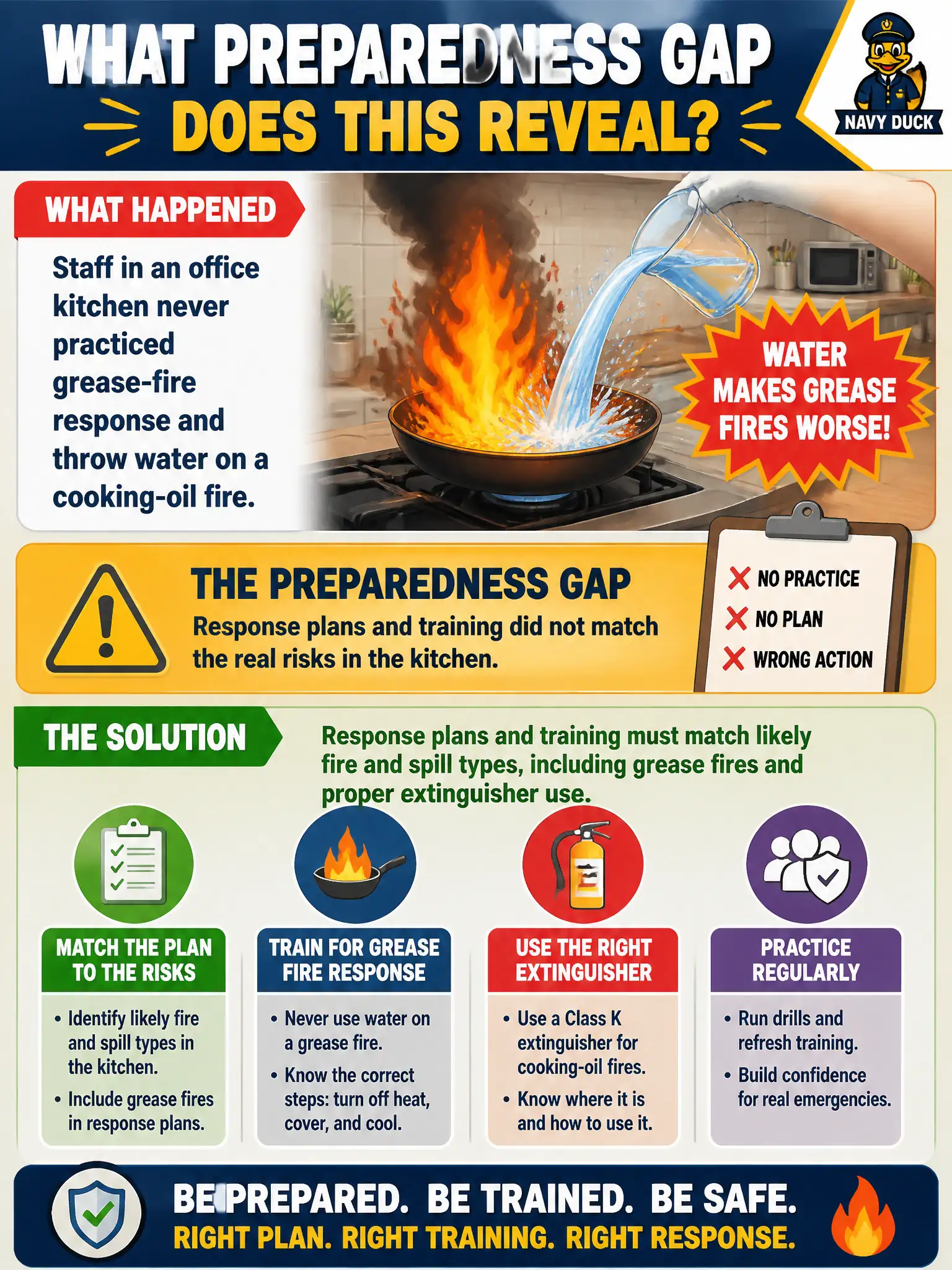
Staff in an office kitchen never practiced grease-fire response and throw water on a cooking-oil fire. What preparedness gap does this reveal?
Select an answer to reveal the explanation.
Short Explanation
Water on a grease fire is a classic panic move—and it spreads the flames. If nobody practiced, nobody remembers the lid, the Class K extinguisher, or “don’t throw water.” Train for the fires you can actually have in that kitchen, not generic hallway posters alone.
Full Explanation
Response plans and training must match likely fire and spill types, including grease fires and proper extinguisher use, because throwing water on a cooking-oil fire is a predictable harmful error when staff never practiced grease-fire response. Office kitchens in civic buildings still present Class K/grease hazards relative to their cooking equipment. Preparedness must map training to the actual fire classes present, not assume generic “pull the pin” awareness is enough.
Claiming office kitchens are too low-risk to need any fire-response training fails by concept because low-frequency kitchen fires still cause severe injury and property loss when water is misapplied. Claiming water is the universal first action for every fire class fails because water on grease fires can spread burning oil—class-specific methods matter. Claiming only the landlord’s after-hours guard needs kitchen fire knowledge fails because daytime staff are often first on scene during office hours when cooking occurs.
Exam caveat: CRMC preparedness expects matching training content to likely scenarios and extinguisher types. Generic training that omits grease-fire behavior is inadequate where kitchens exist.
Operational check: Inventory cooking appliances in city office kitchens, post class-appropriate extinguisher guidance, train staff never to use water on grease fires, and include a grease-fire inject in the next fire drill or toolbox talk.