
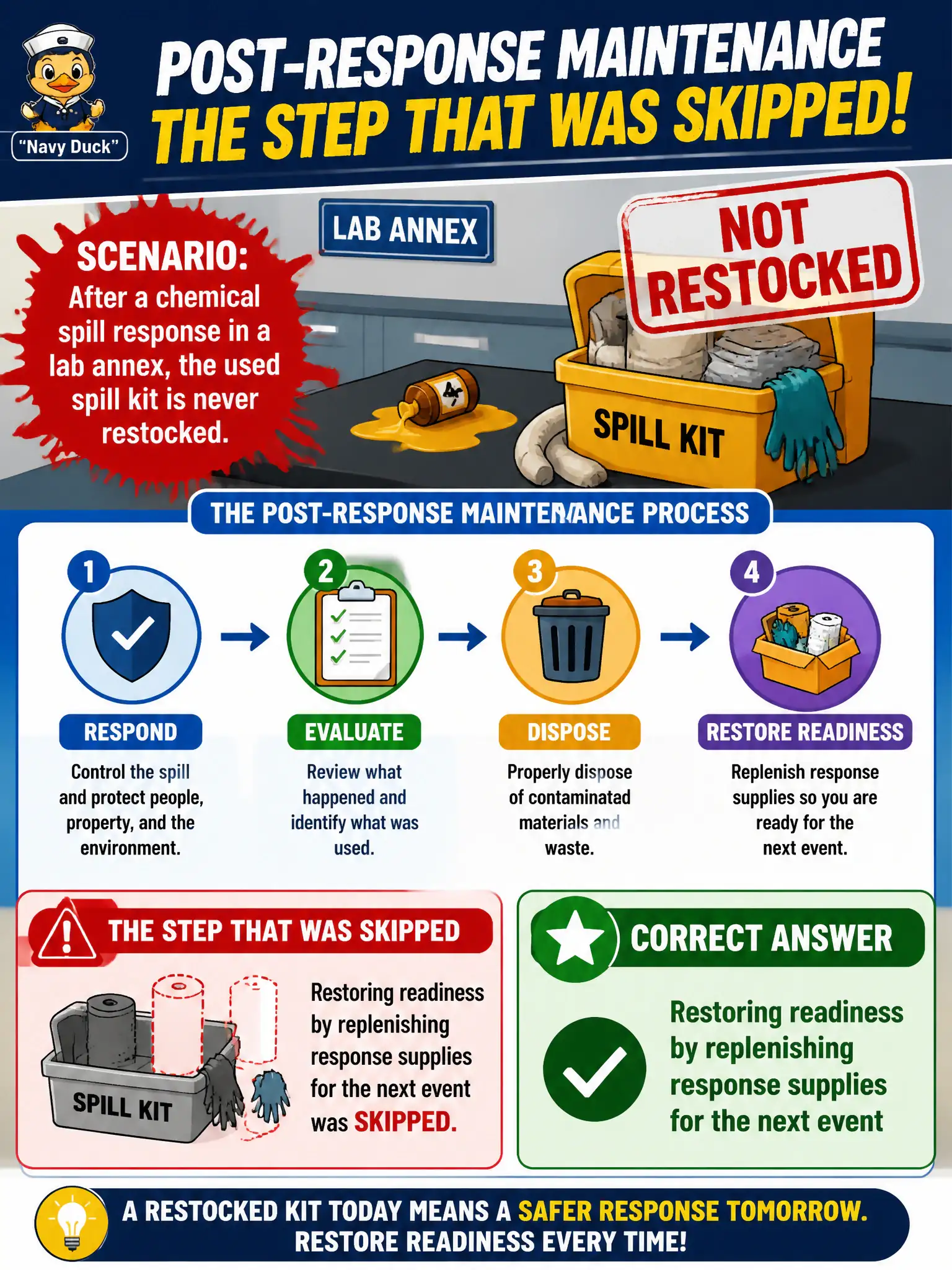
After a chemical spill response in a lab annex, the used spill kit is never restocked. What post-response maintenance step was skipped?
Select an answer to reveal the explanation.
Short Explanation
You used the kit—great. Leaving it empty is how the next spill becomes a scramble. Restock absorbents, PPE, and bags right after the response so readiness is back before someone needs it again.
Full Explanation
Restoring readiness by replenishing response supplies for the next event is the skipped post-response step when a used spill kit is never restocked. Response capability is consumable; after a lab-annex spill, empty kits create a false sense of preparedness for the following incident. Civic labs and shops must include restock and inspection in the after-action checklist.
Discarding all unused spill kits campus-wide to avoid overstock fails by concept because eliminating ready kits destroys response capacity under a misunderstanding of inventory hygiene. Waiting until the next annual inventory before replacing consumables fails because annual cycles are too slow relative to spill likelihood after a kit has already been depleted. Transferring empty kits to marketing for display as safety awards fails because empty displays are theater and remove functional equipment from service.
Exam caveat: CRMC post-incident maintenance includes restoring equipment and supplies to ready state. Response without replenishment leaves residual unreadiness.
Operational check: Add “restock spill kit / replace used absorbents and PPE” as a mandatory close-out item on municipal spill reports; verify kit seals and contents within 24–48 hours and log the restoration.