
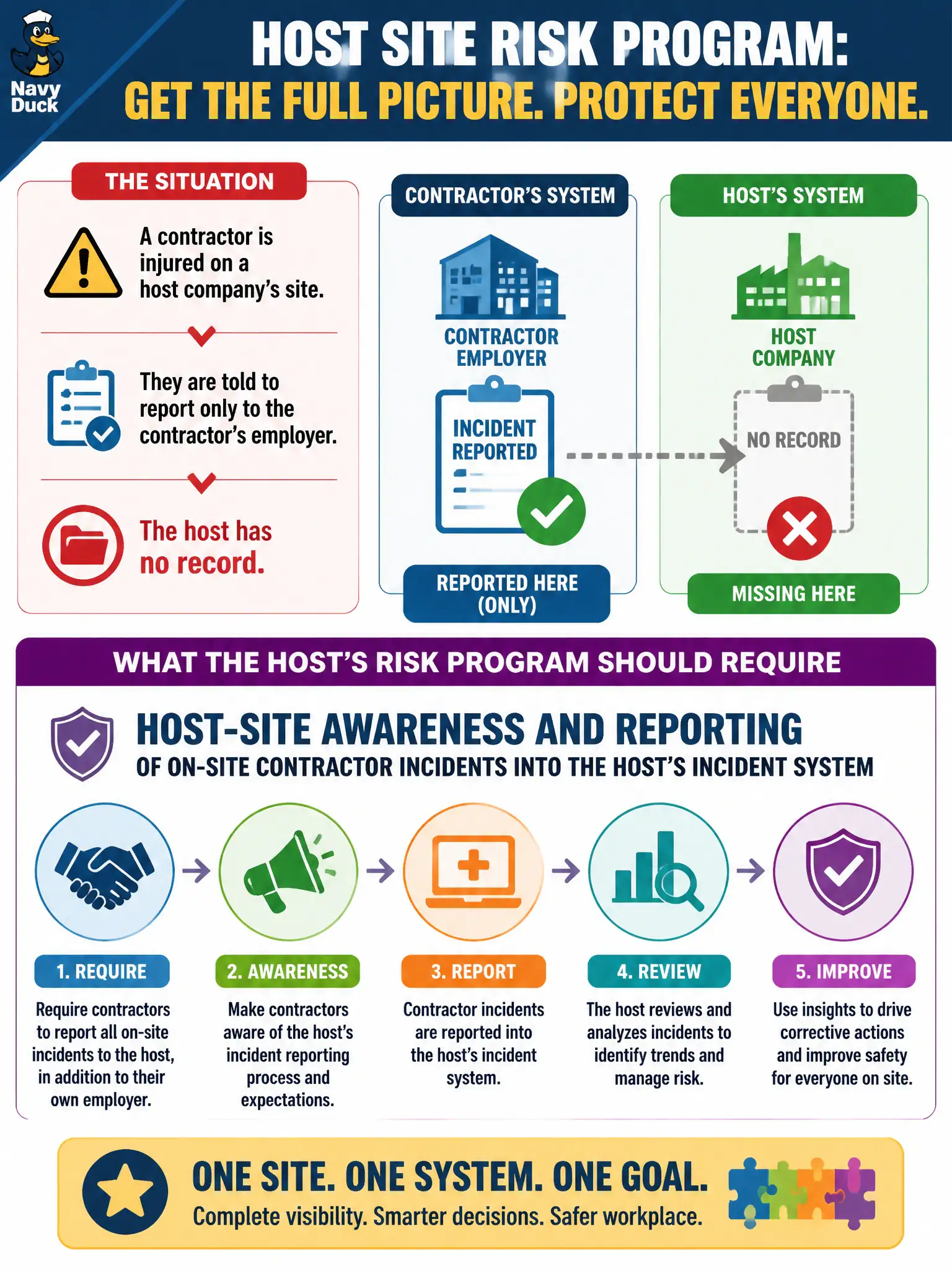
A contractor is injured on a host company’s site and is told to report only to the contractor’s employer, leaving the host with no record. What should the host’s risk program require?
Select an answer to reveal the explanation.
Short Explanation
It happened on your floor—your risk picture needs the scar. Contractor-only reporting can leave the host blind to hazards, trends, and follow-up with the GC. Require a host-side report even when the contractor also notifies its own employer.
Full Explanation
Host-site awareness and reporting of on-site contractor incidents into the host’s incident system is required because the host controls the shared workplace and needs visibility for hazard correction, multi-employer coordination, and trend analysis. Telling an injured contractor to report only to their employer leaves the host blind to conditions that may still endanger employees and other contractors. Civic capital projects and facilities work routinely involve contractors; host-side capture is part of the risk program.
Ignoring contractor injuries if the contractor carries its own insurance fails by concept because insurance transfer does not remove host learning needs or shared-site hazard duties. Verbal notice to the receptionist only with no written host-side record fails because verbal fragments vanish and cannot support investigation or corrective action. Host reporting solely when the contractor’s insurer requests a copy months later fails because delayed third-party requests are lagging and incomplete as the host’s primary intake method.
Exam caveat: CRMC multi-employer awareness expects host incident systems to learn of on-site contractor incidents. Contractor insurance does not equal host reporting exemption.
Operational check: Add contractor-injury reporting requirements to site orientation and contracts for county projects; ensure host supervisors know how to log contractor incidents; sample recent contractor jobs for host-side records matching known events.