
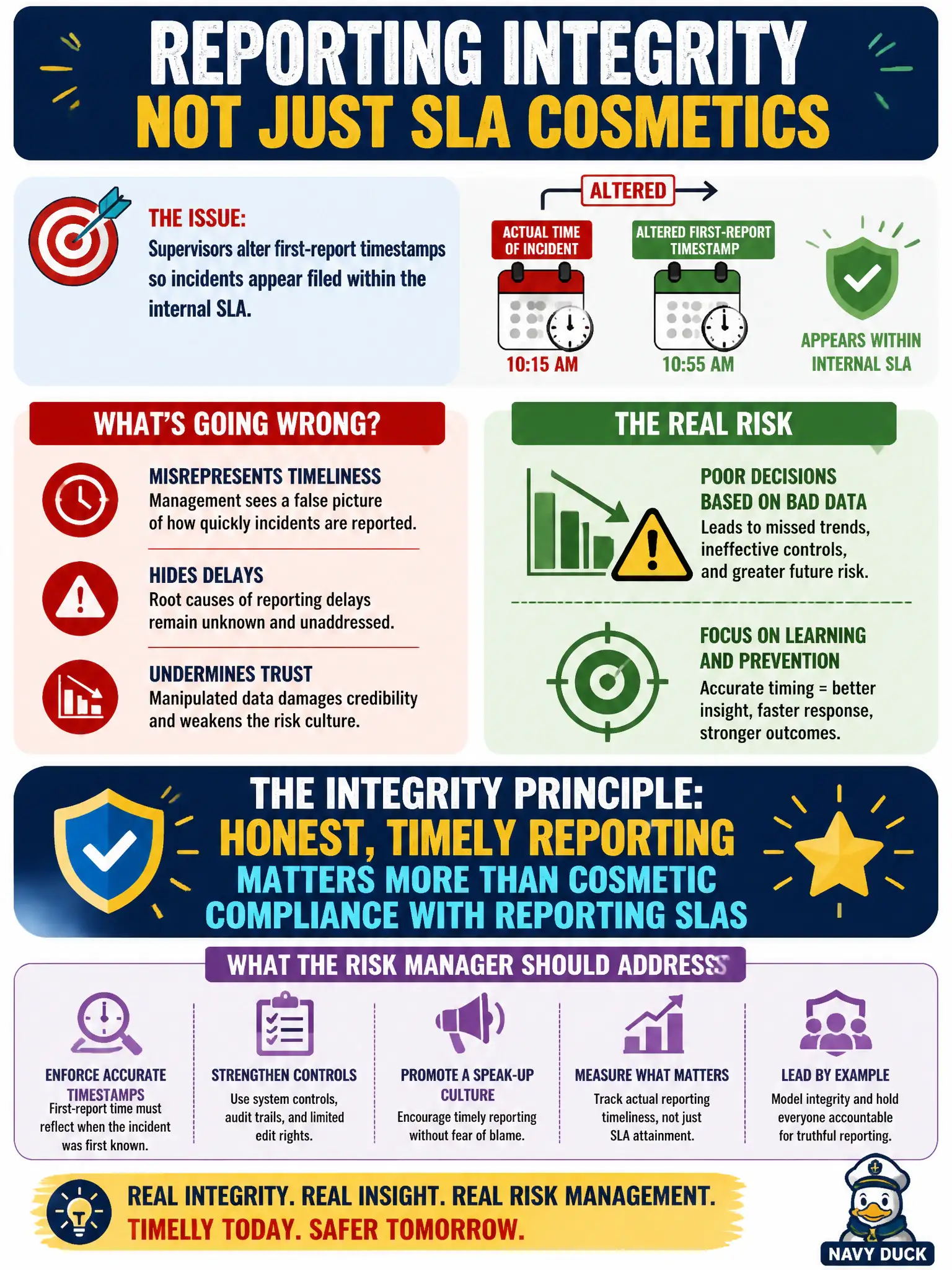
Supervisors alter first-report timestamps so incidents appear filed within the internal SLA. What reporting integrity issue should the risk manager address?
Select an answer to reveal the explanation.
Short Explanation
Fudging the clock to “make SLA” teaches everyone that looking compliant beats being truthful. Late reports still need the real time—and a conversation about why they were late. Pretty timestamps hide slow culture; honest ones let you fix it.
Full Explanation
Honest, timely reporting matters more than cosmetic compliance with reporting SLAs because altering first-report timestamps to appear inside the SLA corrupts data used for learning, regulatory posture, and leadership trust. Integrity of the incident record is a control; KPI cosmetics that rewrite history undermine the program. Civic risk managers must address pressure that drives falsified timeliness rather than praise the fake green metric.
Accepting timestamp edits when they improve award and KPI optics fails by concept because optic-driven falsification is fraud against the management system, not performance. Requiring backdating whenever the injured party delayed seeking care fails because delayed care may be a factual narrative field—it does not justify rewriting when the organization first knew and reported. Removing SLA clocks entirely so no report timing is ever recorded fails because abandoning timing metrics to avoid misuse also loses useful process measurement; the fix is integrity and process support, not metric nihilism.
Exam caveat: CRMC reporting integrity prioritizes truthful records over cosmetic SLA compliance. Backdated timestamps for scorecard appearance are a failure mode, not a clever workaround.
Operational check: Disable casual timestamp edits in the municipal incident system (or log immutable audit trails), coach supervisors that late honest reports beat false on-time marks, and investigate KPI pressure that incentivizes alteration.