
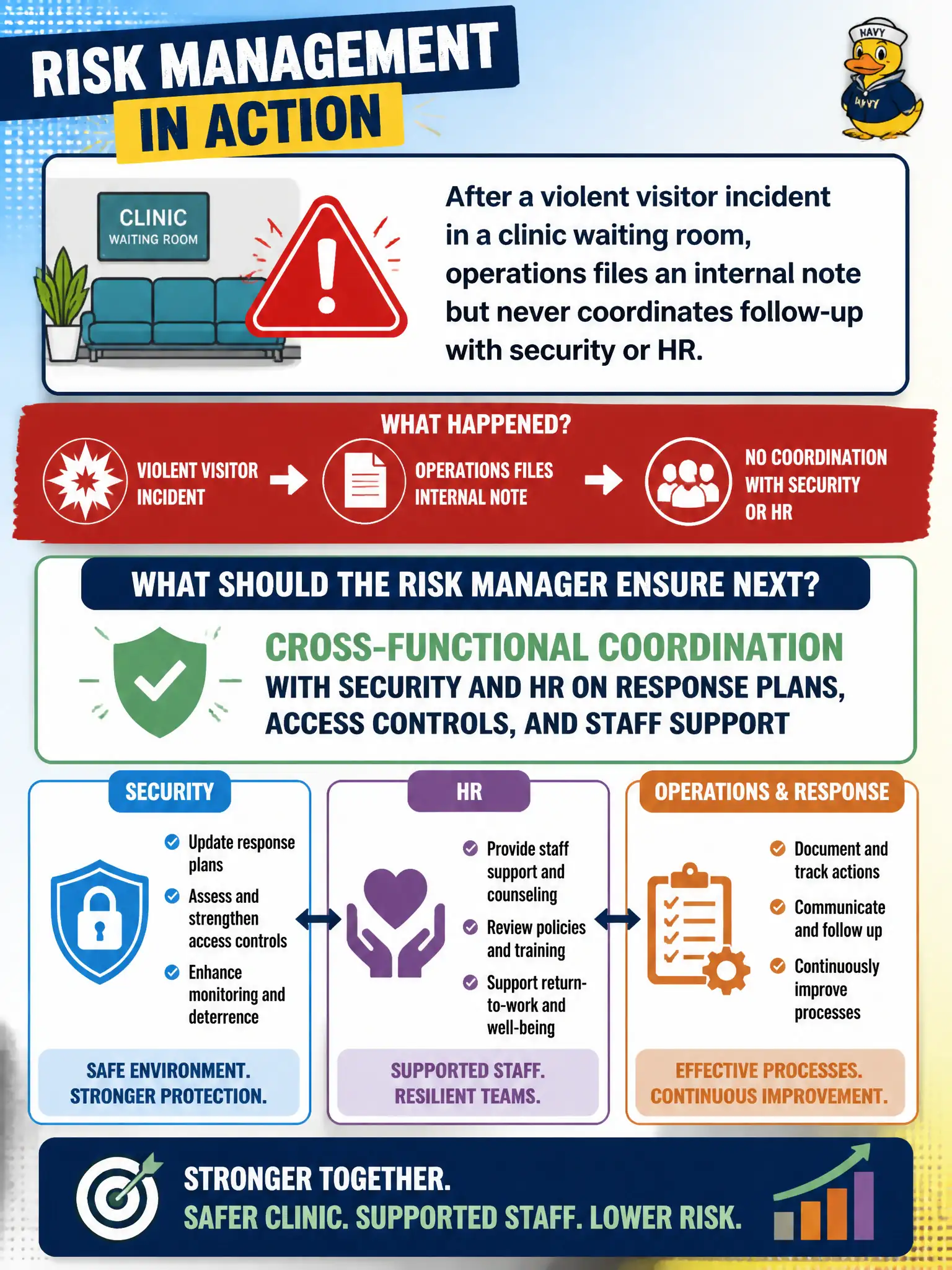
After a violent visitor incident in a clinic waiting room, operations files an internal note but never coordinates follow-up with security or HR. What should the risk manager ensure next?
Select an answer to reveal the explanation.
Short Explanation
A violent visitor is not a paint-and-move-on facilities ticket. Security needs the access and response angle; HR needs staff support and policy follow-through. Risk’s job is to pull those functions into one after-action, not let the note die in a single inbox.
Full Explanation
Cross-functional coordination with security and HR on response plans, access controls, and staff support is what the risk manager should ensure after a violent visitor incident because operations notes alone do not address physical security, behavioral threat follow-up, or employee assistance. Clinic waiting rooms in civic health settings need integrated after-action: lockdown/access changes, visitor management, counseling, and investigation roles. Siloed filing leaves residual risk and unsupported staff.
Updating only the waiting-room paint color fails by concept because aesthetics do not treat violence risk, access control, or trauma support. Keeping the incident siloed in operations to protect departmental autonomy fails because autonomy theater blocks necessary security and HR controls that sit outside operations. Immediate public social-media posts naming the visitor before facts are verified fails because premature identification risks defamation, privacy, and investigative integrity.
Exam caveat: CRMC workplace-violence and incident follow-up expect cross-functional response. A single-department note is an incomplete close-out after a violent visitor event.
Operational check: Convene operations, security, and HR within a defined window after a clinic violence incident; update access/visitor procedures, brief staff on signals and panic methods, offer support resources, and document the joint action plan in the risk register.