
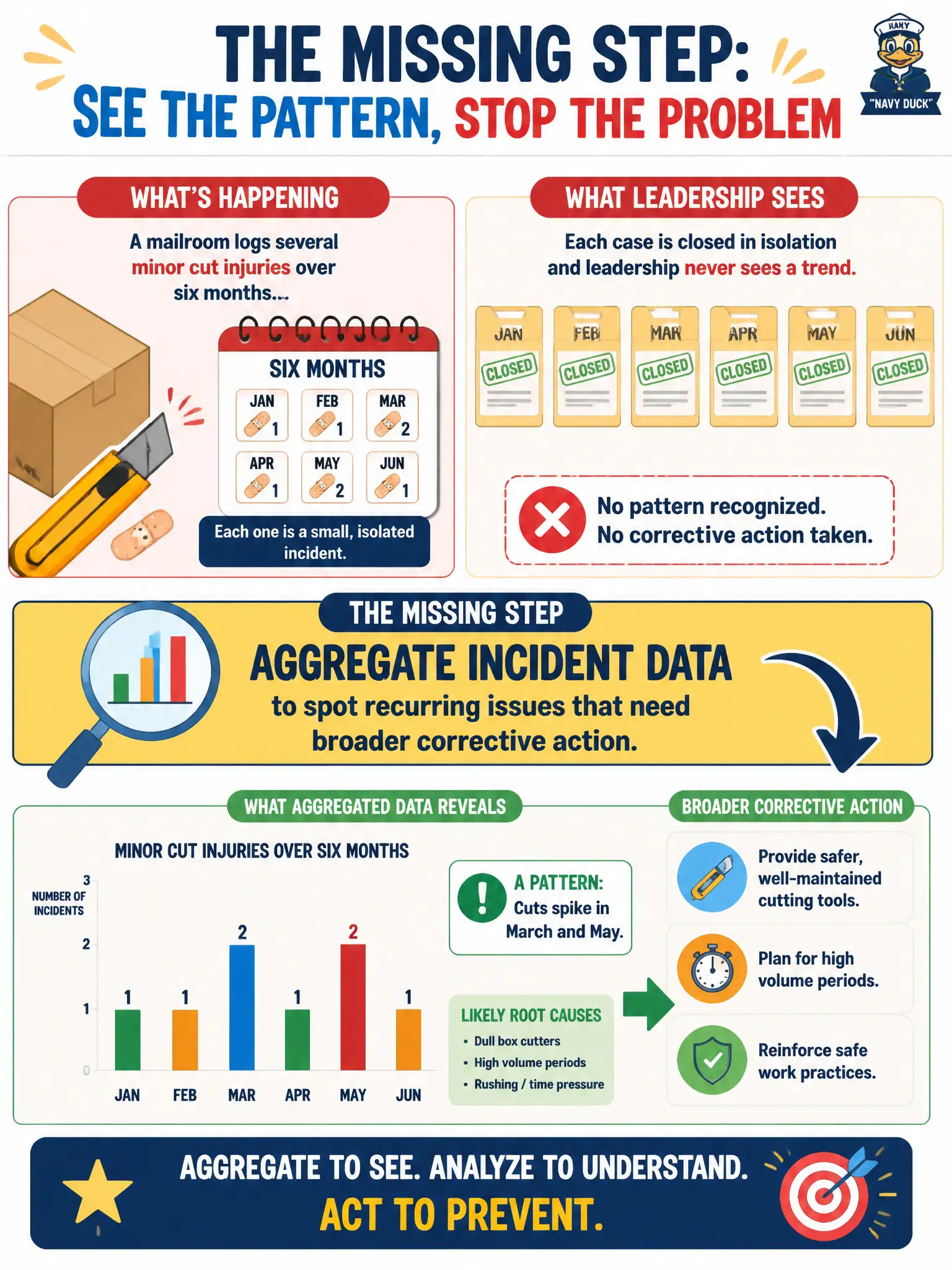
A mailroom logs several minor cut injuries over six months, but each case is closed in isolation and leadership never sees a trend. What analytical step is missing?
Select an answer to reveal the explanation.
Short Explanation
One nick looks like bad luck; six nicks in the same mailroom look like a process problem. If every case closes alone, nobody connects the dots. Roll the data up, see the pattern, then fix the cutter, the gloves, or the layout.
Full Explanation
Aggregating incident data to spot recurring issues that need broader corrective action is correct because closing each minor mailroom cut in isolation hides a pattern that may need better knives, cutters, guards, or methods. Trend analysis converts scattered events into prioritized risk treatment. Civic operations should roll minor injury classes into periodic reviews for recurrence.
Deleting minor-cut records after thirty days to keep dashboards clean fails by concept because destroying short-cycle data prevents the very trend detection needed for prevention. Treating each cut as unique so pattern analysis is never appropriate fails because recurrence across months is exactly when pattern analysis is most appropriate. Escalating only ambulance-level injuries to trend reviews fails because low-severity high-frequency events often precede more serious harm and are cheaper to fix early.
Exam caveat: CRMC analytical use of incident data includes aggregation and trending, not only case-by-case closure. Minor does not mean analytically irrelevant.
Operational check: Produce a quarterly mailroom/cut-injury trend for the city logistics unit; if counts cluster, launch a broader corrective action (tooling, PPE, method) and track whether new cuts decline after implementation.