
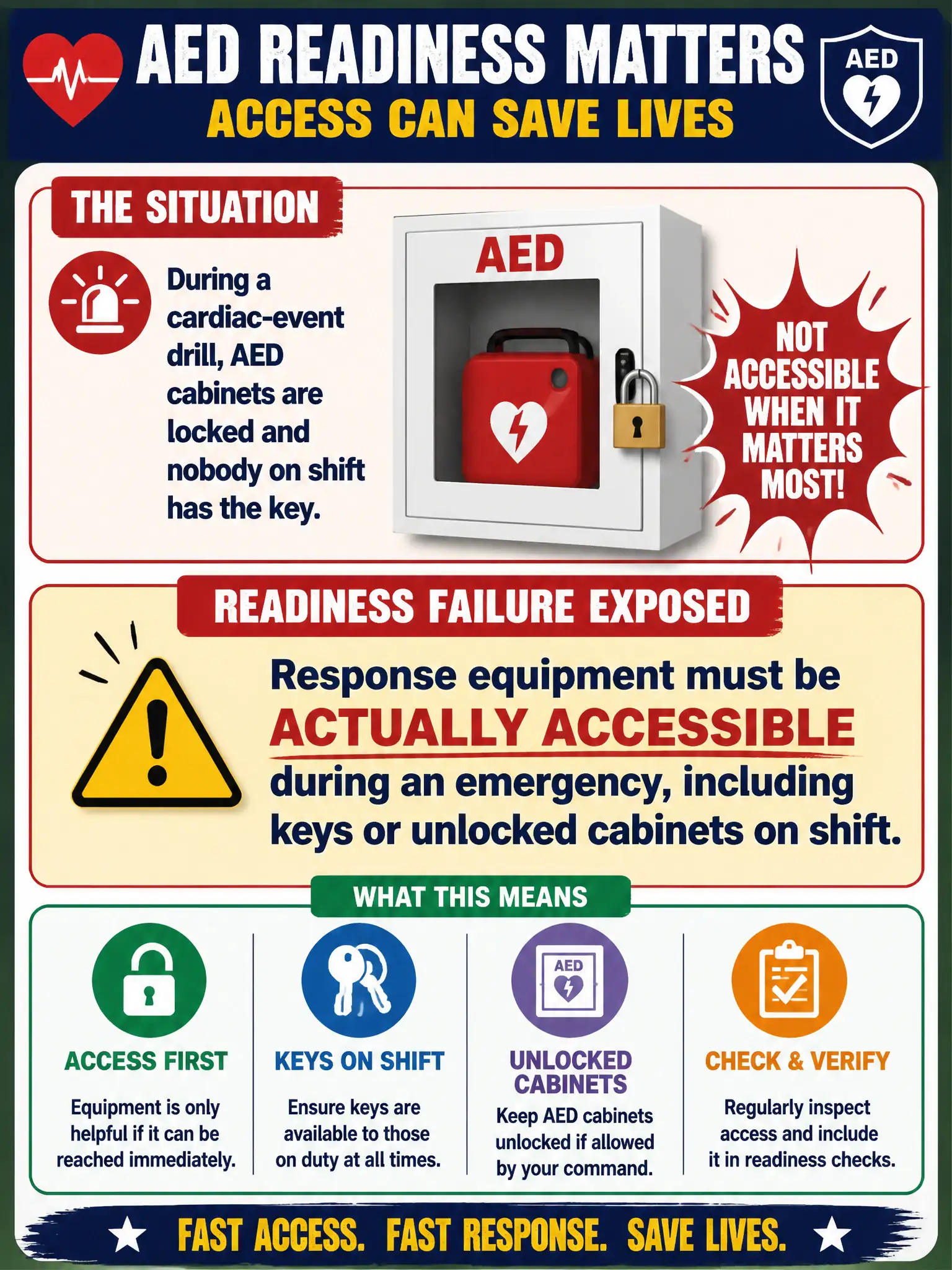
During a cardiac-event drill, AED cabinets are locked and nobody on shift has the key. What readiness failure does this expose?
Select an answer to reveal the explanation.
Short Explanation
An AED behind a lock with no key on shift is a decoration. Drills are supposed to find exactly this kind of gotcha. Make the cabinet reachable—or the key available—every hour the building is occupied, not just during business-card hours.
Full Explanation
Response equipment must be actually accessible during an emergency, including keys or unlocked cabinets on shift, is the readiness lesson when AED cabinets are locked and nobody on shift has the key. Ownership of an AED that cannot be reached in a cardiac event is a false control. Civic drills should deliberately test access, not assume cabinet presence equals readiness.
Avoiding equipment-access testing to keep drills short fails by concept because access is a core readiness objective; shortening drills by skipping it validates the wrong thing. Preferring locked AEDs to prevent theft even during medical emergencies fails because anti-theft design must still allow immediate authorized access—life safety outranks convenience locks without keys on shift. Limiting AED access to only the facilities director so shift coverage is unnecessary fails because cardiac events do not wait for one director; every shift needs a workable access path.
Exam caveat: CRMC emergency readiness evaluates real accessibility of response resources under drill conditions. Locked-without-key and single-person access models fail that test.
Operational check: On each municipal floor, confirm AED cabinets open without hunting for an absent key (breakaway seals, known code, or on-shift key holders); include cabinet-open time in cardiac drills and fix failures before closing the drill.