
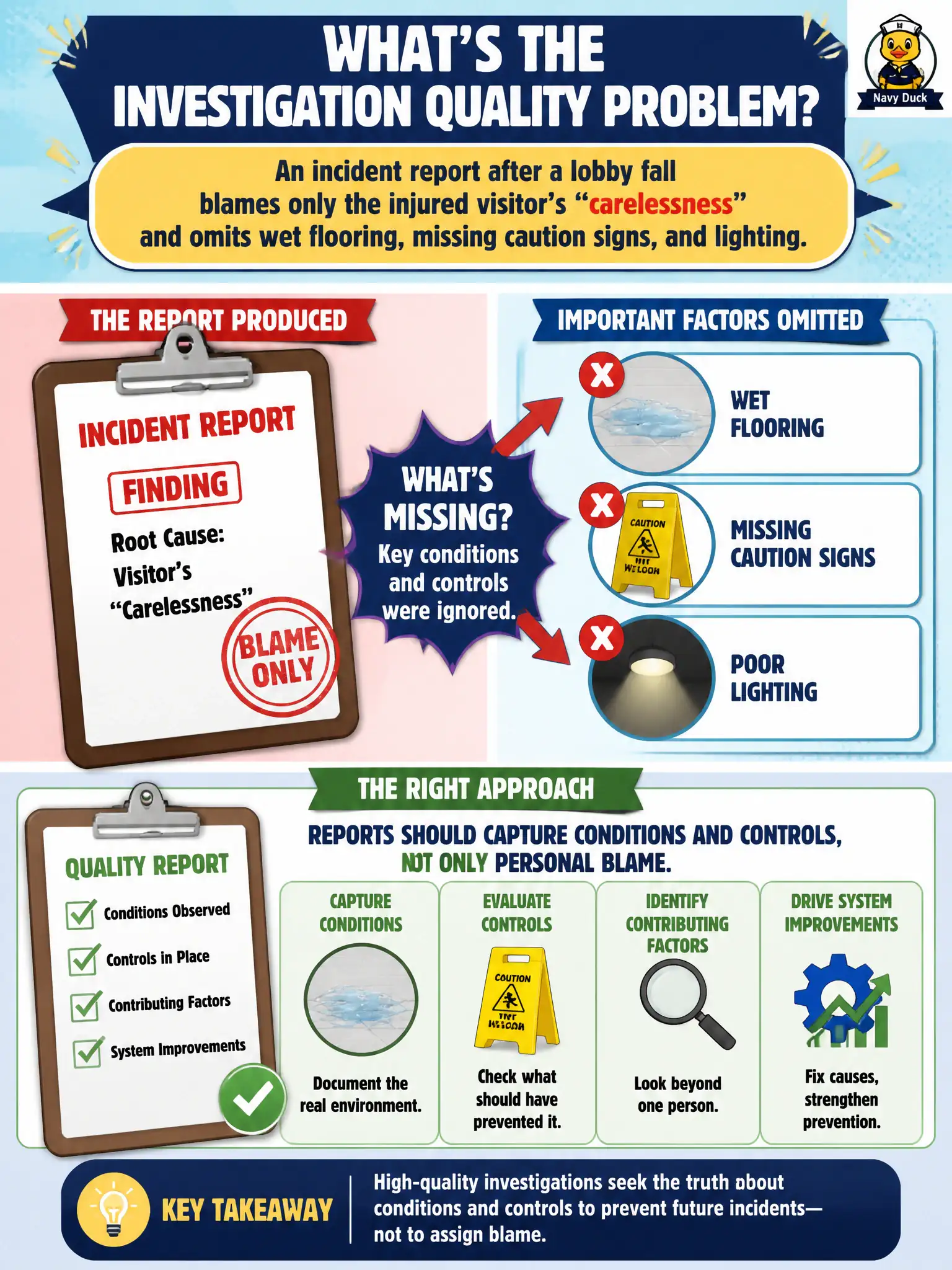
An incident report after a lobby fall blames only the injured visitor’s “carelessness” and omits wet flooring, missing caution signs, and lighting. What investigation quality problem does this illustrate?
Select an answer to reveal the explanation.
Short Explanation
Pinning everything on the person who fell is easy—and usually incomplete. Wet floors, missing signs, and bad lighting are part of the story. Good reports dig into conditions and controls so you can fix the place, not just scold the visitor.
Full Explanation
Reports should capture conditions and controls, not only personal blame, because an investigation that cites only a visitor’s “carelessness” while omitting wet flooring, missing caution signs, and poor lighting misses treatable causes. Quality incident investigation maps environmental and system factors alongside human actions. Civic lobbies and public counters especially need condition capture because the organization controls flooring, signage, and lighting.
Treating personal blame as always sufficient when a visitor is involved fails by concept because visitor status does not erase host-controlled conditions that contributed to the fall. Omitting environmental factors if CCTV was not recording fails because investigation uses multiple evidence sources—witnesses, scene inspection, maintenance logs—not CCTV exclusivity. Logging visitor incidents only in marketing guest-books fails because guest-books are not safety systems and will not drive hazard correction or claims coordination.
Exam caveat: CRMC investigation quality rejects blame-only narratives. Condition and control factors belong in the report whether the injured party is employee or visitor.
Operational check: Audit a sample of lobby-fall reports for condition fields (floor state, signage, lighting, weather tracking); reopen thin blame-only files, correct hazards, and retrain investigators on system-factor capture.