
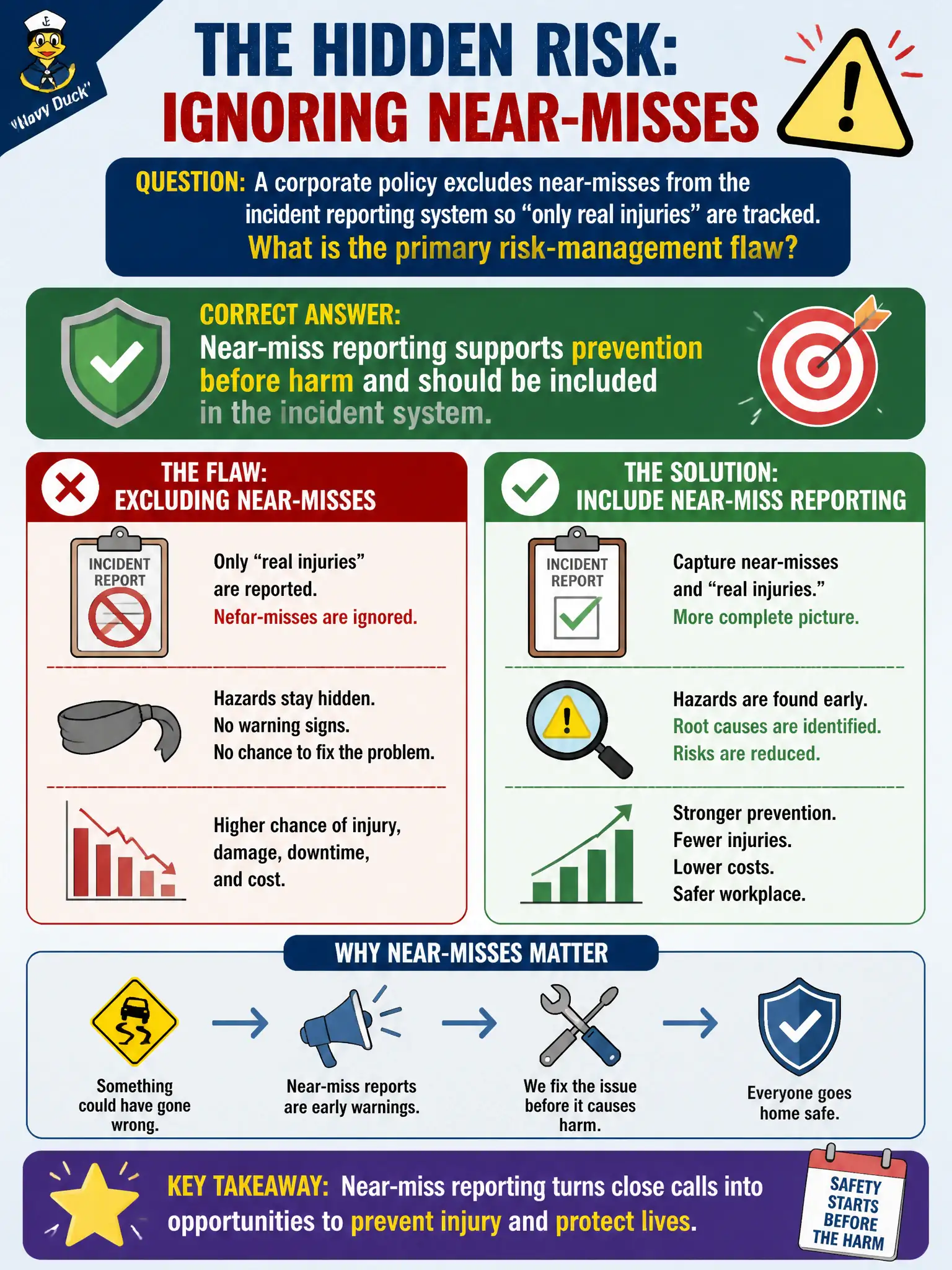
A corporate policy excludes near-misses from the incident reporting system so “only real injuries” are tracked. What is the primary risk-management flaw?
Select an answer to reveal the explanation.
Short Explanation
A near-miss is a free dress rehearsal of the injury that almost happened. If policy locks those out of the system, you throw away the cheapest warning you will ever get. Capture them, learn, and fix the setup before someone actually gets hurt.
Full Explanation
Near-miss reporting supports prevention before harm and should be included in the incident system is correct because near-misses reveal the same pathways as injuries without waiting for damage. Excluding them so “only real injuries” are tracked blinds the organization to leading indicators and wastes free learning. Civic risk programs treat near-miss intake as a prevention engine inside the same reporting ecosystem, with triage proportionate to severity potential.
Claiming near-misses inflate insurance premiums whenever logged fails by concept because near-miss logs are internal learning records, not automatic premium invoices, and fear of cost is not a reason to disable prevention data. Claiming near-misses are legally identical to OSHA recordables and must replace injury forms fails because near-misses and recordable injuries are distinct concepts; including near-misses does not mean they replace injury recording. Claiming exclusion improves culture by reducing paperwork anxiety fails because hiding weak signals teaches staff that early warnings do not matter and usually worsens later paperwork after real harm.
Exam caveat: CRMC incident systems value near-miss capture for proactive control improvement. “Only real injuries” policies are a classic exam distractor against prevention-oriented reporting.
Operational check: Enable near-miss as a report type in the municipal incident system, brief supervisors that reporting near-misses is expected and non-punitive, review weekly for patterns, and convert high-potential near-misses into corrective actions.