
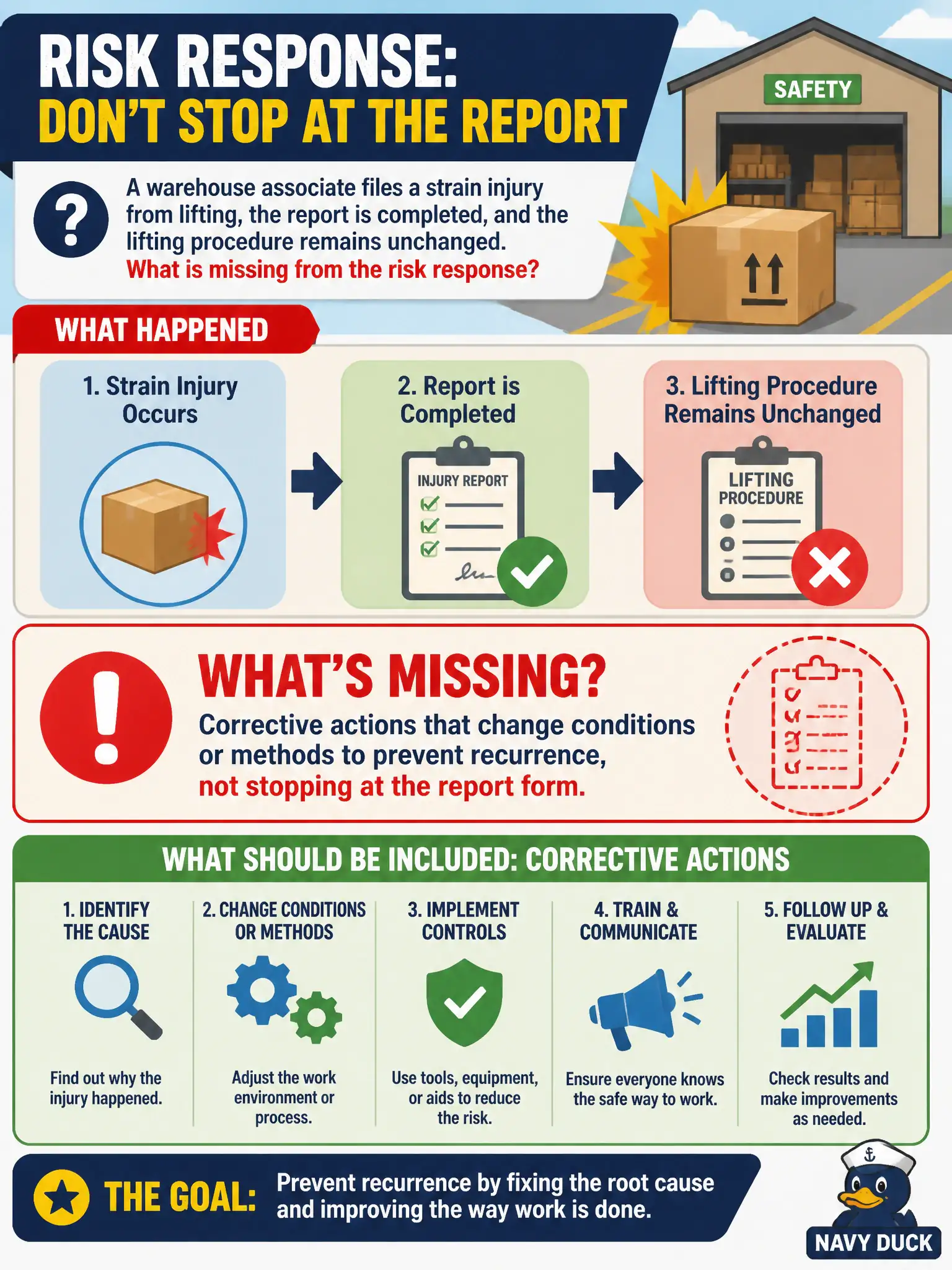
A warehouse associate files a strain injury from lifting, the report is completed, and the lifting procedure remains unchanged. What is missing from the risk response?
Select an answer to reveal the explanation.
Short Explanation
Filing the form is the starting gun, not the finish line. If the lift is still done the same risky way tomorrow, you documented pain without reducing it. Fix the method, the tools, or the load—then the report actually bought you something.
Full Explanation
Corrective actions that change conditions or methods to prevent recurrence—not stopping at the report form—are missing when a strain injury is filed yet the lifting procedure stays unchanged. Reporting without treatment of the underlying exposure is documentation theater. Civic warehouse and facilities programs must link completed reports to engineering, administrative, or PPE changes such as team lifts, assist devices, or revised weight limits and methods.
A public apology email naming the injured associate fails by concept because public naming can violate privacy and does not remove the lifting hazard that caused the strain. Automatic termination of anyone who reports a musculoskeletal injury fails because punishing reporting destroys reporting culture and invites hidden injuries. Raising the lifting weight limit to reduce future reportable events fails because inflating thresholds to suppress counts increases exposure rather than treating risk—metric gaming, not risk reduction.
Exam caveat: CRMC incident response expects the loop to continue into corrective and preventive action. A closed form with unchanged hazardous methods is an incomplete risk response.
Operational check: For each lost-time or strain report at the city warehouse, require at least one condition/method change (assist equipment, revised procedure, task redesign), verify implementation on the floor, and trend whether similar strains decline.