
An internal audit of a city warehouse procedure checklist flags several missing supervisor signatures, then closes the finding without walking the floor. What should the risk manager insist the review also test?
Select an answer to reveal the explanation.
Short Explanation
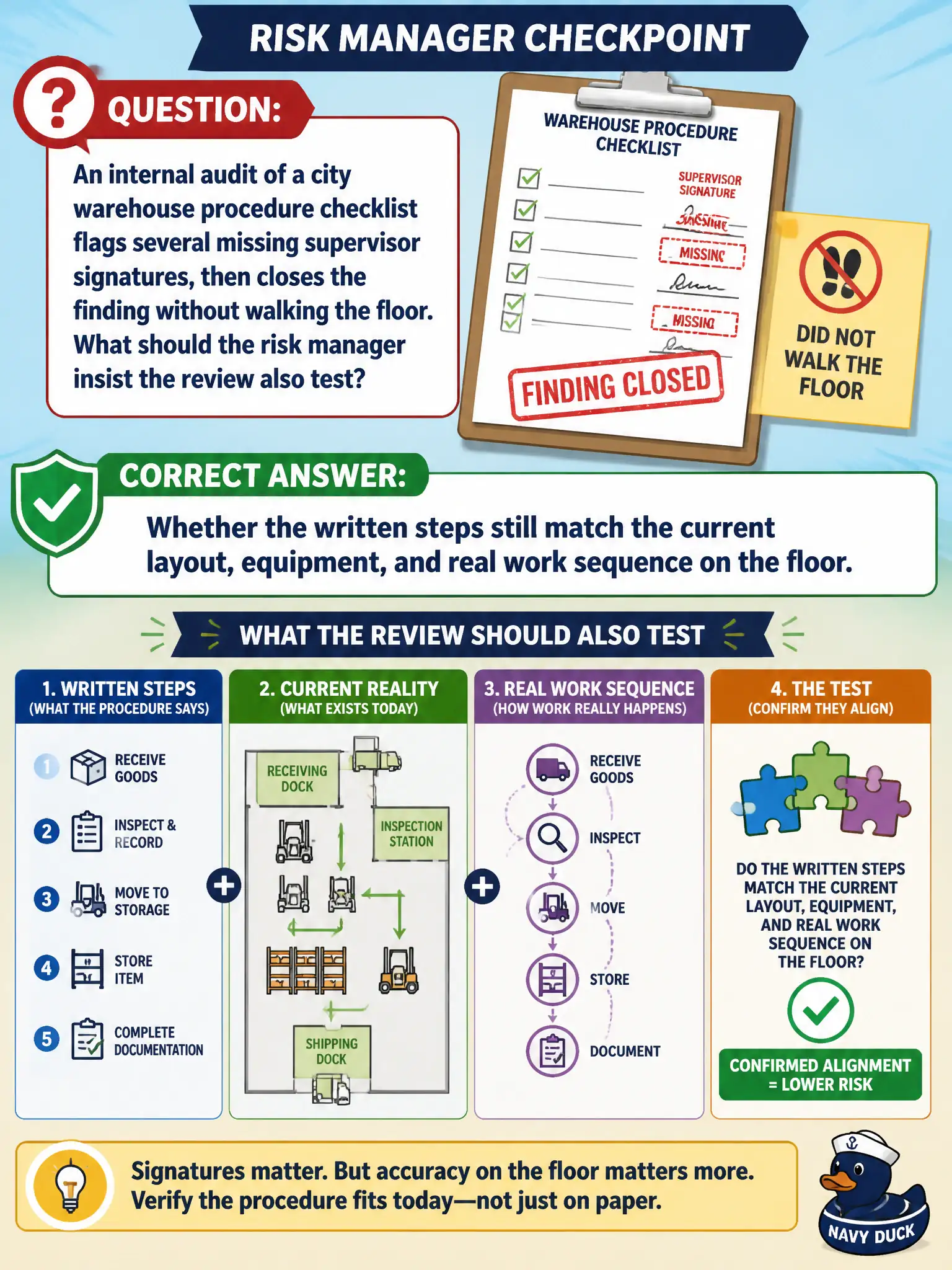
Signatures prove someone signed a page—they do not prove the page still matches the building. If racks moved and the steps did not, the binder is theater. Walk the floor and ask whether the procedure fits reality, not only whether the signature lines are filled.
Full Explanation
Whether the written steps still match the current layout, equipment, and real work sequence on the floor is what the risk manager should insist the review also test because signature completeness alone does not prove procedure fitness. An internal audit that closes on missing supervisor signatures without walking the warehouse may miss relocated aisles, new equipment, or reordered tasks that make the checklist obsolete. Civic risk assurance needs content-to-reality testing alongside documentation hygiene.
Whether every signature block uses the same blue-ink pen brand fails by concept because ink cosmetics are not risk-relevant evidence of procedure adequacy or adherence quality. Whether the binder spine has the newest color-coded cover sheet fails because filing aesthetics do not validate that steps match floor reality. Whether auditors can finish faster by skipping interviews with floor staff fails because skipping operational inquiry trades speed for blindness to the very mismatches risk managers must catch.
Exam caveat: CRMC monitoring and procedure review distinguish clerical completeness from operational validity. Closing findings on signatures alone without reality checks is incomplete assurance.
Operational check: Require warehouse procedure audits for city sites to include a floor walk comparing checklist steps to current layout and equipment; reopen or extend findings when reality diverges even if signatures are later completed.