
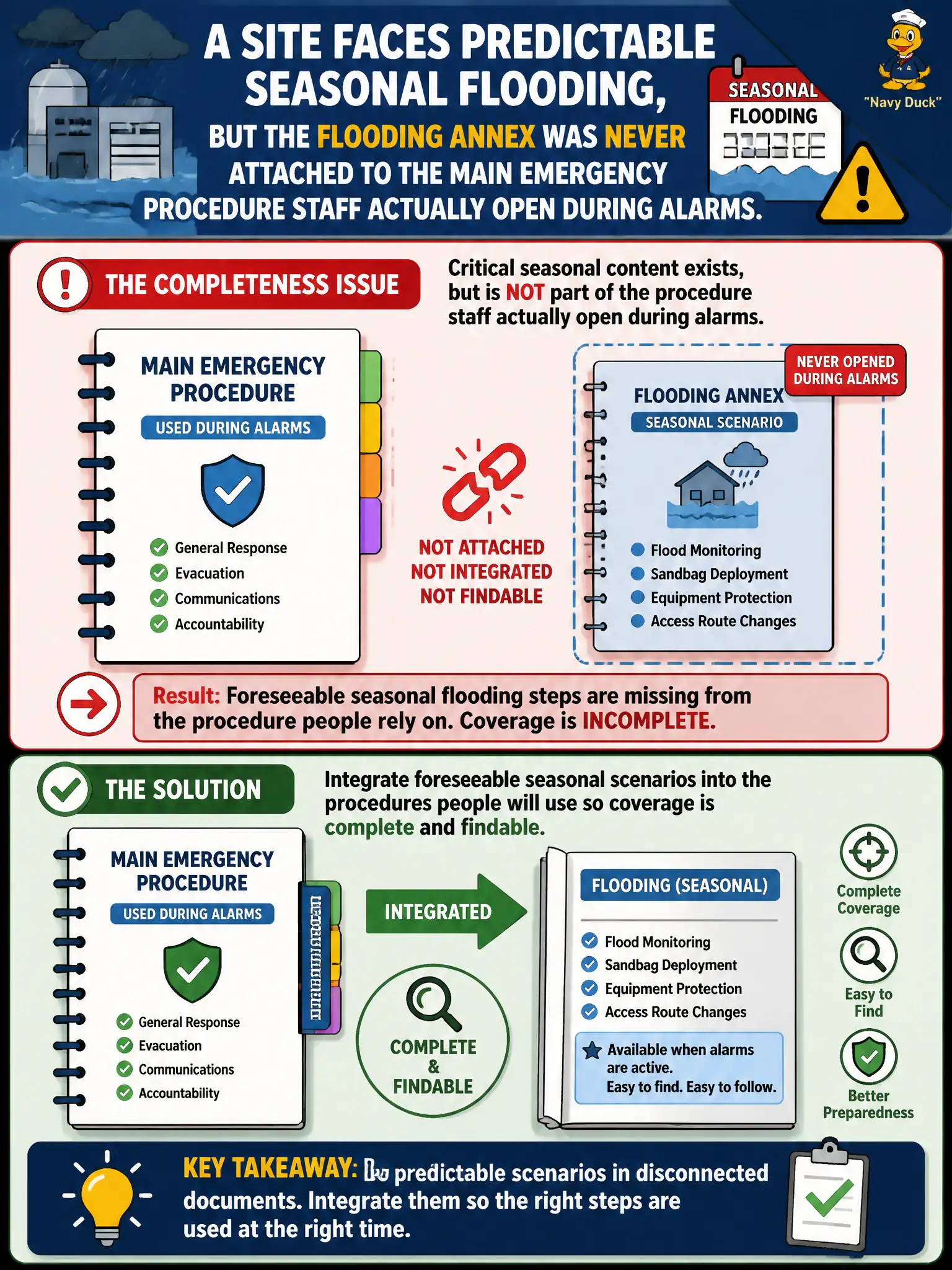
A site faces predictable seasonal flooding, but the flooding annex was never attached to the main emergency procedure staff actually open during alarms. What completeness issue does this create?
Select an answer to reveal the explanation.
Short Explanation
If flood steps live in a forgotten annex nobody opens during the alarm, they might as well not exist. Foreseeable seasons belong in the procedure path responders actually use. Completeness means findable coverage, not orphaned PDFs.
Full Explanation
Integrating foreseeable seasonal scenarios into the procedures people will use so coverage is complete and findable is correct because predictable flooding that lives only outside the opened emergency procedure will be missed under alarm stress. Completeness includes both content existence and attachment to the working document path staff actually open. Civic public-works and facilities teams need flood annex steps co-located with the primary emergency procedure.
Treating seasonal scenarios as optional folklore that need not appear in emergency procedures fails by concept because foreseeable, recurring hazards are core emergency content, not optional stories. Keeping flood steps only in an executive strategy deck operations cannot access fails because strategy decks are not point-of-use response tools during events. Waiting until after the next flood to decide whether an annex belongs with the main procedure fails because post-event discovery is a late trigger when the hazard is already known and seasonal.
Exam caveat: CRMC procedure completeness expects foreseeable scenarios to be covered in the documents responders will open. An orphan annex that never links from the live procedure is an incomplete control design.
Operational check: Attach the seasonal flood annex to the main municipal emergency procedure with clear cross-references, place a quick-action flood card at the EOC/ops desk, and drill retrieval during a wet-season tabletop before peak flood months.