
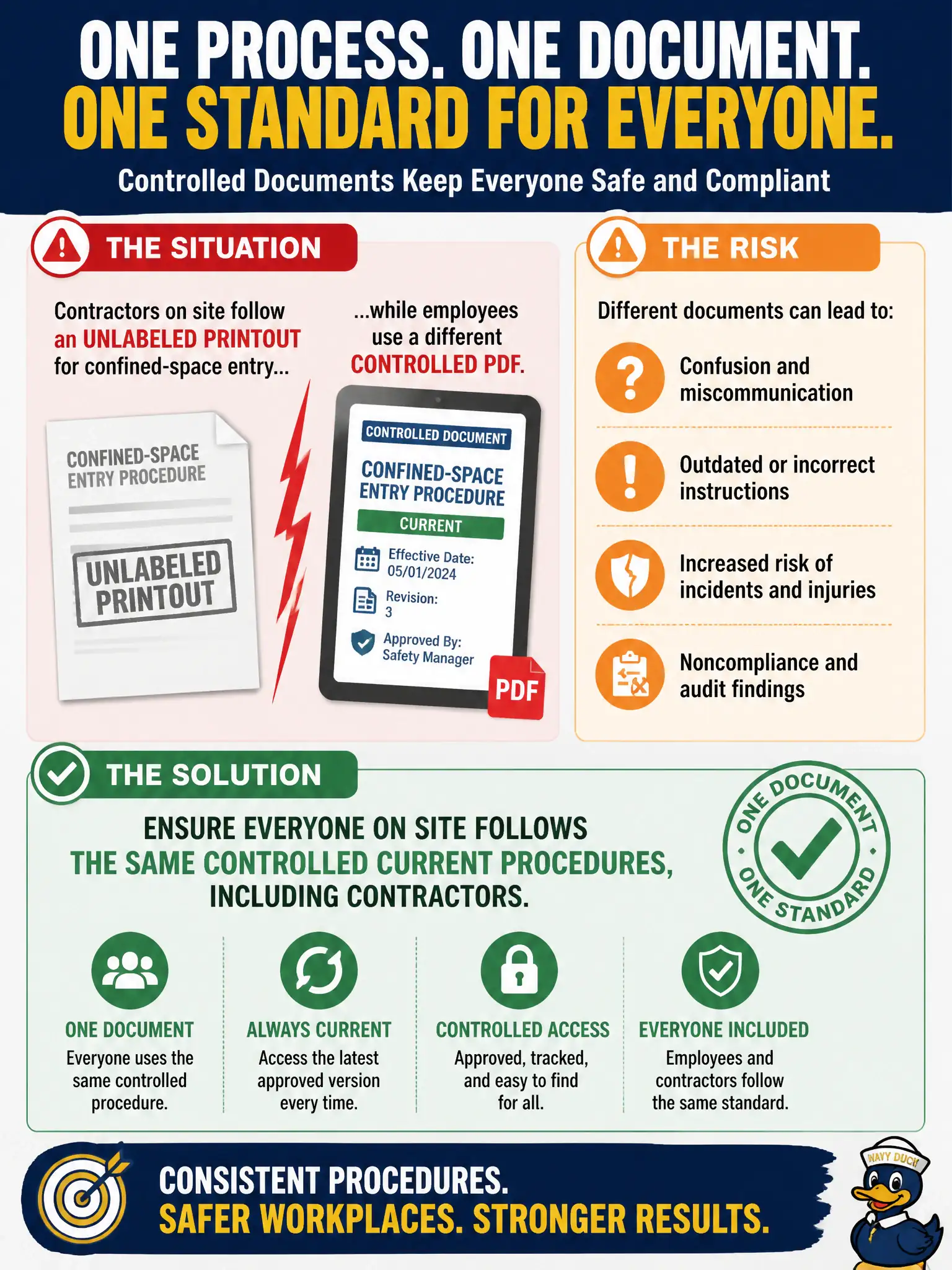
Contractors on site follow an unlabeled printout for confined-space entry while employees use a different controlled PDF. What controlled-document practice should leadership enforce?
Select an answer to reveal the explanation.
Short Explanation
Two playbooks on one job site is a recipe for crossed wires in a confined space. Contractors aren’t guests in a different rulebook—they need the same controlled current procedure. One site, one source of truth.
Full Explanation
Ensuring everyone on site follows the same controlled current procedures, including contractors, is correct because mixed unlabeled printouts versus controlled PDFs create inconsistent confined-space practice and unequal protection. Host employers in civic projects remain accountable for the hazard environment; contractor convenience copies that diverge from the controlled entry procedure are a document-control and life-safety failure.
Allowing each crew private unmarked procedures as long as work finishes on time fails by concept because schedule success does not validate correct entry controls, permits, or rescue readiness. Giving contractors older printouts intentionally so employees retain information advantage fails because asymmetric outdated instructions increase shared-site risk and violate consistent control expectations. Posting conflicting versions side by side and letting crews choose per shift preference fails because preference-based procedure selection destroys standardization and auditability.
Exam caveat: CRMC controlled-document practice extends to all persons performing the work on site. Contractor status does not authorize a parallel unlabeled procedure set for the same high-risk task.
Operational check: At the next confined-space job on county property, issue only the controlled current entry procedure to employees and contractors, collect and destroy unlabeled printouts, and brief both crews on the same permit and rescue steps before entry.