
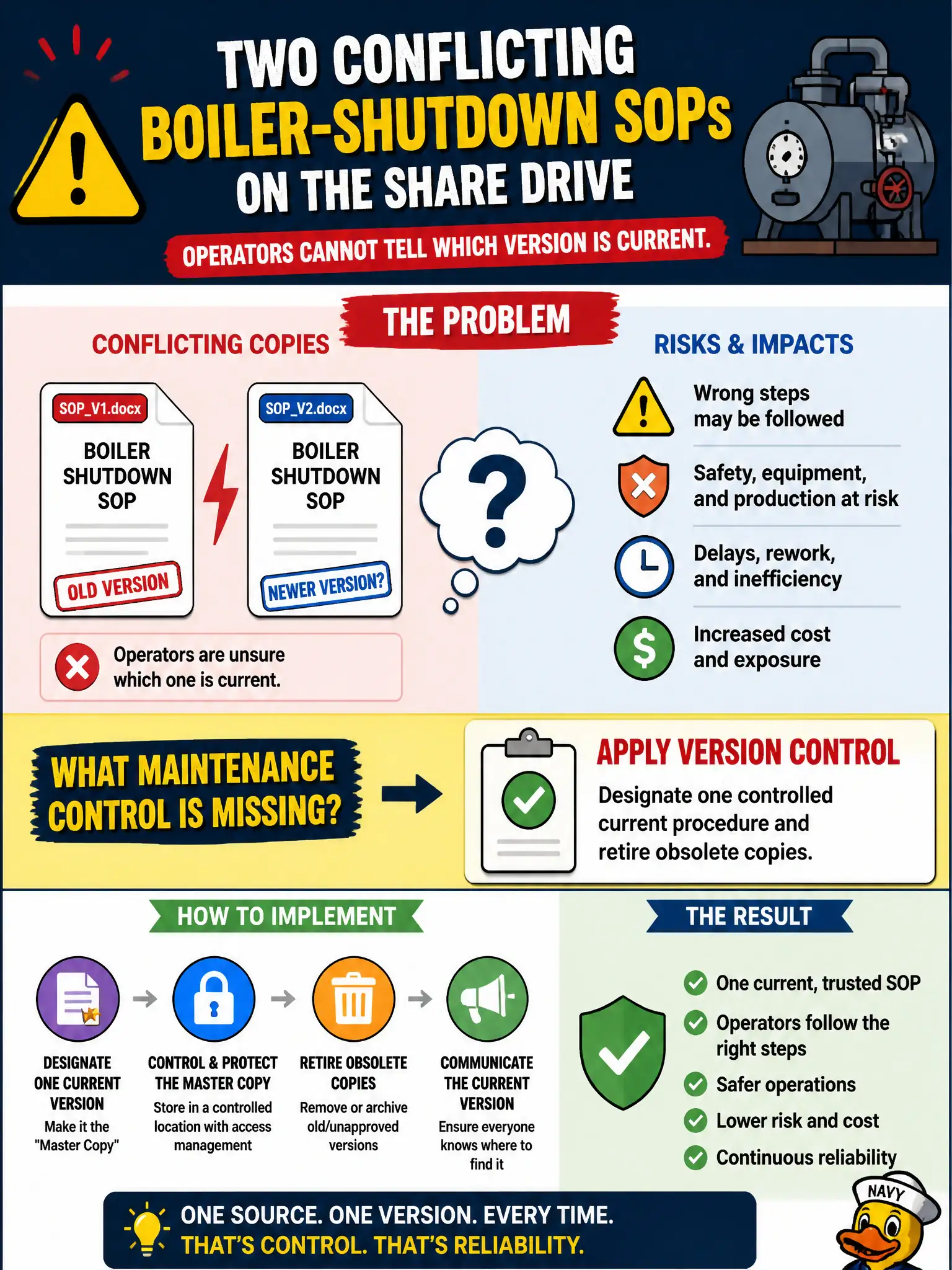
Two conflicting boiler-shutdown SOPs sit on the share drive, and operators cannot tell which version is current. What maintenance control is missing?
Select an answer to reveal the explanation.
Short Explanation
Two "official" shutdown recipes on the same drive is a coin-flip for the boiler. Version control means one living document and obsolete copies clearly retired. Confusion is a risk control failure, not a filing quirk.
Full Explanation
Applying version control—designating one controlled current procedure and retiring obsolete copies—is correct because conflicting boiler-shutdown SOPs on a share drive force operators to guess which steps are authoritative. Ambiguous currency is a direct cause of wrong valve sequences and delayed isolation. Civic utilities and facilities need a single controlled current document with clear identifiers and removal of unmarked obsolete files from operational paths.
Encouraging operators to average two SOPs into a personal hybrid checklist fails by concept because hybridization invents an uncontrolled third procedure and destroys consistency across shifts. Keeping every historical draft online unmarked so auditors see full creativity fails because unmarked drafts are confusion hazards for operators, not audit assets; archives belong in labeled historical stores, not the live path. Banning written shutdown steps and relying on memory contests between shifts fails because critical isolation sequences require controlled documentation, not competitive recall.
Exam caveat: CRMC document control expects one current authoritative procedure for a given task. Multiple live unmarked versions are an adequacy and maintenance failure even if each draft was once approved.
Operational check: Inventory boiler-shutdown files on the county share drive, designate one controlled current SOP with version ID, move obsolete drafts to a clearly labeled archive (or delete per retention rules), and verify operators open only the controlled link from the response binder.