
Annual compliance monitoring consists of managers signing a binder affirming procedures were followed, with no observation of actual work practices. What monitoring improvement is most appropriate?
Select an answer to reveal the explanation.
Short Explanation
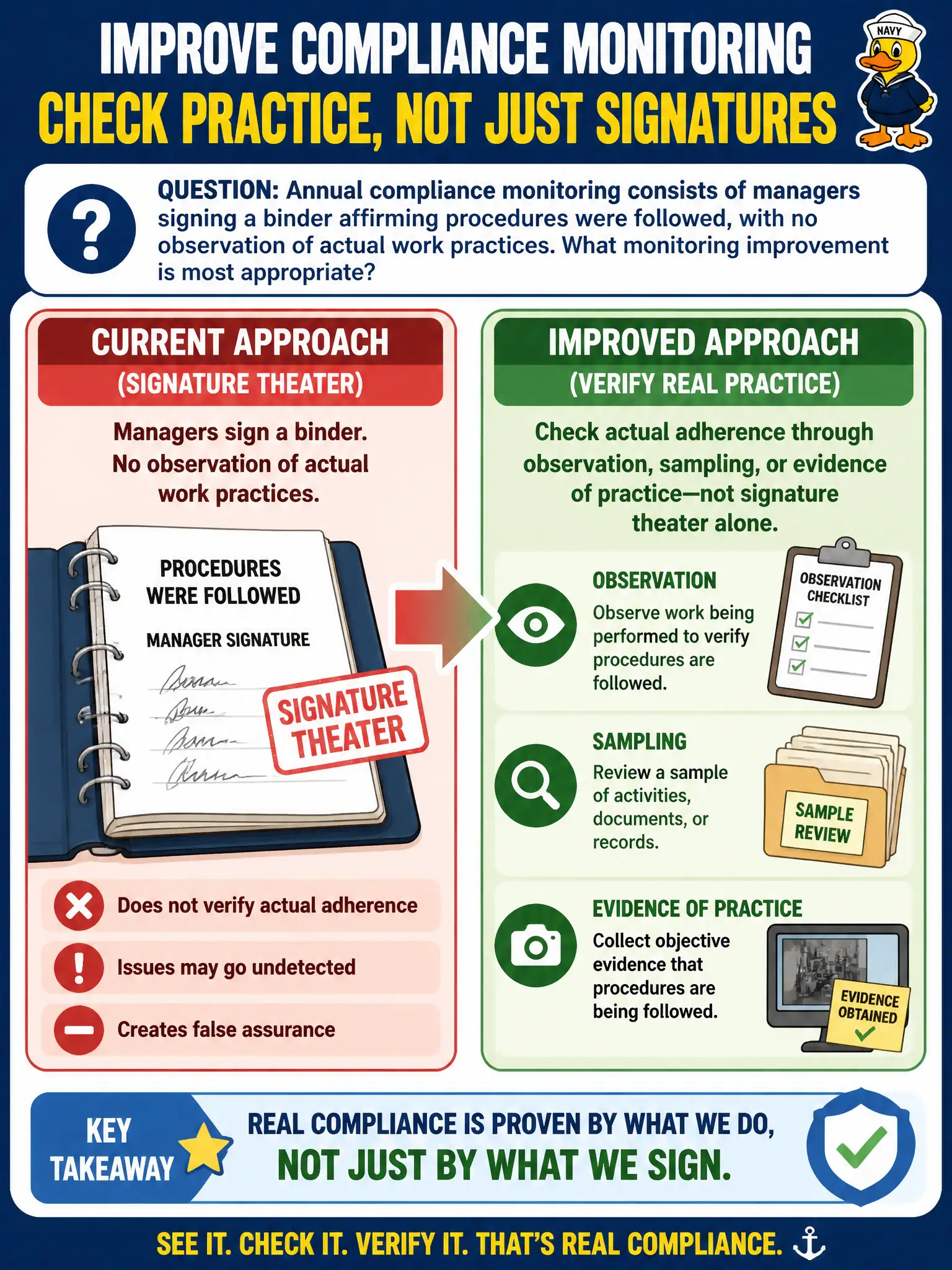
A signed binder that nobody opened is compliance cosplay. Watching how people actually lock out, spill-clean, or escalate tells the real story. Monitor practice, not just penmanship.
Full Explanation
Checking actual adherence through observation, sampling, or evidence of practice—not signature theater alone—is correct because monitoring must verify behavior against the procedure, not merely attest that a binder exists. Manager signatures without watching lockout, spill response, or escalation practices invent false assurance. Civic risk programs need sample observations, checklist evidence, or system logs that show how work is really done.
Increasing the font size on signature pages so attestation looks more formal fails by concept because presentation cosmetics do not create evidence of adherence. Eliminating monitoring entirely once signatures exist for the year fails because a one-time attestation cannot detect drift across months of operations. Allowing anonymous self-attestation without independent review fails because unchecked self-report systematically under-detects noncompliance and conflicts of interest.
Exam caveat: CRMC compliance monitoring distinguishes documentation of intent from verification of practice. Attestation can support a monitoring program but cannot replace observation or evidentiary sampling of real work.
Operational check: Replace binder-only annual sign-off with a quarterly sample: observe or evidence two critical procedures per shop (e.g., lockout and spill kit readiness), record findings, assign corrective actions, and trend results for the city risk committee.