
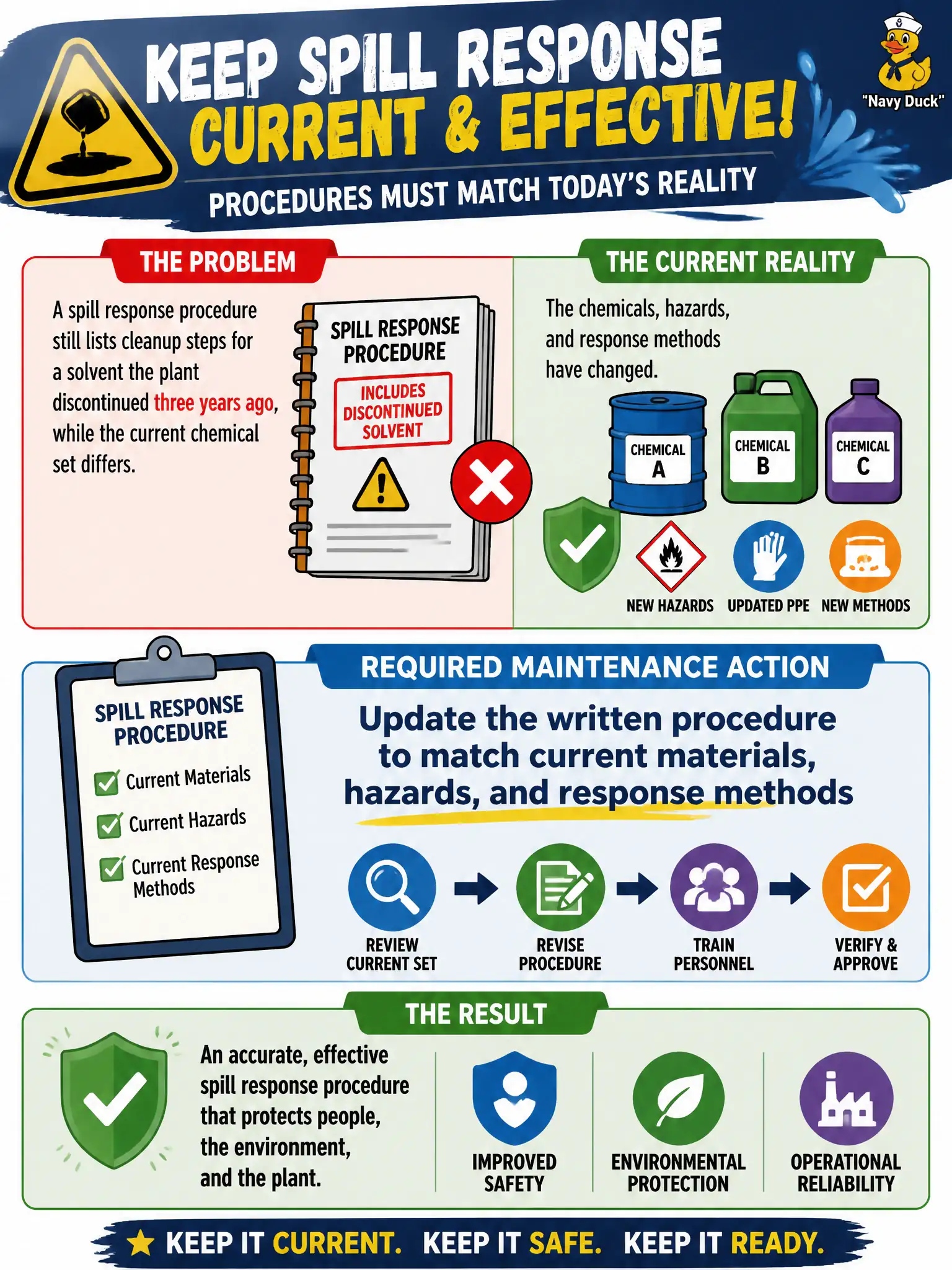
A spill response procedure still lists cleanup steps for a solvent the plant discontinued three years ago, while the current chemical set differs. What maintenance action is required?
Select an answer to reveal the explanation.
Short Explanation
A spill playbook naming a chemical you don’t stock anymore is a treasure map to the wrong island. When materials change, the procedure has to change too. Update the words people will actually follow under pressure.
Full Explanation
Updating the written spill procedure to match current materials, hazards, and response methods is correct because procedures are control documents that must track the real process. When a plant discontinues a solvent and introduces different chemicals, cleanup steps, PPE, extinguishing agents, and notification triggers change. Leaving obsolete solvent steps in a civic utility or public-works playbook misleads responders and creates false confidence during a live spill.
Keeping obsolete solvent steps for historical flavor even if they mislead responders fails by concept because historical narrative belongs in archives, not in active response procedures that people follow under stress. Relying on tribal knowledge so documentation never needs revision fails because undocumented know-how walks out with staff turnover and cannot be audited or trained consistently. Deleting all spill procedures and improvising from memory each event fails because improvisation without a current baseline increases error, training inconsistency, and regulatory exposure.
Exam caveat: CRMC procedure adequacy links documentation currency to process and material change. A signed but outdated procedure is not an adequate control merely because it still exists in the binder.
Operational check: After any chemical inventory change at a municipal yard or plant, trigger a controlled document revision: update spill steps, SDS references, and training; retire superseded pages; and verify the posted field copy matches the current controlled version.