
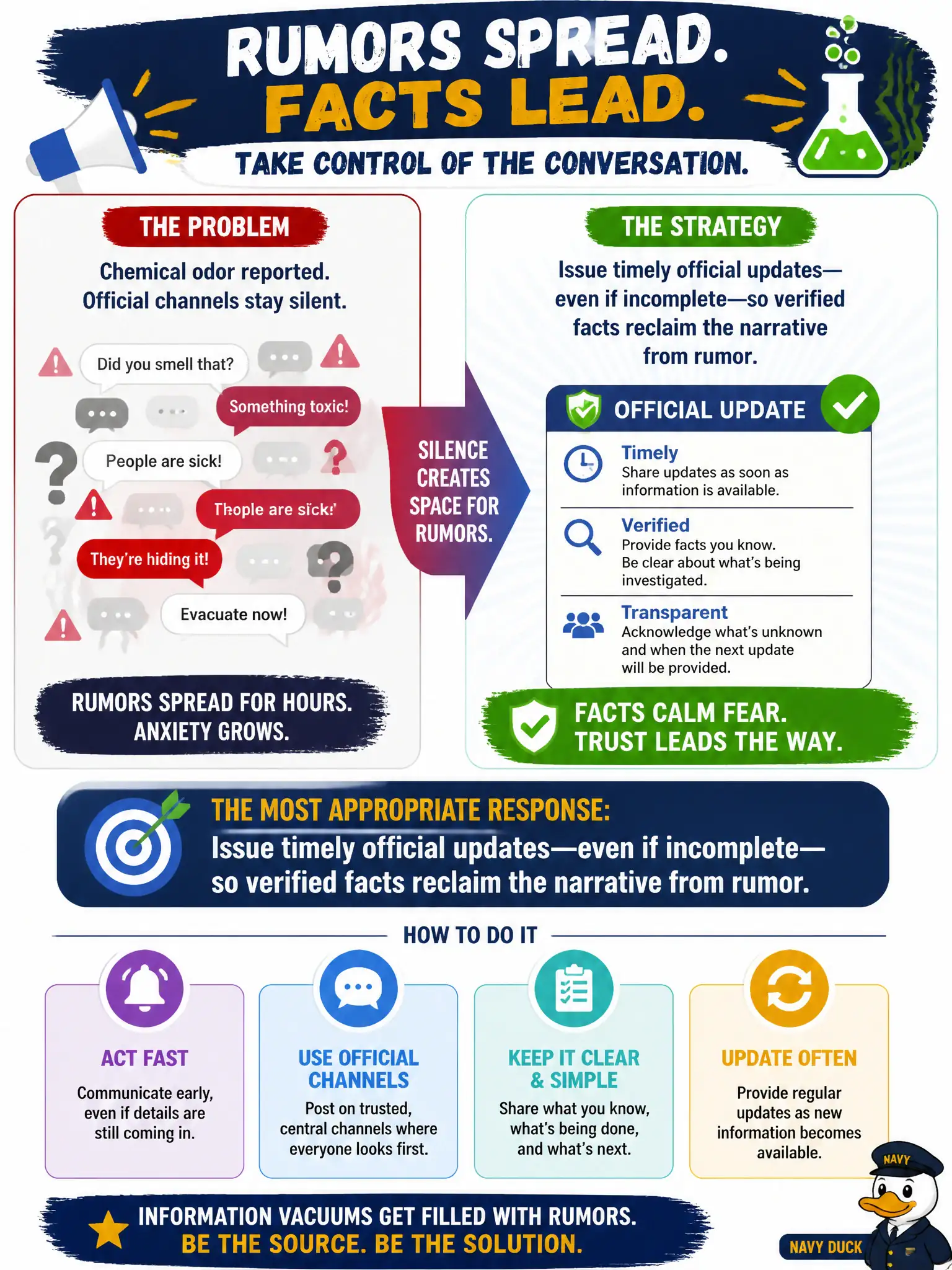
Rumors spread for hours on employee chat while official channels stay silent after a chemical odor event. What communication strategy response is most appropriate?
Select an answer to reveal the explanation.
Short Explanation
Silence is a blank whiteboard—gossip writes on it first. A short official "we’re investigating, here’s what to do now" beats hours of radio quiet. Timely voice stops rumor from becoming the default brief.
Full Explanation
Issuing timely official updates—even if incomplete—so verified facts reclaim the narrative from rumor is correct because silence cedes the information environment to speculation. After a chemical odor event, employees fill gaps with chat theories that can trigger unnecessary evacuation, wrong PPE choices, or dismissiveness of real hazards. Civic leaders should publish what is known, what is being checked, and what people should do now, then refresh as facts firm up.
Banning all chat tools permanently so rumors have nowhere to travel fails by concept because informal channels reappear elsewhere and the underlying need for timely official information remains unmet; tool bans do not substitute for leadership voice. Waiting until a full root-cause report is finished before any official word fails because root-cause timelines are too long for first-hour safety behavior and guarantee rumor dominance. Letting informal rumors run because they usually self-correct fails because rumors often amplify error and delay protective action; self-correction is unreliable under stress.
Exam caveat: CRMC crisis communication favors early partial truth with clear uncertainty labels over polished late completeness. Speed with verified facts and interim actions beats perfect silence.
Operational check: Pre-approve a municipal odor/incident holding statement template; when sensors or reports trigger, issue the first official update within a defined short window stating known facts, investigation status, and required protective actions—then monitor chat for lingering falsehoods to correct.