
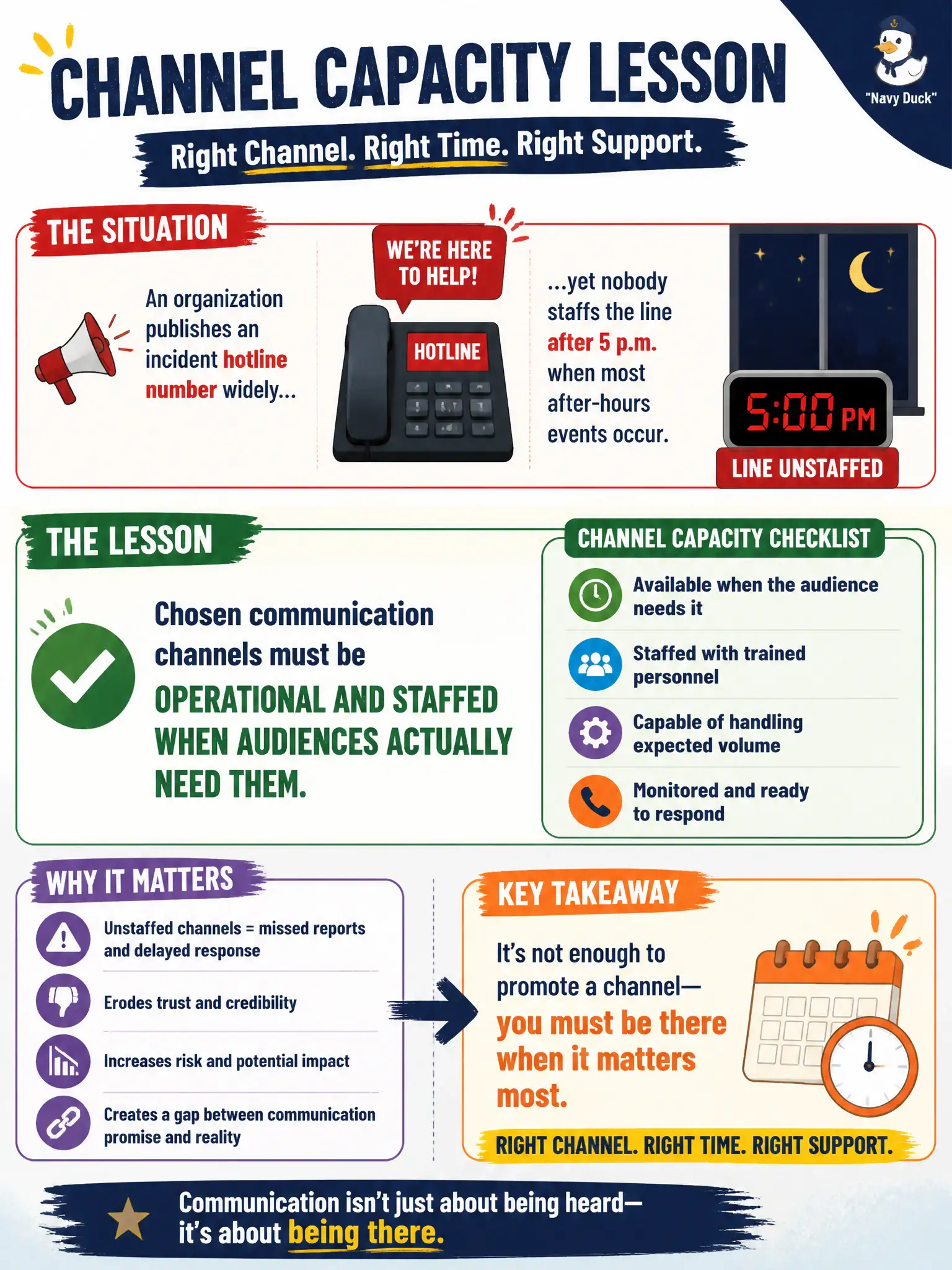
An organization publishes an incident hotline number widely, yet nobody staffs the line after 5 p.m. when most after-hours events occur. What channel-capacity lesson applies?
Select an answer to reveal the explanation.
Short Explanation
Advertising a hotline that goes dark at five is like posting a fire extinguisher that’s empty—comforting until you need it. Channels only count if someone answers when trouble hits. Match staffing to the hours risk actually shows up.
Full Explanation
Chosen communication channels must be operational and staffed when audiences actually need them is correct because publishing a hotline that is unmanned after hours creates a false control. After-hours events—facility alarms, utility disturbances, library evening programs—are when many civic incidents surface; an advertised number that rings into voicemail is channel theater. Capacity planning includes people, escalation, and coverage windows aligned to realistic demand, not daytime convenience alone.
Publishing more phone numbers always compensating for empty shifts fails by concept because additional unmanned lines multiply confusion without adding response capacity. Treating hotlines as symbolic only fails because symbolic channels train the public to expect help that never arrives, destroying trust and delaying alternate reporting. Redirecting after-hours callers to social media comments instead of a live channel fails because comment threads are not monitored incident desks and cannot reliably acknowledge, triage, or dispatch.
Exam caveat: CRMC channel strategy evaluates fitness for purpose under actual operating hours. Listing a channel in a plan is insufficient if staffing and escalation do not match when audiences call.
Operational check: Map peak after-hours incident times for county facilities, staff or contract the hotline across those windows with a documented backup (on-call radio/SMS), and test a 9 p.m. call monthly to confirm live answer and ticket creation.