
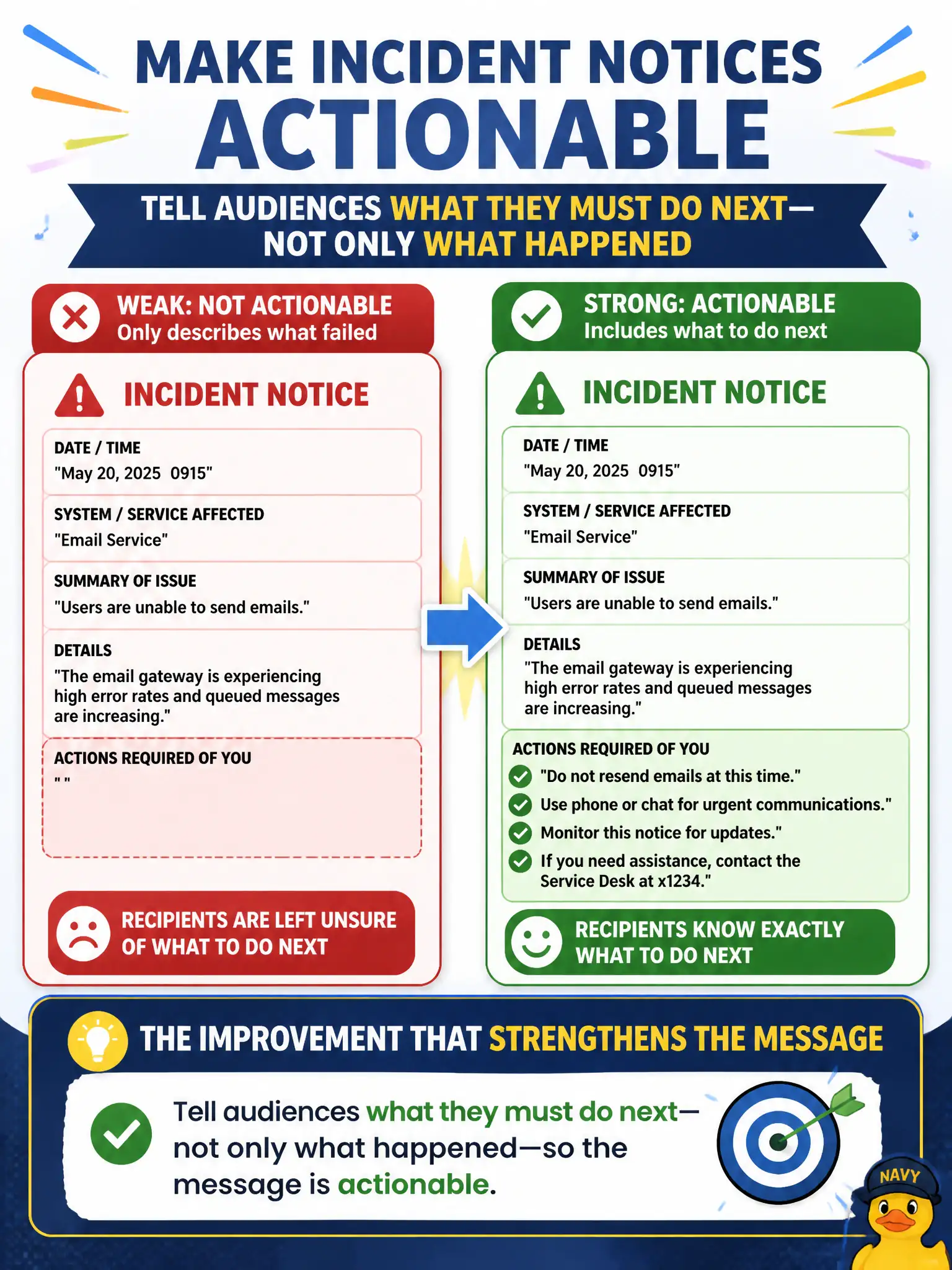
An incident notice template is used, but senders leave the "actions required of you" field blank and only describe what failed. What improvement best strengthens the message?
Select an answer to reveal the explanation.
Short Explanation
"Something broke" without "here’s what you do" is a weather report with no umbrella tip. People freeze or invent their own plan. Spell out the action required so the audience can move.
Full Explanation
Telling audiences what they must do next—not only what happened—is correct because incident notices that describe failure without required actions leave recipients uncertain and invite conflicting improvisation. Actionable messaging converts awareness into coordinated behavior: where to go, what to stop, whom to call, and what not to touch. In civic settings—libraries, transit hubs, utilities—clear “actions required of you” fields reduce secondary incidents and shorten recovery.
Removing action fields permanently because audiences prefer narrative-only updates fails by concept because narrative without instruction is status theater; preference for story does not remove the need for directed response. Filling the field with legal disclaimers instead of concrete steps fails because disclaimers manage liability language; they do not tell a supervisor whether to evacuate a wing or shut a valve. Sending the same status story three times without requesting a response or behavior fails because repetition of non-actionable content does not create compliance or feedback loops.
Exam caveat: CRMC communication templates are judged by whether they drive appropriate action under uncertainty. Completeness about root cause can wait; clarity about immediate required behaviors should not.
Operational check: Revise the county incident-notice template so “actions required of you” is mandatory before send; tabletop a chemical-odor or outage notice and verify every audience segment receives at least one explicit next step and a feedback path.