
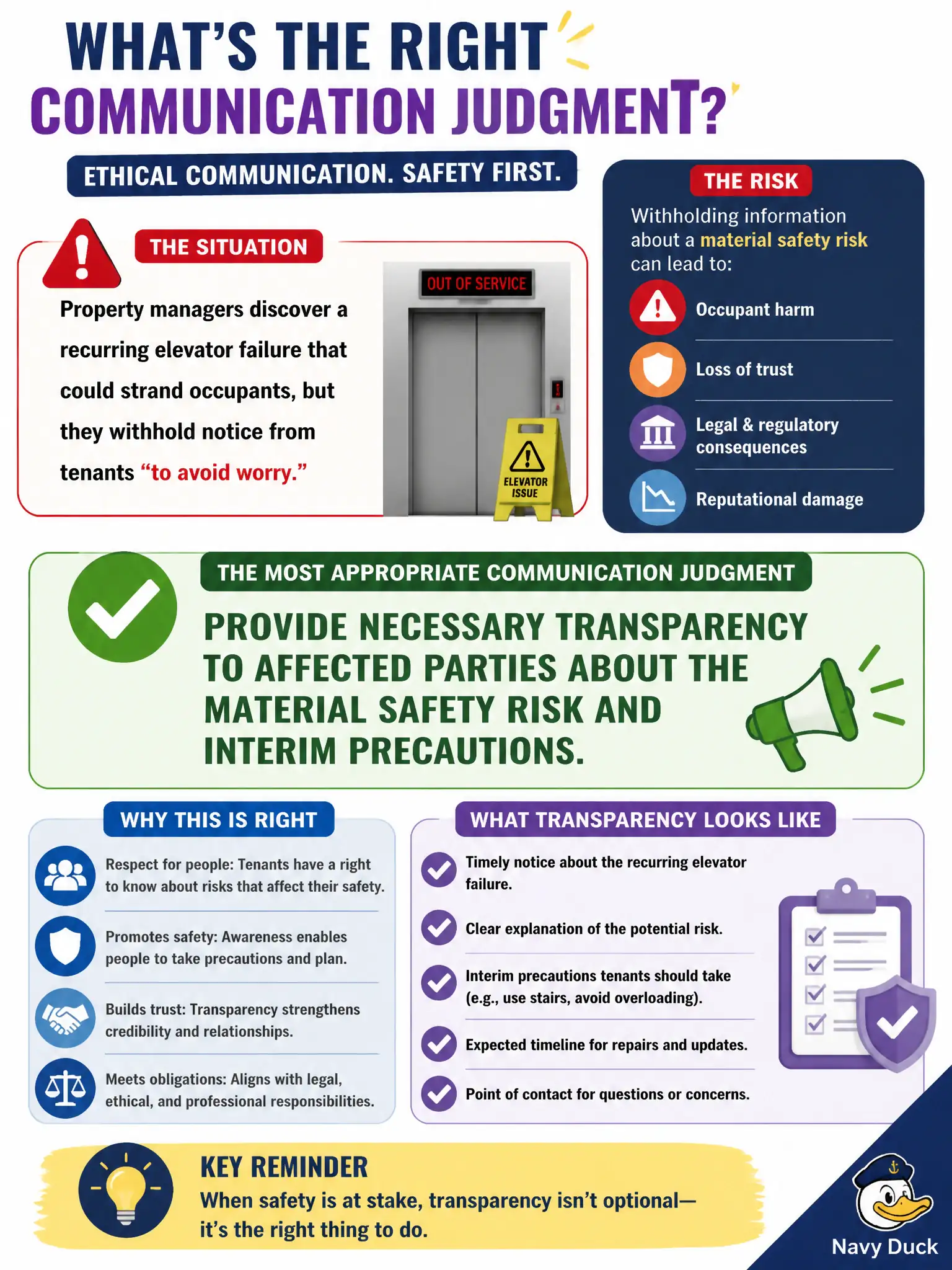
Property managers discover a recurring elevator failure that could strand occupants, but they withhold notice from tenants "to avoid worry." What communication judgment is most appropriate?
Select an answer to reveal the explanation.
Short Explanation
Hiding a sticky elevator "to keep people calm" is like covering a wet-floor sign so nobody frets—then someone slips. Affected folks deserve a straight heads-up and what to do meanwhile. Necessary transparency beats managed silence on safety.
Full Explanation
Necessary transparency to affected parties about a material safety risk and interim precautions is the correct judgment because occupants who use elevators need actionable warning and alternate movement plans. Withholding notice “to avoid worry” substitutes managerial comfort for informed self-protection and can worsen liability and trust when a stranding or injury occurs. Civic property and housing managers owe tenants clear interim precautions—out-of-service notices, stair guidance, priority assistance for mobility-limited residents—while repairs proceed.
Delaying all safety notices until a lawsuit forces disclosure fails by concept because reactive legal compulsion is not a risk-communication strategy and allows preventable harm in the interim. Sharing only with insurers and never with elevator users fails because insurers manage financial transfer; they do not occupy the cars—affected parties remain uninformed. Replacing transparency with informal rumors so managers stay out of writing fails because rumor is uncontrolled, often inaccurate, and leaves no auditable trail of what was told to whom.
Exam caveat: CRMC risk communication balances unnecessary alarm against material disclosure. Fear of worry does not justify hiding known recurring life-safety hazards from people who bear the exposure; framing and precautions accompany honesty rather than replace it.
Operational check: When a municipal elevator shows recurring fault codes, post tenant notices with nature of risk, interim controls, reporting contact, and repair ETA; confirm accessibility accommodations; and log the communication in the facilities risk register notes.