
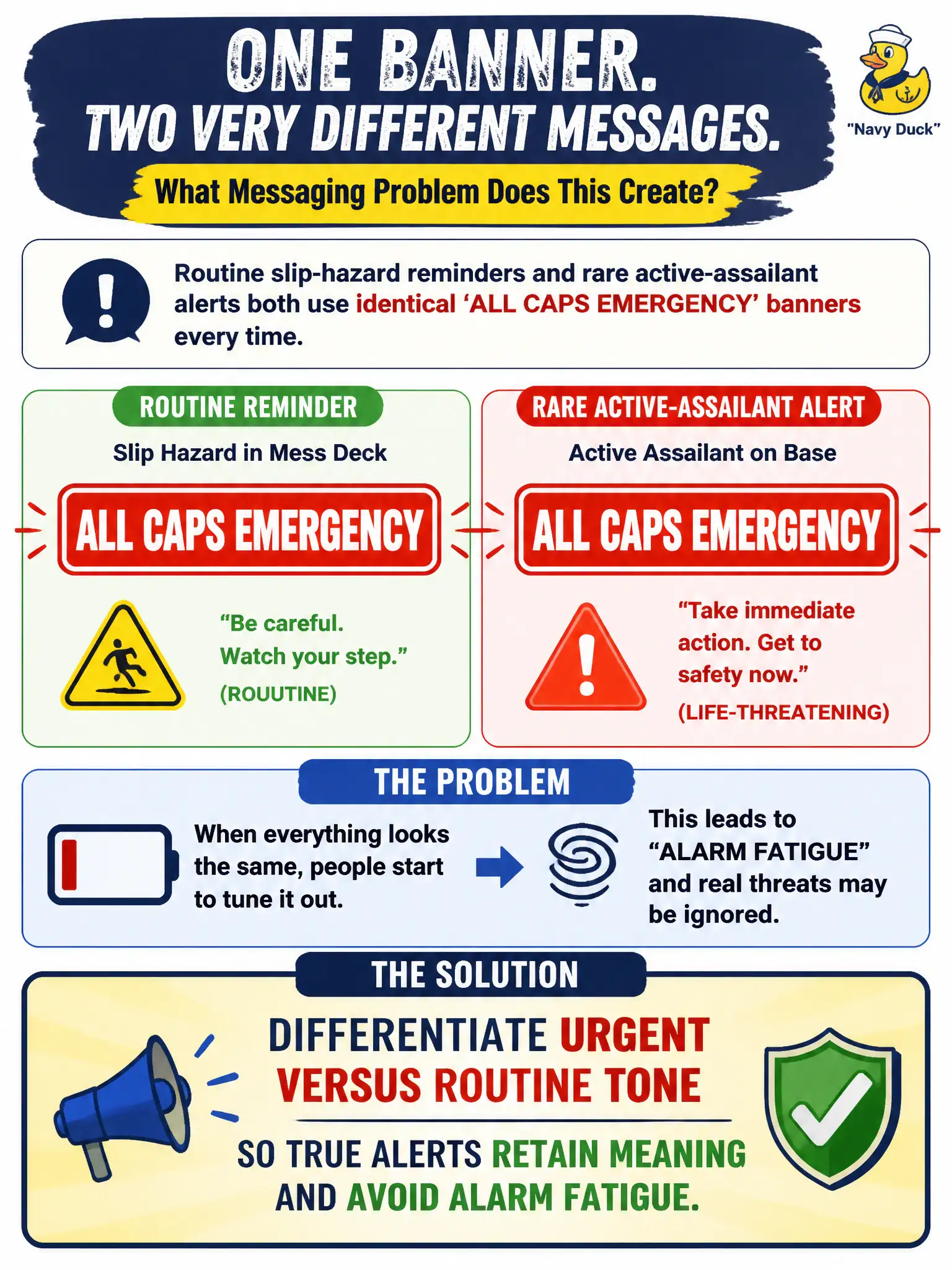
Routine slip-hazard reminders and rare active-assailant alerts both use identical 'ALL CAPS EMERGENCY' banners every time. What messaging problem does this create?
Select an answer to reveal the explanation.
Short Explanation
If every email is a red siren, people stop hearing sirens. Save the emergency banner for real emergencies so it still means something.
Full Explanation
Routine slip-hazard reminders and rare active-assailant alerts must use differentiated urgency and tone so true alerts retain meaning and avoid alarm fatigue; identical ALL CAPS EMERGENCY banners on every message train people to discount the format. Identical banners do not improve safety by making every message feel equally critical forever; they flatten urgency and reduce response to genuine emergencies. Using emergency formatting for routine reminders merely to boost open rates spends credibility for marketing metrics and harms future protective action. Tone differentiation remains necessary even when legal disclaimers are identical on every notice; sameness of disclaimer language does not justify sameness of urgency signaling. Message design is part of risk communication effectiveness for civic workplaces that mix training tips with rare life-safety alerts. Over-alerting is a recognized failure mode in emergency notification and internal safety messaging. Exam caveat: reserve emergency presentation for events that require immediate protective action. Operational check: define urgency tiers with distinct subject lines and visual treatments, reserve emergency banners for genuine alerts, audit recent messages for misuse of emergency formatting, retrain communicators, and measure acknowledgment or response rates on true alerts after differentiation is enforced.