
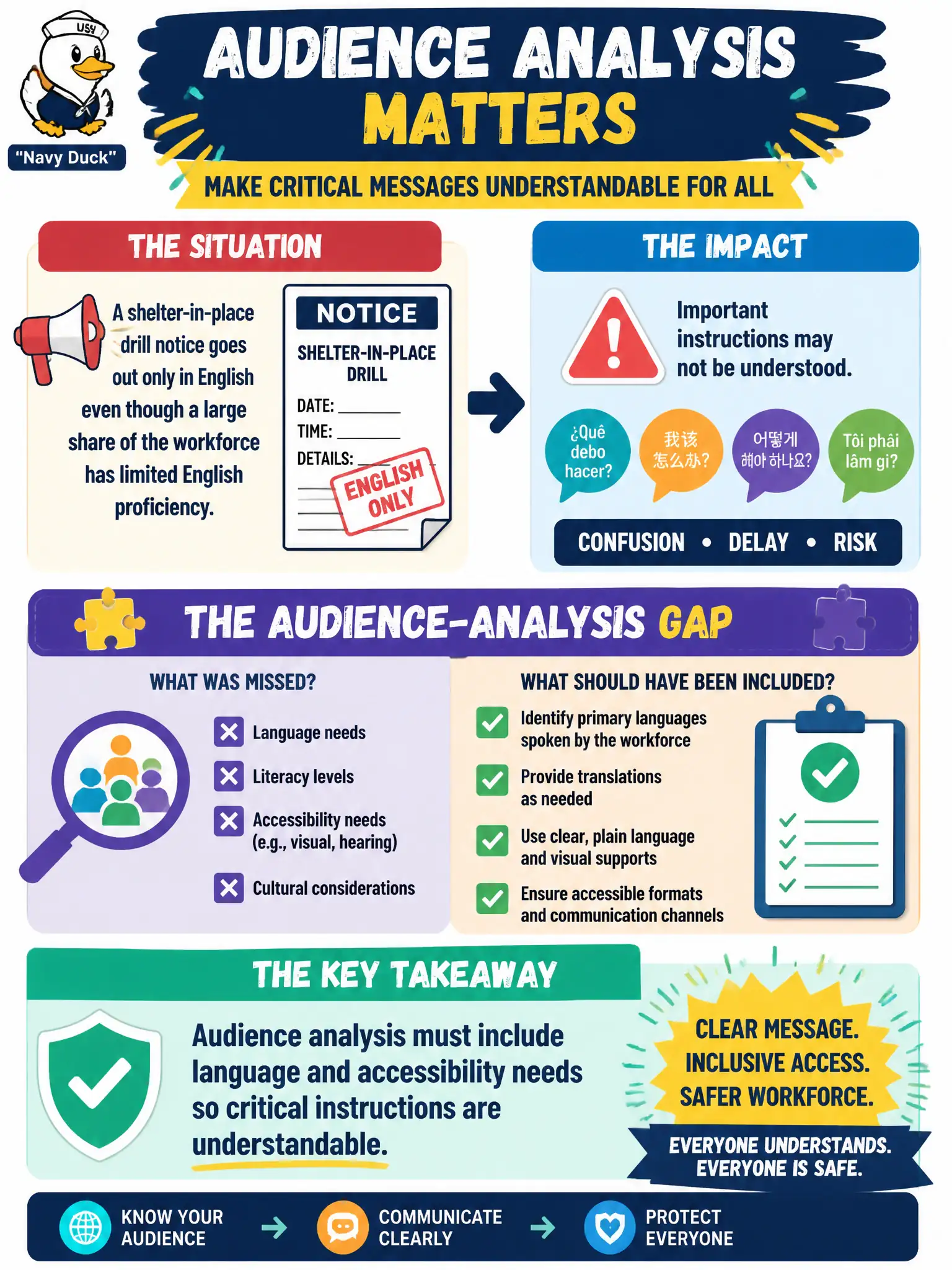
A shelter-in-place drill notice goes out only in English even though a large share of the workforce has limited English proficiency. What audience-analysis gap does this show?
Select an answer to reveal the explanation.
Short Explanation
If half the crew cannot read the drill sheet, the drill failed before it started. Audience analysis includes language—and accessibility—so everyone gets the instructions.
Full Explanation
Audience analysis must include language and accessibility needs so critical shelter-in-place drill instructions are understandable when a large share of the workforce has limited English proficiency; English-only drill notices reveal that gap. Avoiding translation to keep messages legally identical to the English original only prioritizes linguistic uniformity over comprehension and safe performance when seconds matter. Expecting limited-English workers to rely on gestures from bilingual peers during drills creates unequal protection and unreliable transmission under noise and stress. Language access is not limited to customer-facing notices; workforce emergency instructions are core duty-of-care communications for municipal employers. Accessibility may also require hearing, vision, plain-language, and literacy supports beyond translation alone. Translated messages should be checked for accuracy and consistency of protective actions rather than abandoned for fear of imperfect wording. Exam caveat: CRMC communication competence includes audience analysis, not only channel selection. Operational check: identify language needs in the workforce, provide translated or interpreted drill instructions, post multilingual cues at workstations, brief bilingual leads as supplements not sole substitutes, and verify comprehension among a sample of LEP employees in the next drill after-action review.